Density, parking, height, affordability, utilities, and community posture.
A committee-grade first pass before parcel assembly.
Multifamily sites fail early on ordinary variables: achievable density, parking ratios, height limits, affordability set-asides, utility capacity, approval path, and community posture. RealClear turns those public-record questions into a cited site memo. The review queue targets a delivery window confirmed at acceptance of the completed property submission. Complex or thin-record sites can take longer.
Legal doctrines matter, but they are not the site memo by themselves. They sit beside the density, parking, utility, and community questions a development committee actually has to decide.
On acceptance
Research target
18
States
6
Decision variables
46
Housing case files
Delivery window confirmed when the completed property submission is accepted. Complex or thin-record sites may require more research.
Source record review · multifamily & housing policy
The participants shaping multifamily outcomes.
Statewide preemption, SB 35 ministerial paths, and municipal executive discipline. The six participants below recur across RealClear's cited multifamily and missing-middle case files.
Hon. Helen Williams
Santa Clara Sup. Ct. · SB 35 precedent
Mayor Jacob Frey
Minneapolis, MN · 2040 Plan executive
Mayor Lisel Blash
Fairfax, CA · survived recall
Commissioner Chloe Eudaly
Portland, OR · RIP architect
Matt de Ferranti
Arlington, VA · PenPlace vote chair
California HCD
Statewide · ministerial enforcement
Open any case file for the source documents, participant role, and method note behind the weighting.
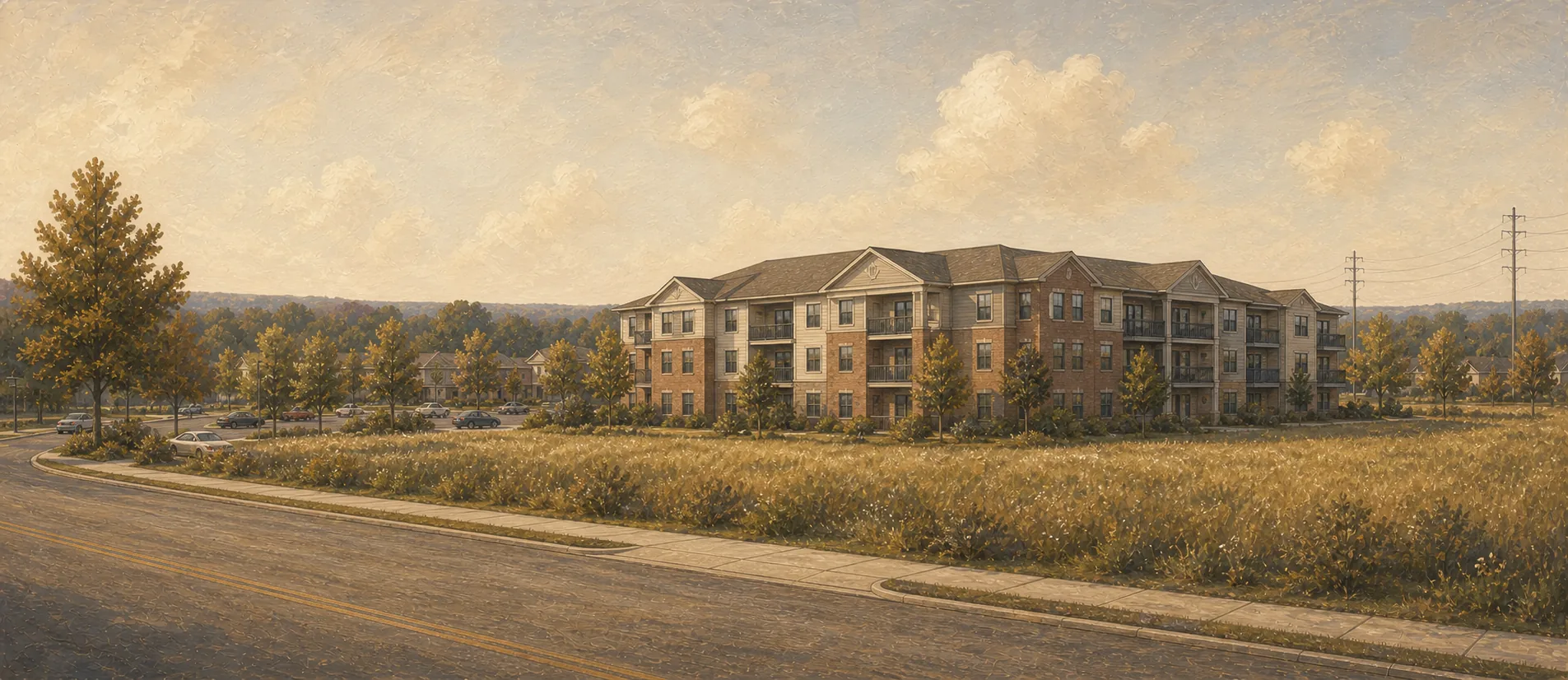
Density, parking, height, community posture.
Statewide preemption, SB 35 ministerial paths, and municipal executive discipline — the patterns that recur across RealClear's cited multifamily and missing-middle case files.
SINGLE-FAMILY EDGEPARKING FIELDBUILDING MASSFRONTAGE ROAD
ILLUSTRATION · MULTIFAMILY INFILL · NOT A SPECIFIC PROPERTYThe legal landscape matters. So do parking, height, utilities, and neighbors.
These are not abstract legal hypotheticals. Each doctrine below is documented in a real case file, but RealClear treats doctrine as one part of the first-pass site decision. The site memo also calls out density, parking, height, affordability, utility, and community questions that counsel or consultants should answer next.
Builder's Remedy
California · Massachusetts
When a city's housing element falls out of state compliance, the developer gets to drive. The builder's remedy allows by-right approval of any housing project with a modest affordable set-aside — bypassing local zoning entirely. In California alone, dozens of cities are exposed right now. Palo Alto was forced to process applications it didn't want. Cupertino lost the Vallco fight after SB 35 made the ministerial pathway airtight.
See Palo Alto builder's remedy →Religious Land Use & Institutionalized Persons Act
Federal — nationwide
RLUIPA was written to protect religious institutions from discriminatory zoning. But it's become a doctrine with teeth in the affordable housing fight: some faith-based affordable housing providers invoke it when municipalities impose substantial burdens on their applications. The Franklinton DOJ settlement shows what happens when a city ignores it.
See Franklinton RLUIPA settlement →Fair Housing Act
Federal — nationwide
The FHA prohibits discrimination in housing on the basis of race, color, national origin, religion, sex, familial status, or disability. Municipalities that systematically deny affordable housing applications in minority neighborhoods are federal enforcement targets. Belton, Texas learned this. So did Franklinton, Louisiana. In some jurisdictions, FHA exposure is a lever that makes your application harder to deny.
See Belton Fair Housing case →NIMBY Opposition Coalitions
Everywhere
In Fairfax, California, organized opposition to a 20-unit multifamily project escalated into a recall campaign against the mayor and vice mayor who voted for it. The recall failed — but only after months of political paralysis, a second hearing, and the kind of press coverage that makes every future applicant more cautious. NIMBY opposition in multifamily fights is not just a public comment nuisance. It's an electoral threat.
See Fairfax NIMBY escalation →BTR & STR Bans + Zoning Changes
Georgia · California · Arkansas
Georgia tried to ban built-to-rent single-family communities outright. Del Mar prohibited BTR in coastal overlay zones. Fayetteville fought over whether BTR is a distinct land use that needs its own entitlement strategy. As institutional capital has flooded into BTR, municipalities have begun treating it as a different category — and not always a welcome one. If you're assembling parcels for a BTR community, the doctrine landscape around your parcel is not the same as it was in 2022.
See Georgia BTR ban →46 housing case files. Source records linked.
Planning commission records. DOJ filings. HCD correspondence. State court opinions. Every outcome in this library traces to a primary source you can open. That's the point.
How we read Vallco SB 35. The decade that built the playbook.
The Vallco Shopping Mall in Cupertino, California sat half-vacant for over a decade while the city and a revolving cast of developers fought about what to do with 58 acres in the heart of Silicon Valley. Cupertino preferred retail. The state of California preferred housing. The developer — Sand Hill Property Company — eventually found a mechanism to force the issue.
In 2018, Sand Hill filed an application under SB 35, a California statute that mandates ministerial approval for qualifying multifamily projects in cities that have failed to meet their state housing production obligations. Cupertino was on the list. The application was for 2,402 residential units with the required affordable set-aside — and under SB 35, the city had no discretionary review authority. No public hearings. No council vote. Ministerial or nothing.
Cupertino sued. The city argued its General Plan was not a “zoning ordinance” for SB 35 purposes, and that its application of objective development standards was legitimate. The litigation ran from 2019 through 2022, escalating to the California Court of Appeal. In October 2022, the appellate court ruled for the developer. SB 35 applied. The ministerial path was airtight. The city's attempt to use its own General Plan as a blocking tool had failed.
RealClear's pattern-match on Vallco would have surfaced four source-record factors before counsel committed budget to the litigation strategy: Cupertino's housing element compliance status, the state's documented enforcement posture toward non-compliant jurisdictions, the precedent set by similar SB 35 applications in comparable Bay Area cities, and the composition of the Santa Clara Superior Court bench that would hear the initial challenge. None of these source-record factors were hidden. They were in the public record. They required assembly.
The case files in this library are history. What they make possible is pattern recognition before the next fight begins. We've already seen this playbook. The question is whether you see it before or after parcel assembly.
Show us your parcel. We've already seen this playbook.
Case file
Cupertino Vallco SB 35
Cupertino, Santa Clara County, CA
What RealClear would have surfaced
None of these source-record factors were hidden. They were in the public record. They required assembly.
Do not assemble the parcel before the committee questions are mapped.
Density, parking, height, affordability, utility availability, approval path, and community posture need a first-pass answer before capital commits. RealClear delivers the cited site memo and flags what counsel, civil, utility, traffic, environmental, or geotech should confirm next.
Start with the one property in front of the committee. The decision gate is simple: public-record evidence first, deeper diligence second.
The review queue targets a delivery window confirmed at acceptance of the completed property submission. Complex or thin-record sites can take longer.
46 multifamily case files. 18 states. Five active doctrines. Every fight documented.