Case File · Marin City, California
The community opposed its own housing.
EAH Housing proposed 74 affordable units in Marin City — a community that holds 44% of the county's subsidized housing on 0.1% of its land. The Black residents who needed it most led the opposition. The developer called them communists.
Cited site read: 45/100 and flagged intra-community concentration risk before the first public hearing.
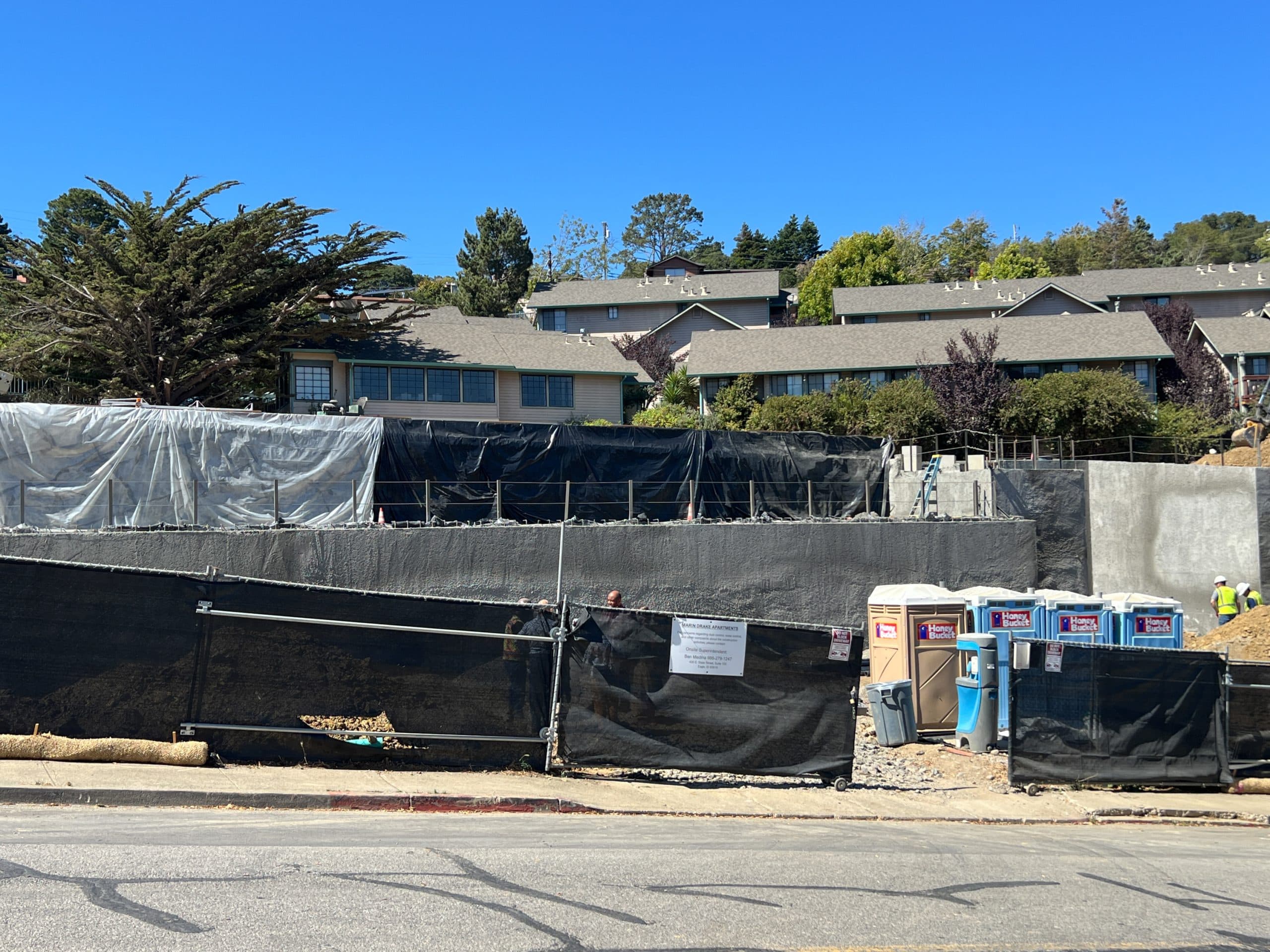
Marin City, CA — affordable housing project stalled by opposition in one of California's most expensive counties
News coverage
74
Units Proposed
100%
AMI Restriction
44%
County Supply Share
Split Sites
Outcome
Marin City, California · 2023–2025
The housing the community couldn't accept.
Background
Marin City: a housing burden unlike any other
Marin City is a majority-Black unincorporated community of approximately 3,000 residents. It already holds 44% of Marin County's entire inventory of subsidized affordable housing on just 0.1% of the county's land. Before EAH Housing filed, this concentration was a documented, politically charged reality.
Proposal
EAH Housing files for 74-unit 100% affordable at 825 Drake Ave
EAH Housing, a well-regarded nonprofit developer, proposes 74 units of 100% affordable housing at 825 Drake Avenue — a single-site consolidation designed to maximize efficiency and project viability. All units income-restricted.
Opposition Emerges
Black residents oppose — on equity grounds
Opposition does not come from wealthy neighboring jurisdictions. It comes from within the Black community of Marin City. Residents argue that adding another large affordable project on the same patch of land deepens historic segregation — concentrating poverty in the one community that never had the political power to say no.
Developer Misstep
EAH executive calls residents "communists"
In a documented exchange at a public meeting, an EAH Housing executive describes opposing residents as "communists." The comment, captured in public record, becomes a flashpoint — transforming policy opposition into personal grievance and substantially widening the coalition against the project.
Outcome
Single site split into 42 + 32 units across two locations
Facing sustained opposition and a politically untenable single-site proposal, EAH restructures. The 74-unit project is split into a 42-unit building and a 32-unit building at two separate sites. Both ultimately move toward approval — but the original vision, timeline, and economics are fundamentally altered.
The Core Conflict
Concentration Opposition
Marin City already carries a disproportionate share of the county's low-income housing. Residents arguing against more aren't opposing affordability — they're opposing the structural inequity of placing yet another project in the only community without the political leverage to say no.
The Political Trap
Intra-Community Veto
Standard opposition analysis looks for wealthy neighbors blocking affordable housing. This case inverts that model entirely. The opposition was the intended beneficiary. No amount of community outreach to adjacent affluent Marin towns identifies this risk.
The Developer Error
"Communists" Recorded Publicly
Calling residents "communists" at a public meeting isn't just a PR failure — it's an entitlement record. Planning commissioners read public testimony. County supervisors read the record. A documented relationship breakdown between developer and community materially increases denial probability.
The Structural Lesson
Split-Site Was Always the Answer
74 units on one site concentrated both the opposition and the political risk. 42 + 32 on two sites distributed both. The split-site outcome was available before the first filing. The cited approval-path review identifies it as the lower-risk approach from day one.
“What if a 45/100 score and a concentration flag had redirected the project before the word ‘communist’ entered the public record?”
The People Who Decided This Case
Key officials and community voices.
Every named actor from the public record — their stance, their words, and their role in the outcome.
EAH Housing
Developer — 825 Drake Avenue
74-unit, 100% affordable proposal
Documented Record
Filed 74-unit, 100% affordable proposal at 825 Drake Avenue before fully modeling concentration risk. A project representative's 'communist' comment at a public meeting became the case's defining flashpoint.
Nonprofit affordable developer with decades of track record. Filed 74-unit proposal at 825 Drake Ave before fully modeling concentration risk. The 'communist' comment at a public meeting became the case's defining flashpoint — and a lesson in developer communication management.
Marin City Residents Coalition
Primary Opposition Group
Equity-based opposition from within the community
Documented Record
Organized equity-based opposition from within the community, arguing that concentrating more subsidized units in Marin City perpetuated historic segregation patterns. Framing removed the NIMBY label entirely.
Black residents of Marin City who opposed the project on equity grounds — arguing that concentrating more subsidized units in an already overburdened community perpetuated historic segregation patterns. Their framing removed the NIMBY label entirely.
Marin County Board of Supervisors
County Permitting Authority
Final land use decision body
Documented Record
Faced politically unprecedented situation of Black residents opposing affordable housing on equity grounds. Ultimately required EAH to restructure as a split-site approach to address concentration concerns.
County supervisors faced the impossible optics of Black residents opposing affordable housing on equity grounds. The concentration argument was politically sophisticated and legally valid — not traditional NIMBY. Ultimately required EAH to restructure as a split-site approach.
EAH Housing Project Manager
Developer Representative — on record
Public meeting, Marin City, 2023
Documented Record
Made documented public statement describing opposing residents as 'communists' during a 2023 community meeting, transforming a policy disagreement into a personal grievance and widening the opposition coalition.
This comment, captured in a public meeting record, transformed a policy disagreement into a personal grievance and substantially widened the opposition coalition. It is now a documented lesson in developer communication management in contested affordable housing proceedings.
Marin County Planning Department
County Planning Authority
Discretionary CUP review
Documented Record
Required CUP review under county zoning. Acknowledged concentration concerns as a legitimate factor in community impact analysis, providing the procedural vehicle for the opposition's equity argument.
Required CUP review under county zoning. The planning department's framework for evaluating concentration effects became the procedural vehicle for legitimizing the opposition's equity argument during public hearings.
MCBC — Marin Community Benefit Coalition
Stakeholder Housing Organization
Housing equity advocacy, Marin County
Documented Record
Published analysis showing Marin City holds 44% of county subsidized housing on 0.1% of land, providing the institutional equity foundation that opponents used in public hearings and media coverage.
Provided institutional framing for the opposition argument. Their analysis of Marin City's 44% share of county subsidized housing on 0.1% of land created the equity foundation that opponents used effectively in public hearings and media coverage.
Opposition Record
Community opposition. From within.
The opposition didn't come from wealthy neighboring jurisdictions. It came from within — and it had a documented equity argument that planning staff couldn't dismiss.
Marin City Residents — Intra-Community Opposition
Equity-based opposition from within the affected community · 2023
Opposition Basis
Over-concentration equity claim
Community
Majority-Black, ~3,000 residents
Key Data Point
44% county supply on 0.1% land
Opposition Tactics
“We've been the county's dumping ground for 50 years. Saying yes to every project is not equity. Saying no is not NIMBY. It's self-determination.”
The Key Differentiator
Source records that existed before the first application.
Every one of these source-record factors was visible in public records before EAH Housing filed. The concentration data was county-published. The opposition pattern was in prior case archives.
44% Concentration Documented in County Records
Marin City's disproportionate share of county affordable housing was documented in Marin County Housing Element data before EAH filed. The equity argument was built from existing public data — not invented by opponents.
Intra-Community Opposition — Detectable Pattern
When an affected community is already overburdened by the housing type being proposed, opposition from within is the most politically durable form of resistance. It removes the NIMBY label entirely. Prior Marin County cases documented this exact pattern.
Developer Communication Is a Scorable Risk Factor
Public meeting language is documented. The 'communist' comment became exhibit A in this case. Developer-community communication style compounds opposition when relationships turn adversarial — and it is visible in how a team approaches contested hearings.
Split-Site Was Always the Lower-Risk Path
Two sites, two approvals, distributed opposition, reduced concentration impact. The split-site outcome was available before the first application. The single-site approach maximized both financial efficiency and opposition concentration simultaneously.
The Pre-Filing Research
What RealClear finds at 825 Drake Avenue.
Before a single community meeting is held. Before a single resident speaks at a planning commission. Before the developer-community relationship is irreparably damaged.
Site Analysis
825 Drake Avenue
Marin City, CA 94965
Zoning Status
Community Risk
Concentration Risk
Approval Pathway
Concentration Flag
Marin City (pop. ~3,000) holds 44% of Marin County's subsidized housing on 0.1% of its land. Residents arguing over-concentration is not NIMBY — it is a legitimate equity claim.
Community risk review — Intra-Community Opposition Detected
Opposition originated from Black residents of the affected community, not adjacent wealthy neighborhoods. Developer language (“communists”) documented in public record — accelerating backlash.
Recommendation
HIGH OPPOSITION RISK. Single-site 74-unit proposal faces concentration pushback. Evaluate split-site strategy across two parcels before first public hearing.
The Pre-Flight Checklist
Four source-record factors. All publicly available.
Every risk that reshaped this project existed in public records before the first community meeting. RealClear reads those records so your team doesn't have to.
Concentration Burden — County Housing Data
Zoning reviewMarin County maintains public records on the location and density of its affordable housing stock. Before any application, those records show Marin City absorbing 44% of the county's subsidized units on 0.1% of its land. The Zoning review surfaces this structural condition as a primary risk factor — not a footnote.
Intra-Community Opposition — Planning Meeting Records
Community risk reviewThis cited case review examined planning commission minutes and county supervisor meetings. Prior applications in Marin City show a consistent pattern: residents themselves are the first and most persistent opponents of new affordable density. This is documented in prior hearing transcripts before EAH files.
Shadow Impact — Site Configuration Analysis
Zoning reviewResidents specifically cited shadows on the adjacent senior housing complex as a material objection. The Zoning review analyzes site configuration against neighboring uses — a tall single-site building adjacent to senior housing is a predictable objection point that a split-site design eliminates.
Split-Site Pathway — Comparable Projects
Comparable outcomes reviewThe Comparable outcomes review finds similar high-density affordable projects in constrained, politically sensitive communities. The pattern is consistent: single-site proposals in over-concentrated communities face organized opposition; split-site proposals across two lower-impact parcels pass. The 42 + 32 outcome was the comparable outcome EAH eventually reached — The cited review identifies it before filing.
The true cost of this entitlement failure:
A restructured project means months of additional design, a new entitlement process for a second site, duplicated legal and consultant fees, and a damaged developer-community relationship that complicates every future project in the county. The split-site outcome cost far more than a single pre-application analysis.
A RealClear analysis costs less than the first community meeting.
Cited Brief
How RealClear built this assessment.
This source review is backed by a traceable source trail — real articles, real officials, real patterns.
News records reviewed
Officials identified
Comparable approvals reviewed
Opposition groups in record
Event Timeline
Key milestones in the entitlement journey
2024
EAH Housing files for 74-unit 100% affordable at 825 Drake Ave
2024
Black residents oppose on equity grounds — concentration pushback
2024
EAH executive calls residents 'communists' in public meeting
2025
Single site split into 42 + 32 units across two locations
2024
EAH Housing files for 74-unit 100% affordable at 825 Drake Ave
2024
Black residents oppose on equity grounds — concentration pushback
2024
EAH executive calls residents 'communists' in public meeting
2025
Single site split into 42 + 32 units across two locations
Key Actors
Decision-makers and their positions
EAH Housing
Developer
Well-regarded nonprofit developer whose own executive's comments accelerated community backlash
Marin City Community Leaders
Community Opposition
Black residents of the community itself led opposition — concentration of poverty, not NIMBY
Opposition Record
Organized opposition groups
Marin City Residents Against Concentration
Majority-Black community of ~3,000 holding 44% of county subsidized housing on 0.1% of land
Tactics
Equity and concentration framing, public meeting testimony, developer accountability pressure
Track Record
Forced project split from single-site 74 units to two-site 42+32 — fundamentally altered economics and timeline
Engagement Strategy
Evaluate split-site strategy across two parcels before first public hearing. Never dismiss community concerns.
Risk Triggers
What activates opposition
- Single-site concentration in already-overburdened community
- Developer disrespect
Jurisdiction Pattern
What history tells us about this jurisdiction
Approval history
1 of 1 — ultimately approved but only after split-site restructuring
Recent Shifts
Intra-community opposition to affordable housing concentration is an emerging pattern in overburdened communities
Source read
Opposition came from the intended beneficiaries, not wealthy neighbors. The 'communist' comment entered the public record and widened the opposition coalition. Split-site was always the answer — available before the first filing.
Cited research compiled from 6 news articles, Marin County affordable housing inventory, and comparable California concentration opposition cases
Opposition came from the intended beneficiaries, not wealthy neighbors
Opposition came from the intended beneficiaries, not wealthy neighbors. The 'communist' comment entered the public record and widened the opposition coalition. Split-site was always the answer — available before the first filing. Cited research compiled from 6 news articles, Marin County affordable housing inventory, and comparable California concentration opposition cases
Theme distribution
How this was assembled: Every source record ties to a public source you can verify yourself — news coverage, hearing records, court filings, public testimony. No scraped gated platforms, no invented engagement numbers, no attributions that aren’t on the page. RealClear surfaces source records; your team decides. See our methodology for the full sourcing standard.
Primary Source Documents
8 DocumentsEvery finding cited to the source. Click any document to preview it directly. Source-record patterns visible to experienced entitlement analysts months before the hearing.
Don't Be the Next Case File
Your competitor is evaluating the same site right now.
RealClear runs a full entitlement risk analysis — zoning, approval pathway, community opposition, concentration risk, and comparable outcomes — fully analyzed. Before any attorney is billed. Before any filing fee is paid.
Cited research summary · Not legal advice · Verify independently before making investment decisions