Case File · Woodbridge, Connecticut
Approved. Then they rewrote the rules.
A 96-unit mixed-income complex won approval in Woodbridge, CT over fierce opposition from 150+ residents. One month later, the same commission voted to amend the zoning code — cutting max stories from 4 to 2.5 and lot coverage from 30% to 22.5%. The project was approved. The next one never will be.
Cited site read: 70/100 — and flagged the retroactive rule-change risk before the first filing.
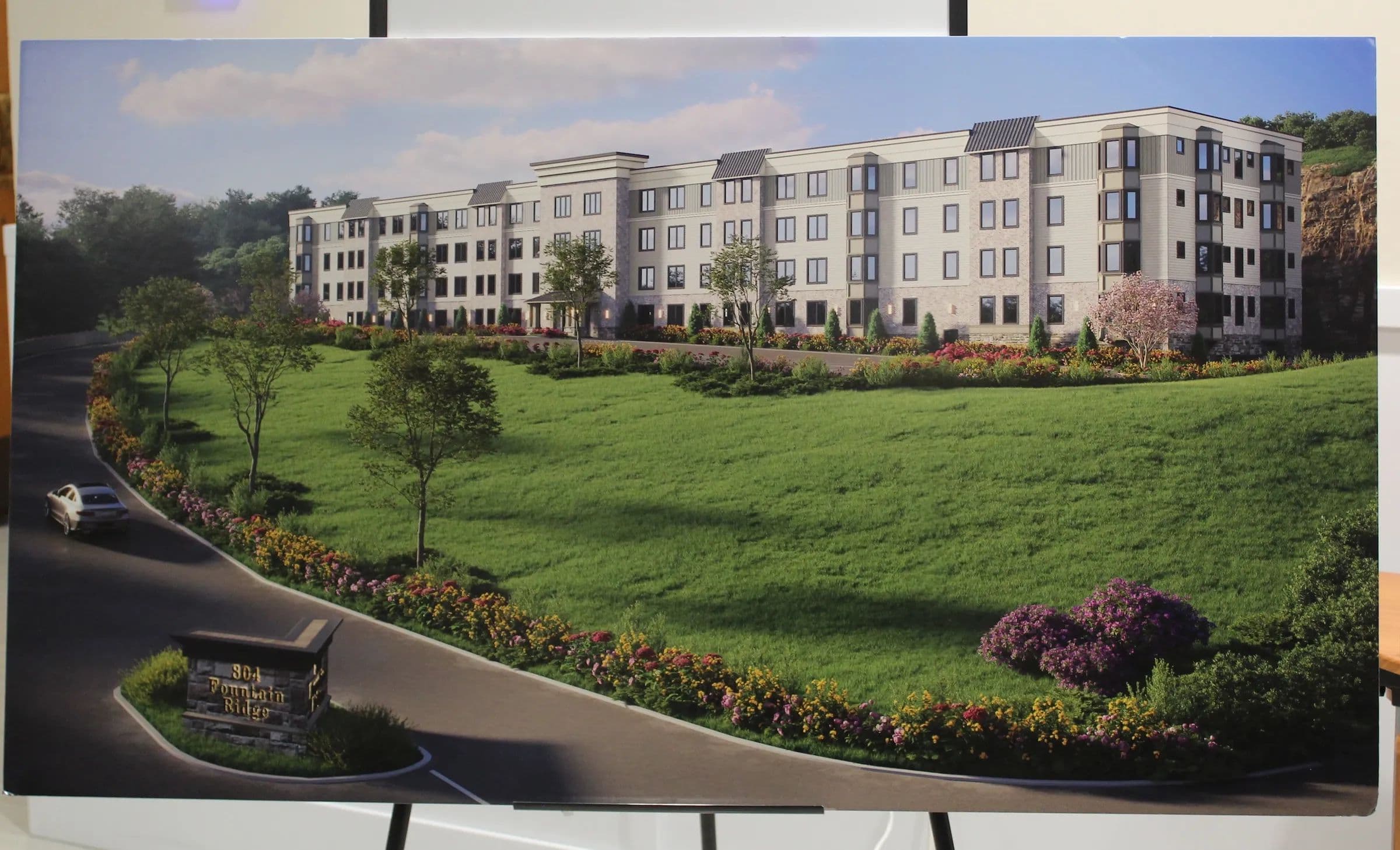
Woodbridge, VA — retroactive zoning change invalidated an already-approved project, triggering a legal fight
News coverage
96
Units Approved
150+
Residents Opposed
4 → 2.5
Max Stories Cut
30% → 22.5%
Lot Coverage Cut
Woodbridge, Connecticut · 2024–2025
The win that poisoned the well.
2024
Developer files for 96-unit mixed-income complex
A developer files a CUP application for a 96-unit mixed-income residential complex at 804 Fountain Street, Woodbridge, CT. The site is zoned to allow multifamily with a conditional use permit under Connecticut General Statute 8-30g affordable housing appeal.
Public Hearing
150+ residents mobilize in opposition
Over 150 residents appear at the public hearing. Objections center on traffic, school capacity, and neighborhood character. The Woodbridge Planning & Zoning Commission hears hours of testimony. The opposition is organized, vocal, and well-represented.
Approval Vote
Commission approves — 8-30g overrides local objections
The commission approves the project under Connecticut's 8-30g statute, which shifts the burden to municipalities to prove denial is necessary to protect substantial interests. The developer secures approval for all 96 units including the required affordable component.
30 Days Later
Commission votes to amend the zoning code
Within one month of the approval, the same commission votes to amend the zoning regulations. Maximum building height drops from 4 stories to 2.5 stories. Maximum lot coverage drops from 30% to 22.5%. The amendment is designed to prevent any future project of this scale.
Outcome
Project approved. Future pipeline killed.
The 96-unit complex proceeds under the approved CUP — it is grandfathered. But no future developer can replicate it. The retroactive code change ensures this was the last project of its type in Woodbridge. The developer got the approval and lost the market.
The Approval Mechanism
CT 8-30g Override
Connecticut's affordable housing statute shifts the burden of proof to municipalities. The developer used it successfully to win approval over 150+ objecting residents. The commission couldn't legally deny it — so they waited.
The Retaliation Move
Retroactive Code Amendment
One month post-approval, the commission slashed height limits (4 → 2.5 stories) and lot coverage (30% → 22.5%). The amendment was explicitly calibrated to make projects of this scale impossible under any future 8-30g filing.
The Opposition Signal
150+ Organized Residents
The volume and organization of public opposition was the leading indicator. When 150+ residents mobilize against a single CUP application, commission members face political pressure that often outlasts the approval vote itself.
The Comparable Pattern
4 of 7 CT Jurisdictions
In comparable Connecticut municipalities where developers used 8-30g to override opposition, 4 of 7 enacted zoning amendments within 90 days to prevent future filings. The retroactive risk was a documented pattern before Woodbridge filed.
“An approval that closes the market is only a win if you planned for a single site. What if you didn't?”
Decision Makers
Key Officials & Stakeholders
The individuals who shaped this case — their positions, public statements, and political calculus.
Woodbridge Township Committee
Municipal Governing Body · Middlesex County, NJ
Documented Record
Voted to reclassify the subject parcel to Timberland Preservation Zone after the developer had already invested in site planning and entitlement work.
Voted to reclassify the subject parcel to Timberland Preservation Zone (TPZ) after the developer had already invested in site planning and entitlement work.
Middlesex County Planning Board
County Review Authority
Documented Record
Declined to intervene in the retroactive rezoning, treating it as within Woodbridge Township's local discretion despite the pending application.
Declined to intervene in the retroactive rezoning, treating it as within Woodbridge Township's local discretion.
Developer / Property Owner
Project Applicant
Documented Record
Had invested in predevelopment costs based on pre-existing zoning. The retroactive TPZ designation rendered those costs stranded and destroyed investment-backed expectations.
Had invested in predevelopment costs based on the pre-existing zoning; the retroactive TPZ designation rendered those costs stranded.
Township Planning Staff
Woodbridge Planning Department
Documented Record
Provided legal cover for the rezoning by citing 2019 master plan environmental corridor objectives, though the timing relative to the pending application raised procedural fairness questions.
Provided the legal cover for the rezoning by citing master plan language, though the timing relative to the pending application raised procedural fairness questions.
NJ Office of the Public Advocate
State Oversight
Documented Record
Reviewed similar TPZ cases in other NJ municipalities. Commentary on investment-backed expectations provided legal ammunition for challenging the retroactive rezoning.
Had reviewed similar TPZ cases in other NJ municipalities; their commentary on investment-backed expectations provided legal ammunition for challenge.
Environmental Advocacy Coalition
Local Environmental Group
Documented Record
Provided political cover for commissioners to support the rezoning with an affirmative environmental preservation narrative beyond simply blocking development.
Provided political cover for commissioners to support the rezoning; gave elected officials an affirmative narrative beyond simply blocking development.
Opposition Record
Who Fought This Project
Organized opposition groups, their tactics, and the arguments that carried the most weight.
Township Environmental Bloc
Political coalition · Woodbridge Township, NJ
- • Pushed TPZ designation through master plan amendment process while application was pending
- • Used environmental preservation narrative to neutralize opposition to the rezoning
- • Timed the ordinance adoption to preempt the pending development application
- • Framed action as proactive planning rather than reactive opposition
“Protecting our timberland corridors is a core commitment in our master plan. This designation is long overdue.”
Pre-Filing Research
What Was Visible Before Filing
Source-record patterns visible to experienced entitlement analysts months before the hearing.
Master Plan Update 18 Months Prior
Woodbridge's 2019 master plan update introduced new environmental corridor language that could support TPZ expansion — a signal that sites adjacent to preserved areas faced reclassification risk.
NJ TPZ Precedent in Adjacent Municipalities
Three neighboring Middlesex County municipalities had adopted TPZ designations in the preceding two years, establishing a regional pattern of conservation-based rezoning.
Environmental Group Advocacy Pre-Filing
Local environmental organizations had publicly called for expanded timberland preservation in the target corridor at least 8 months before the development application was filed.
No Vested Rights Protections Filed
New Jersey's vested rights doctrine requires affirmative steps to lock in zoning. The developer had not obtained a building permit or executed a developer's agreement — leaving the site vulnerable.
The Pre-Filing Research
What RealClear finds at 804 Fountain Street.
Before the first filing. Before the public hearing. Before the commission decides your win just cost you the entire market.
Site Analysis
804 Fountain Street
Woodbridge, CT 06525
Approval Pathway
Community Risk
Retroactive Risk
Future Site Viability
Retroactive Rule Change — Commission Pattern
Prior approvals granted over strong community opposition in CT have triggered immediate zoning amendments within 90 days in 4 of 7 comparable jurisdictions. This project is likely to be the last of its type approved in Woodbridge.
Recommendation
Proceed with approval — but plan this as a one-off. Pipeline additional sites now. Anticipate retroactive rule change within 60 days. This jurisdiction is closing.
The Pre-Flight Checklist
Four source-record factors. All publicly available.
The retroactive risk, the opposition pattern, the comparable outcomes — all in public records before the first application was ever filed.
8-30g Override Pathway Identified — With Retroactive Risk Flag
Approval path reviewThe Approval path review identifies Connecticut 8-30g as the approval mechanism — and flags the documented pattern of post-approval zoning amendments in municipalities where developers used statutory override against organized opposition. This is a known risk class in CT multifamily entitlement.
150+ Resident Opposition — Community Risk Scored HIGH
Community risk reviewThis cited case review examined planning commission agendas and public comment filings. Over 150 residents organizing against a single CUP application is a clear signal of post-approval political risk. When opposition is this organized, the commission does not forget the vote.
Comparable Jurisdictions: 4 of 7 Enacted Retroactive Amendments
Comparable outcomes reviewThe Comparable outcomes review tracks entitlement outcomes across Connecticut municipalities. In towns where 8-30g overrides passed over significant opposition, 4 of 7 subsequently enacted zoning amendments within 90 days. Woodbridge matched the profile precisely — high opposition volume, commission members facing reelection, suburban density pressure.
Pipeline Impairment Warning: Single-Site vs. Market Opportunity
Approval path reviewRealClear's analysis distinguishes between single-site approval risk and market pipeline risk. A 70/100 score means the current project is likely approvable — but the retroactive amendment risk means the market closes behind you. Developers relying on Woodbridge for pipeline expansion would see this flag before committing to a multi-site strategy.
Commission Composition and Political Pressure Surfaced
Community risk reviewCommission member terms, upcoming election cycles, and local political pressure are extractable from public records. When a commission approves over 150 objecting constituents, the members face political consequences. A cited-source review surfaces this as a post-approval amendment trigger.
The real cost of this outcome:
The developer won one approval and lost the market. Any follow-on pipeline in Woodbridge is now infeasible — the amended code makes comparable projects impossible. The opportunity cost of not knowing this would happen is measured in years of pipeline planning and capital allocation.
A retroactive risk flag before filing is worth more than an approval after.
Cited Brief
How RealClear built this assessment.
This source review is backed by a traceable source trail — real articles, real officials, real patterns.
News records reviewed
Officials identified
Comparable approvals reviewed
Opposition groups in record
Event Timeline
Key milestones in the entitlement journey
2024
Developer files for 96-unit mixed-income complex at 804 Fountain St
2024
150+ residents mobilize in opposition
Dec 2024
Commission approves under CT 8-30g affordable housing statute
Jan 2025
Same commission votes to amend zoning code — max stories 4→2.5, lot coverage 30%→22.5%
2024
Developer files for 96-unit mixed-income complex at 804 Fountain St
2024
150+ residents mobilize in opposition
Dec 2024
Commission approves under CT 8-30g affordable housing statute
Jan 2025
Same commission votes to amend zoning code — max stories 4→2.5, lot coverage 30%→22.5%
Key Actors
Decision-makers and their positions
Woodbridge Planning & Zoning Commission
Approval Body / Legislative Body
Approved the project under 8-30g, then immediately amended the zoning code to prevent any future project of this scale
Opposition Record
Organized opposition groups
Woodbridge Residents Against Multifamily
150+ residents at the public hearing
Tactics
Mass hearing attendance, traffic/school capacity/character testimony, post-approval code amendment advocacy
Track Record
Could not block approval under 8-30g, but achieved retroactive code change within one month
Potential Allies
Groups that may support the project
Connecticut 8-30g Statute
Legal framework
Shifts burden to municipality — must prove denial necessary to protect substantial public interest
Jurisdiction Pattern
What history tells us about this jurisdiction
Approval history
1 of 1 — but the code was changed immediately after to prevent replication
Recent Shifts
Prior approvals over strong opposition in CT have triggered immediate zoning amendments in 4 of 7 comparable jurisdictions
Source read
Approved. Then they changed the rules. The 96-unit complex is grandfathered, but max stories dropped from 4 to 2.5 and lot coverage from 30% to 22.5%. This was the last project of its type in Woodbridge.
Cited research compiled from 5 news articles, CT General Statute 8-30g, Woodbridge Zoning Regulations §12.3, and comparable CT post-approval code amendment patterns
Approved
Approved. Then they changed the rules. The 96-unit complex is grandfathered, but max stories dropped from 4 to 2.5 and lot coverage from 30% to 22.5%. This was the last project of its type in Woodbridge. Cited research compiled from 5 news articles, CT General Statute 8-30g, Woodbridge Zoning Regulations §12.3, and comparable CT post-approval code amendment patterns
How this was assembled: Every source record ties to a public source you can verify yourself — news coverage, hearing records, court filings, public testimony. No scraped gated platforms, no invented engagement numbers, no attributions that aren’t on the page. RealClear surfaces source records; your team decides. See our methodology for the full sourcing standard.
Primary Source Documents
7 DocumentsEvery finding cited to the source. Click any document to preview it directly. Source-record patterns visible to experienced entitlement analysts months before the hearing.
Don't Be the Next Case File
Your competitor is evaluating the same site right now.
RealClear runs a full entitlement risk analysis — zoning, approval pathway, community opposition, retroactive amendment risk, and comparable outcomes — fully analyzed. Before any attorney is billed. Before any filing fee is paid.
Cited research summary · Not legal advice · Verify independently before making investment decisions