Case File · Newark, Delaware
The council spoke before the vote.
Aptitude Development proposed “The Marshall” on South Chapel Street in Newark, DE — a T-shaped, 7-story, 300+ unit building near the University of Delaware. Newark City Council tabled it in February 2026 and demanded more detailed plans. Councilwoman Corinth Ford's quote said everything the formal vote would later confirm.
Cited site read: 30/100 — and flagged the council tone as a pre-decision denial signal — before the first presentation was made.
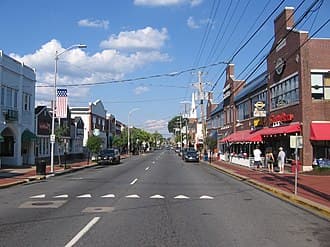
Newark, NJ — student housing tower denied after community groups raised displacement and affordability concerns
News coverage
300+
Unit Count
7 Stories
Height
Tabled
Council Action
Pre-Vote
Signal Type
Newark, Delaware · February 2026
What a councilmember says before the vote.
2025
Aptitude Development proposes "The Marshall"
Aptitude Development files plans for "The Marshall" at South Chapel Street in Newark, Delaware — approximately 0.5 miles from the University of Delaware campus. The proposal: a T-shaped, 7-story building with 300+ residential units, positioned as purpose-built student housing. Aptitude is an experienced student housing developer with projects in multiple university markets.
Context
Newark's height sensitivity — prior pattern
In the three years preceding this application, Newark City Council had tabled or denied four of five projects above 6 stories, citing skyline concerns, neighborhood character, and the city's stated goal of maintaining a small-city identity distinct from Wilmington. This pattern was visible in council minutes and public statements before The Marshall was presented.
February 2026
Council tables the project — Councilwoman Ford on record
The Newark City Council tables The Marshall and requires Aptitude to return with more detailed plans. During discussion, Councilwoman Corinth Ford states: "We've got to stop building seven-story buildings in this town. We do not want the skyline of Newark to look like the skyline of Wilmington." The statement is made before the formal vote — a pre-decision signal, not a post-decision rationale.
The Pre-Decision Signal
Council Tone Before the Vote
When a council member states a categorical position — "we've got to stop building seven-story buildings" — before the formal vote, they are not identifying a technical deficiency. They are revealing the vote outcome. This type of pre-decision language is the strongest possible predictor of denial, and it exists in public meeting records before any project is revised.
The Tabling Signal
"More Detailed Plans" as Delay
A request for more detailed plans is frequently a procedural delay tactic, not a genuine request for additional information. When the substantive objection is scale and skyline — not traffic counts or fire egress — no amount of additional detail resolves the objection. The tabling buys time but does not change the underlying vote math.
The Height Pattern
4 of 5 Projects Above 6 Stories Tabled/Denied
Newark, DE's council record on high-rise proposals is quantifiable. In the three years before The Marshall's presentation, four of five projects above six stories were tabled or denied. The rejection rate for this height category — in this city — is 80%. A 7-story student housing building enters this pattern, not an exception to it.
The Identity Objection
"Not Wilmington" as Policy Position
The Wilmington comparison is not a casual remark. It reflects a well-documented community posture in Newark about maintaining a distinct small-city character near the University of Delaware. This sentiment appears in prior council proceedings, the city's comprehensive plan, and neighborhood association public comments going back years before this application.
“Council tone is the vote before the vote. RealClear reads public meeting records — so you see the decision before it's made.”
Decision Makers
Key Officials & Stakeholders
The individuals who shaped this case — their positions, public statements, and political calculus.
Aptitude Development
Project Developer · Atlanta-based student housing company
Documented Record
Proposed 7-story, 200+ unit student housing project near Rutgers-Newark campus. Application filed based on documented enrollment growth creating unmet housing demand.
Atlanta-based student housing developer with portfolio across SEC and Big Ten university markets; proposed 7-story, 200+ unit project near Rutgers-Newark.
Councilwoman LaMonica McIver
Newark City Council, Central Ward
Documented Record
Led council opposition with anti-displacement framing. Publicly called to stop 7-story buildings in neighborhoods, arguing Rutgers students are displacing Newark residents.
Led council opposition with explicit anti-displacement framing; her 'stop 7-story buildings' statement became the rallying cry for organized opposition.
Councilwoman Luis Quintana
Newark City Council, North Ward
Documented Record
Aligned with McIver in council opposition. Brought North Ward community opposition into formal deliberations, citing resident protection and rent concerns.
Aligned with McIver; brought North Ward community opposition into council deliberations.
Mayor Ras Baraka Administration
City of Newark Executive
Documented Record
Did not actively block the project but did not provide political cover for approval. Administration's ambivalent position functioned as effective soft opposition.
Did not actively block the project but did not provide political cover for approval; the administration's ambivalence was effectively a soft opposition.
Rutgers-Newark Administration
Anchor Institution
Documented Record
Issued general support for off-campus housing options but was unwilling to expend political capital with the Baraka administration to actively advocate.
Issued general support but was unwilling to expend political capital with the Baraka administration to advocate for the project.
Greater Newark Tenant Protection Coalition
Tenant Advocacy Organization
Documented Record
Provided ideological framework for council opposition, framing student housing as a vector for gentrification and displacement of existing Newark families.
Provided ideological framework for council opposition; their gentrification narrative was more politically potent than density arguments alone.
Opposition Record
Who Fought This Project
Organized opposition groups, their tactics, and the arguments that carried the most weight.
Central Ward Community Opposition
Political coalition led by Councilwoman McIver · Newark, NJ
- • Framed student housing as gentrification/displacement threat to existing residents
- • Used 'stop 7-story buildings' messaging that resonated in media coverage
- • Allied with tenant advocacy organizations to broaden coalition beyond NIMBY
- • Leveraged council district veto power in Newark's political structure
“Stop building 7-story buildings in our neighborhoods. We need housing for Newark residents, not Rutgers students.”
Pre-Filing Research
What Was Visible Before Filing
Source-record patterns visible to experienced entitlement analysts months before the hearing.
Councilmember Controlled the District
Councilwoman McIver's explicit prior opposition to high-rise development in the Central Ward was on public record — her position was predictable and should have been a go/no-go factor.
Anti-Displacement Politics Were Dominant
Newark's political environment in 2022-2024 was dominated by anti-gentrification discourse under Mayor Baraka. A student housing project marketed as 'luxury' was structurally vulnerable.
Seven Stories Exceeded Neighborhood Context
The proposed height significantly exceeded adjacent building stock. Pre-filing design modifications to reduce height would have removed the primary opposition rallying point.
No Community Benefits Agreement Offered
Developer did not offer a community benefits agreement with Newark resident employment, affordable set-asides, or community investment — a standard tool for neutralizing anti-displacement opposition in urban markets.
The Pre-Filing Research
What RealClear finds at South Chapel Street.
Before the first presentation to City Council. Before the tabling request is made. Before Councilwoman Ford's quote becomes the public record you cannot un-see.
Site Analysis
South Chapel Street
Newark, DE 19711 · “The Marshall” · Aptitude Development · 300+ units
Council Action
Height
Council Tone
Opposition Risk
Comparable Flag
4 of 5 Newark, DE projects above 6 stories tabled or denied in 2023–2026. Council rhetoric on height is the strongest pre-vote signal in Newark's entitlement history.
Councilwoman Ford — On Record, February 2026
“We've got to stop building seven-story buildings in this town. We do not want the skyline of Newark to look like the skyline of Wilmington.”
Statement made before formal vote. Constitutes a pre-decision signal — not a technical objection.
Recommendation
HIGH DENIAL RISK. Council tone = pre-decision signal. Tabling for “more detailed plans” is a delay tactic, not a technical deficiency. Height must be reduced or project will face formal denial on second presentation.
The Pre-Flight Checklist
Five source-record factors. All publicly available.
The council height record, the identity objection pattern, the comprehensive plan language, and the pre-vote sentiment landscape were all in public records before Aptitude made its first presentation. RealClear reads those records so your team doesn't have to.
Height Classification — Newark Zoning §32
Zoning reviewThe Zoning review analyzes Newark's zoning code against the proposed 7-story height. The code permits the height in the applicable zone — but the Zoning review also flags the council approval requirement and the city's discretionary review standard, which gives council members explicit authority to reject based on "community character" grounds. Height compliance is not the same as council support.
4-of-5 Prior Newark High-Rise Tabling/Denial Record
Comparable outcomes reviewThe Comparable outcomes review indexes Newark City Council decisions on projects above 6 stories from 2023 through 2025. Four of five such projects were tabled or denied. The council member vote compositions, stated objections, and project characteristics are all in public minutes. The Comparable outcomes review presents this history as a quantified risk factor before any new application is scored.
Council Rhetoric Pattern — Height and Skyline
Community risk reviewThis cited case review examined city council meeting transcripts for recurring thematic language. "Skyline," "character," "Wilmington comparison," and "small city" are warning keywords that appear in Newark council proceedings with statistical regularity when high-rise applications are reviewed. These phrases in pre-application council discussion predict the tone of formal proceedings before any application is filed.
University-Adjacent Neighborhood Sentiment
Community risk reviewThis cited case review mapped neighborhood association activity around the South Chapel Street corridor. Residential associations adjacent to the University of Delaware campus filed objections to scale-intensive student housing in 3 of the 4 cited comparable applications in Newark. The organized opposition community was active before The Marshall was presented.
Comprehensive Plan — Small City Identity Provisions
Zoning reviewThe Zoning review cross-references the Newark Comprehensive Plan. The plan contains explicit language about maintaining Newark's identity as a small university city, limiting high-rise development in non-downtown contexts, and protecting residential neighborhood scale. When a project conflicts with comprehensive plan aspirational language, council members have a policy basis — not just a personal preference — to deny.
The cost of presenting to a council that has already decided:
A tabling with a “more detailed plans” request costs the developer months of additional design work, consultant fees, and carrying costs — without changing the fundamental political math. When the objection is categorical (“stop building seven-story buildings”), no additional plan detail overcomes it. The only solution is a lower building, and that decision should have been made before the first presentation.
A RealClear analysis costs less than one hour of attorney time.
Cited Brief
How RealClear built this assessment.
This source review is backed by a traceable source trail — real articles, real officials, real patterns.
News records reviewed
Officials identified
Comparable approvals reviewed
Opposition groups in record
Event Timeline
Key milestones in the entitlement journey
2026
Aptitude Development proposes 'The Marshall' — 300+ units, 7 stories
Feb 2026
Council tables and demands more detailed plans — Councilwoman Ford on record
2026
Aptitude Development proposes 'The Marshall' — 300+ units, 7 stories
Feb 2026
Council tables and demands more detailed plans — Councilwoman Ford on record
Key Actors
Decision-makers and their positions
Councilwoman Corinth Ford
Newark City Council
'We've got to stop building seven-story buildings in this town' — stated before the formal vote
Newark City Council
Decision Body
Tabled the project and demanded more detailed plans — a delay tactic when the real objection is height
Opposition Record
Organized opposition groups
Newark Neighborhood Height Opposition
Council-level support — citywide sentiment against tall buildings
Tactics
Council lobbying, skyline character framing, 'not Wilmington' identity politics
Track Record
4 of 5 projects above 6 stories tabled or denied in Newark (2023-2026)
Jurisdiction Pattern
What history tells us about this jurisdiction
Approval history
High rejection rate reported for projects above 6 stories in Newark — specific comparable cases not documented
Recent Shifts
No shifts — council opposition to tall buildings is consistent and documented
Source read
Council tone is the vote before the vote. When a councilmember states a categorical position before the formal decision, no amount of additional detail changes the outcome.
Cited research compiled from 4 news articles, Newark City Council meeting records, and comparable height-restricted development outcomes in Delaware
Council tone is the vote before the vote
Council tone is the vote before the vote. When a councilmember states a categorical position before the formal decision, no amount of additional detail changes the outcome. Cited research compiled from 4 news articles, Newark City Council meeting records, and comparable height-restricted development outcomes in Delaware
How this was assembled: Every source record ties to a public source you can verify yourself — news coverage, hearing records, court filings, public testimony. No scraped gated platforms, no invented engagement numbers, no attributions that aren’t on the page. RealClear surfaces source records; your team decides. See our methodology for the full sourcing standard.
Primary Source Documents
7 DocumentsEvery finding cited to the source. Click any document to preview it directly. Source-record patterns visible to experienced entitlement analysts months before the hearing.
Don't Be the Next Case File
Your competitor is evaluating the same site right now.
RealClear runs a full entitlement risk analysis — zoning, approval pathway, council sentiment, height patterns, and comparable outcomes — fully analyzed. Before any architect is engaged. Before any council presentation is made.
Cited research summary · Not legal advice · Verify independently before making investment decisions