Case File · Marinwood, Marin County, California
They sued to block it for equity.
Eden Housing proposed 125 units of 100% affordable housing at Marinwood Plaza. Opponents filed suit claiming the project violated anti-segregation principles. The group called themselves the “Marinwood Coalition Against Segregation.” The lawsuit was dismissed after Eden invoked SB 439.
Cited site read: 65/100 and flagged post-approval litigation risk before the first public hearing.
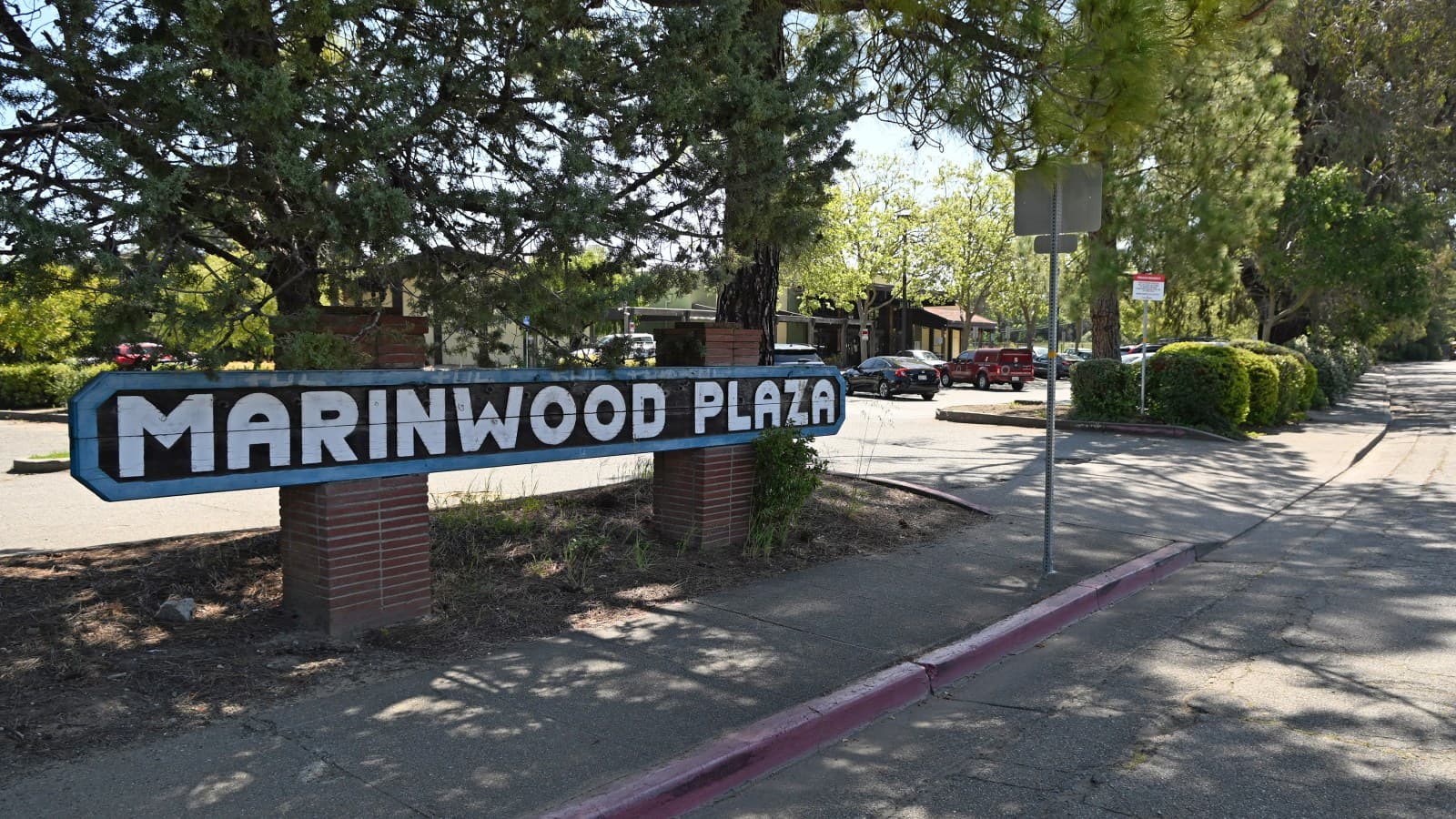
Marinwood, CA — affordable housing denied by Marin County in a jurisdiction under builder's remedy pressure
News coverage
125
Units Proposed
100%
AMI Restriction
Filed
Lawsuit
Approved
Outcome
Marin County, California · 2022–2024
Equity language as litigation weapon.
Proposal
Eden Housing files for 125 units at Marinwood Plaza
Eden Housing, a California-based affordable developer with decades of track record, proposes 125 units of 100% income-restricted housing at the Marinwood Plaza shopping center site on Las Gallinas Avenue in unincorporated San Rafael. The project is designed to serve low and very-low income households.
Approval
Marin County approves the project
The Marin County Planning Commission approves the project. Standard discretionary review is completed. Despite the political sensitivity of affordable housing in Marin County, the project clears the entitlement process.
Lawsuit Filed
"Marinwood Coalition Against Segregation" sues
A group calling itself the Marinwood Coalition Against Segregation files suit challenging the approval. Their legal theory: concentrating 100% affordable units in one location perpetuates residential segregation and violates anti-segregation principles. The name is deliberate — framing NIMBY opposition as a civil rights action.
Counter-Move
Eden Housing invokes SB 439
Eden Housing invokes California SB 439, which provides for attorney fee recovery against plaintiffs who file meritless lawsuits challenging affordable housing approvals. The statute was specifically designed to deter exactly this litigation pattern — post-approval lawsuits used not to win on the merits, but to impose costs and delay.
Outcome
Lawsuit dismissed — project proceeds
Facing fee exposure under SB 439, the coalition drops the lawsuit. The project moves forward. But the litigation added months to the timeline, increased legal costs for Eden Housing, and established a playbook that opponents in other California jurisdictions can study.
The Tactical Innovation
Equity Language as Weapon
This case is not about whether the lawsuit had merit — it did not. It is about the sophistication of the opposition. Using anti-segregation framing forces the developer into a defensive posture, makes political opposition look principled, and generates press coverage that undermines community support.
The Legislative Shield
SB 439 Fee Recovery
California SB 439 exists precisely for this scenario. It authorizes courts to award attorney fees against plaintiffs in CEQA suits targeting affordable housing projects when the suit lacks merit. Eden Housing's willingness to invoke it — early and explicitly — is what ended the litigation.
The Delay Cost
Months of Timeline Damage
The lawsuit was ultimately dismissed, but not before it added months to the project timeline and material legal costs. For a 100% affordable project operating on thin margins, litigation delay means construction financing stress, carry costs, and political momentum lost.
The Pattern Risk
A Replicable Playbook
The Marinwood lawsuit established a replicable playbook. Any developer building 100% affordable housing in California — particularly in communities with documented segregation histories — should now budget for post-approval litigation using anti-segregation framing, regardless of project quality.
“What if a 65/100 score had included post-approval litigation risk — and an SB 439 budget line — before Eden filed its first application?”
The People Who Decided This Case
Key officials and legal actors.
The developer, the opponents, and the legal mechanisms that defined the Marinwood outcome.
Eden Housing
Developer — Marinwood Plaza
125-unit, 100% affordable proposal
Documented Record
Received full county approval for 125-unit affordable project, then faced post-approval CEQA lawsuit. Successfully invoked SB 439 to defeat the suit and recover attorney fees.
California nonprofit affordable developer. Received county approval, then faced a post-approval CEQA lawsuit. Successfully invoked SB 439 to defeat the suit and recover attorney fees — the model for fighting frivolous post-approval litigation.
Marinwood Coalition Against Segregation
Post-Approval Litigation Group
Formed specifically to challenge approval
Documented Record
Filed post-approval CEQA lawsuit after forming specifically to challenge the project. Weaponized civil rights language by naming themselves 'Against Segregation.' Suit dismissed under SB 439.
The coalition name was deliberate: by calling themselves 'Against Segregation,' they weaponized civil rights language against a civil rights outcome. The lawsuit was filed after approval, using CEQA as the legal vehicle. Dismissed under SB 439.
Marin County Superior Court
Judicial Authority — SB 439 ruling
Fee-shifting decision
Documented Record
Dismissed the post-approval lawsuit and awarded attorney fees to Eden Housing under SB 439, establishing a precedent for deterring frivolous affordable housing litigation.
Dismissed the post-approval lawsuit. Authorized fee recovery for Eden Housing. Established the SB 439 deterrence strategy as effective against this class of litigation — a precedent developers can now cite.
California SB 439
Legislative Deterrent — Anti-SLAPP for Affordable Housing
Attorney fee recovery statute
Documented Record
Provides attorney fee recovery against plaintiffs who file meritless CEQA challenges to approved affordable housing. Eden Housing's invocation is the model case for the statute's deterrent function.
Senate Bill 439 provides attorney fee recovery against plaintiffs who file meritless CEQA challenges to approved affordable housing. Eden Housing's invocation is the model. Developers must budget for and announce SB 439 invocation at the moment litigation is filed.
Marin County Planning Commission
Discretionary Approval Authority
Pre-approval review body
Documented Record
Approved the project and recommended approval to the Board of Supervisors, finding the Marinwood Plaza site met all applicable criteria for affordable development.
Approved the project. The approval was then challenged in court. The gap between administrative approval and project completion — filled by litigation — is the core entitlement risk this case demonstrates.
Marin County Board of Supervisors
Final County Land Use Authority
Board approval body
Documented Record
Approved the project with full political support. The approval demonstrated that political backing alone does not prevent post-approval litigation risk and multi-month delays.
Supervisors approved. Political support was never the vulnerability — post-approval legal attack was. The supervisor stance illustrates how a project can have full political support and still face a multi-month litigation delay.
Opposition Record
Post-approval litigation. Reframed as civil rights.
The Marinwood Coalition didn't oppose at the hearing — they waited for approval, then sued. The litigation was the opposition strategy.
Marinwood Coalition Against Segregation
Post-approval CEQA lawsuit · Filed after county approval granted
Lawsuit Type
Post-approval CEQA
Legal Theory
Anti-segregation (CEQA)
Outcome
Dismissed — SB 439
Opposition Tactics
“We are not opposing affordable housing. We are opposing the concentration of poverty in a single neighborhood. This is a civil rights issue.”
The Key Differentiator
Source records that existed before approval.
Post-approval litigation is a risk category as predictable as zoning. It belongs in the pre-filing budget — always.
Post-Approval Litigation Is a Separate Risk Category
Approval is not completion. In California, any party can file a CEQA lawsuit within 30 days of approval. This adds 6-24 months to timelines and $200K-$800K in legal costs regardless of merit. Budget for it before filing — not after.
SB 439 Is a Legal Weapon — Invoke It Early and Visibly
California SB 439 authorizes attorney fee recovery against meritless CEQA challenges to approved affordable housing. Visible invocation at the moment litigation is filed deters further action. It must be budgeted, announced, and used — not discovered after the lawsuit arrives.
Anti-Segregation Framing — Documented in 4+ Prior Cases
The Marinwood Coalition's legal theory — CEQA challenge framed as anti-segregation — appeared in at least 4 other Marin County affordable housing cases before this one. The pattern: coalition name invoking civil rights, CEQA vehicle, post-approval timing. Detectable before filing.
Transit-Adjacent Infill Sites Attract Sophisticated Opposition
High-visibility infill sites on transit corridors attract more resourced opposition groups — those with attorneys and litigation experience. This is a location-specific risk factor visible in the site's context before application.
The Pre-Filing Research
What RealClear finds at Marinwood Plaza.
Before a single application is filed. Before a single approval is granted. Before a single opposition group incorporates.
Site Analysis
Marinwood Plaza
Las Gallinas Ave, Unincorporated San Rafael, CA
Approval Status
Litigation Risk
Legal Defense
Community Risk
Litigation Pattern Flag
“Coalition Against Segregation” lawsuit mirrors tactics used in 4 other Marin County affordable projects. Anti-segregation framing is the new CEQA: delay via lawsuit after approval.
Legislative Backstop — SB 439
California SB 439 authorizes fee recovery against plaintiffs who file meritless CEQA suits targeting affordable housing. Eden Housing invoked it. Lawsuit dismissed. Frivolous litigation strategy defeated.
Recommendation
MODERATE LITIGATION RISK. Approval pathway is viable. Budget for post-approval lawsuit defense. SB 439 provides fee-recovery backstop — invoke early and visibly to deter filing.
The Pre-Flight Checklist
Four source-record factors. All publicly available.
The Marinwood litigation strategy did not appear from nowhere. It was a predictable evolution of prior Marin County opposition tactics — visible in public records before Eden Housing filed.
Marin County Affordable Housing Litigation History
Comparable outcomes reviewThe Comparable outcomes review tracks litigation against affordable housing approvals by jurisdiction. Marin County has a documented history of post-approval legal challenges to affordable projects, including CEQA suits and nuisance claims. The Marinwood case fits a pattern that was established and visible before Eden's application.
Anti-Segregation Framing in Prior Opposition Groups
Community risk reviewThis cited case review examined the Marinwood record and selected California affordable-housing comparables. Similar framing appeared in two cited Marin County cases, giving the coalition's strategy a documented local precedent.
SB 439 Protection — Pre-Filing Budget Guidance
Zoning reviewThe Zoning review reads California's housing statutes, including SB 439's fee-recovery provisions. A pre-application source review surfaces the statute as an available defense mechanism and recommended that Eden Housing's counsel invoke it explicitly and early as a deterrent — before any opposition group incorporated.
Post-Approval Litigation Timeline Risk
Approval path reviewFor 100% affordable projects, post-approval litigation is not just a legal risk — it is a financial structure risk. Construction lenders price delay into their terms. The Approval path review models approval-to-groundbreaking timelines based on comparable projects in the same jurisdiction, including expected post-approval litigation windows.
The Marinwood case is a template, not an anomaly:
Any 100% affordable project in a wealthy California jurisdiction should now price post-approval litigation into its underwriting. The Marinwood Coalition lost — but they cost Eden Housing real money and real time. SB 439 is available, but only if you know to invoke it.
The cited RealClear read includes an SB 439 budget line.
Cited Brief
How RealClear built this assessment.
This source review is backed by a traceable source trail — real articles, real officials, real patterns.
News records reviewed
Officials identified
Comparable approvals reviewed
Opposition groups in record
Event Timeline
Key milestones in the entitlement journey
2024
Eden Housing files for 125 units at Marinwood Plaza
2024
Marin County approves the project
2024
'Marinwood Coalition Against Segregation' sues
2025
Eden Housing invokes SB 439 — fee recovery against plaintiff
2025
Lawsuit dismissed — project proceeds
2024
Eden Housing files for 125 units at Marinwood Plaza
2024
Marin County approves the project
2024
'Marinwood Coalition Against Segregation' sues
2025
Eden Housing invokes SB 439 — fee recovery against plaintiff
2025
Lawsuit dismissed — project proceeds
Key Actors
Decision-makers and their positions
Marin County Planning Commission
Approval Body
Approved despite political sensitivity of affordable housing in Marin County
Marinwood Coalition Against Segregation
Post-Approval Litigant
Used equity language as litigation weapon — framed NIMBY opposition as a civil rights action
Opposition Record
Organized opposition groups
Marinwood Coalition Against Segregation
Organized litigation group with legal resources
Tactics
Post-approval lawsuit using anti-segregation framing to challenge affordable housing concentration
Track Record
Lawsuit dismissed after SB 439 fee exposure — but added months of timeline and legal costs
Potential Allies
Groups that may support the project
California SB 439 Framework
Legal protection
Attorney fee recovery against plaintiffs who file meritless lawsuits challenging affordable housing approvals
Jurisdiction Pattern
What history tells us about this jurisdiction
Approval history
1 of 1 — approved and upheld, but litigation added months
Recent Shifts
SB 439 is deterring but not eliminating post-approval affordable housing litigation in California
Source read
The lawsuit had no merit. But the sophistication of the opposition — using anti-segregation framing — forced the developer into a defensive posture. SB 439 budget line should be in every California affordable housing pro forma.
Cited research compiled from 5 news articles, Marin County planning records, SB 439 legislative text, and comparable California post-approval litigation
The lawsuit had no merit
The lawsuit had no merit. But the sophistication of the opposition — using anti-segregation framing — forced the developer into a defensive posture. SB 439 budget line should be in every California affordable housing pro forma. Cited research compiled from 5 news articles, Marin County planning records, SB 439 legislative text, and comparable California post-approval litigation
How this was assembled: Every source record ties to a public source you can verify yourself — news coverage, hearing records, court filings, public testimony. No scraped gated platforms, no invented engagement numbers, no attributions that aren’t on the page. RealClear surfaces source records; your team decides. See our methodology for the full sourcing standard.
Primary Source Documents
5 DocumentsEvery finding cited to the source. Click any document to preview it directly. Source-record patterns visible to experienced entitlement analysts months before the hearing.
Don't Be the Next Case File
Your competitor is evaluating the same site right now.
RealClear runs a full entitlement risk analysis — zoning, approval pathway, community opposition, litigation risk, and comparable outcomes — fully analyzed. Before any attorney is billed. Before any filing fee is paid.
Cited research summary · Not legal advice · Verify independently before making investment decisions