Case File · Sumter County, South Carolina
The third solar project the same county blocked.
Treaty Oak Clean Energy filed for a 170 MW, 1,700-acre solar project in Sumter County, SC. The BZA voted unanimously to deny the Special Exception in May 2025. It was the third solar project Sumter citizens had blocked. The comparable pattern was in public records before Treaty Oak submitted its first application.
Cited site read: 20/100 and surfaced two prior solar denials in the same county before the first filing.
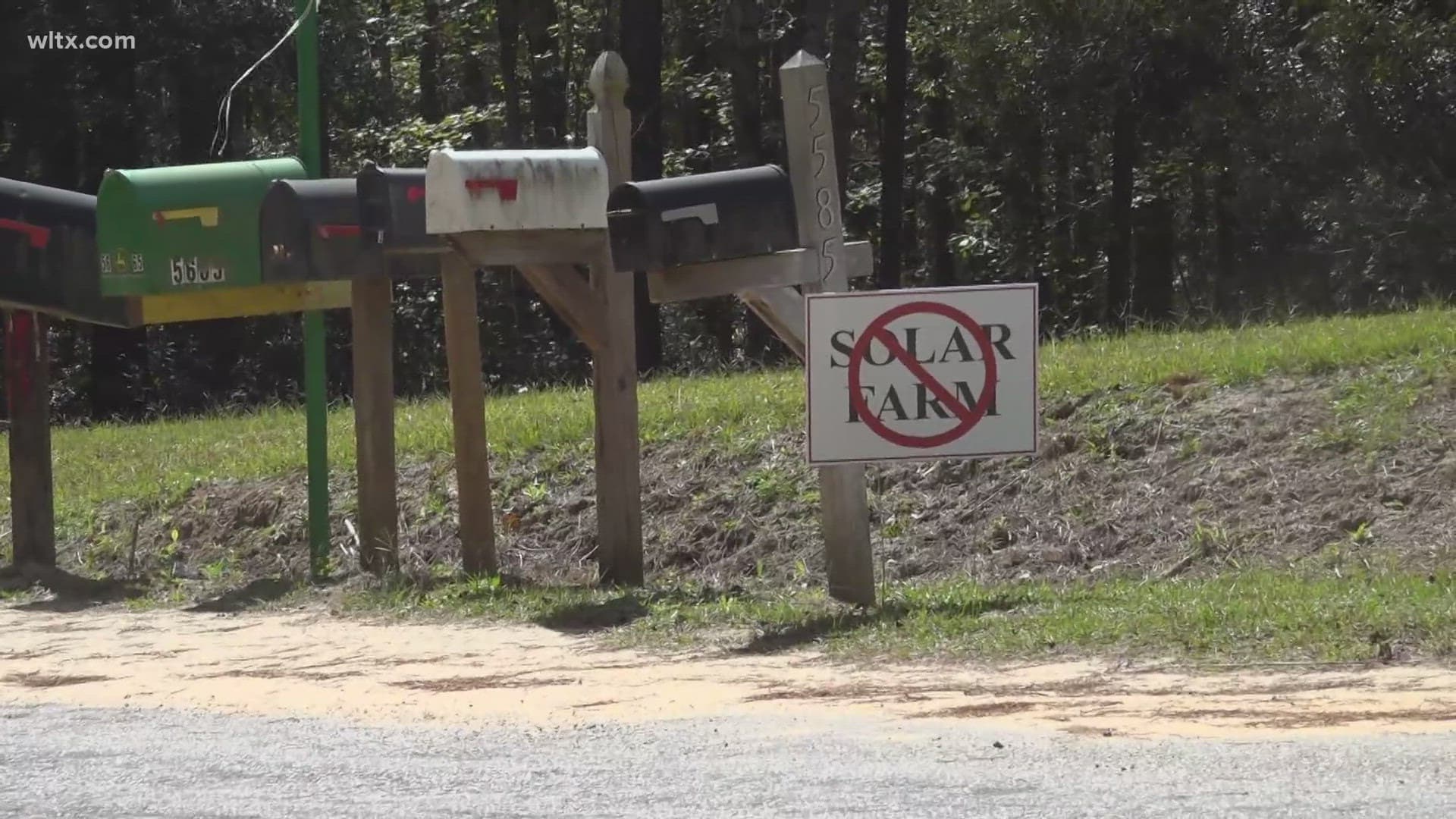
Sumter County, SC — solar farm denied as rural county residents push back on large-scale land conversion
News coverage
170 MW
Project Capacity
1,700 ac
Acreage
Unanimous
BZA Vote
2 Before
Prior Denials
Sumter County, South Carolina · 2023–2025
The pattern the developer ignored.
2021–2022
Solar developers identify Sumter County farmland as target market
Sumter County's combination of flat terrain, strong sun hours, and available agricultural land attracts multiple solar developers. The county's rural character and large land parcels make it appealing for utility-scale projects. The first applications begin appearing in BZA dockets. Local farmers and landowners begin monitoring the trend.
2023
First solar Special Exception denied unanimously — community coalesces
The first large-scale solar Special Exception application comes before the Sumter County BZA. Opposition cites farmland conversion, visual impact on agricultural character, concerns about long-term land use commitment, and inadequate decommissioning guarantees. The BZA denies unanimously. The community has organized, won, and established communication infrastructure for future applications.
Late 2023
Sumter Citizens Against Industrial Solar formally incorporates
Following the first denial, Sumter County opposition organizers formally incorporate a citizen group to monitor future applications and coordinate response. The group builds email lists, recruits county landowners as members, and establishes relationships with BZA members and county council members. They are now a permanent fixture in the county's land use process.
2024
Second solar project denied — opposition now battle-tested
A second solar developer files a Special Exception in Sumter County without apparent awareness of the first denial. The same community opposition mobilizes again — now with two years of experience, documented arguments, established media relationships, and a prior win. The BZA denies the second application. Two-for-two. The comparable record sits in public BZA archives.
Early 2025
Treaty Oak Clean Energy files 170 MW application near Black River Rd
Treaty Oak Clean Energy, a Texas-based utility-scale solar developer, files for a Special Exception for a 170 MW project spanning approximately 1,700 acres near Black River Road, Sumter County. The project is styled the 'White Palmetto Solar Farm.' Two prior solar denials are in the public BZA record. The community opposition infrastructure is fully intact. Treaty Oak does not appear to have engaged community stakeholders before filing.
Spring 2025
BZA public hearings draw organized opposition; three core arguments deployed
BZA public hearings on the White Palmetto application draw hundreds of opponents organized by Sumter Citizens Against Industrial Solar. Three core arguments are deployed: permanent conversion of prime South Carolina farmland, inadequate decommissioning financial assurance, and precedent effect on the county's agricultural identity. Treaty Oak presents economic benefits — tax revenue, construction jobs, landowner payments. The economic argument fails to move the board.
May 2025
BZA votes unanimously to deny — third consecutive solar rejection
The Sumter County BZA votes unanimously to deny Treaty Oak's Special Exception application for the White Palmetto Solar Farm. It is the third consecutive solar project denied in the county. Treaty Oak announces it will appeal to the South Carolina Public Service Commission — a state-level body that can override local zoning for energy facilities — beginning a costly, multi-year alternative pathway.
2025 (Ongoing)
Treaty Oak pursues SC PSC appeal; county considers solar moratorium
Treaty Oak's SC Public Service Commission appeal is pending. Meanwhile, Sumter County Council members have discussed a formal solar moratorium to preempt future applications during the PSC process. The opposition group continues monitoring the docket. The SC PSC process can take 2-4 years and requires Treaty Oak to demonstrate public need — a standard that pure commercial solar projects have historically struggled to meet.
The Ignored Signal
Two Prior Denials
The most powerful predictor of a local government denial is a prior denial — especially when the same community organized the opposition. Two prior solar denials in Sumter County were sitting in public BZA records. This is not a subtle signal. It is a flashing red light.
The Discretionary Trap
Special Exception — BZA Has Full Discretion
Sumter County requires a Special Exception for large-scale solar — a fully discretionary BZA proceeding. The board does not need to cite a technical deficiency to deny. They can weigh community impact, character concerns, and cumulative effect. Against a community that had won twice, discretion was inevitably exercised against the applicant.
The Battle-Tested Opposition
Community Won Twice
This was not a first-time opposition group finding its voice. By the Treaty Oak hearing, Sumter County's anti-solar coalition had organized twice, testified twice, and won twice. They had board relationships, documented arguments, and a track record of success. This is the most dangerous opposition environment in real estate development.
The Costly Alternative
SC Public Service Commission Appeal
After the BZA denial, Treaty Oak is appealing to the SC Public Service Commission — a state-level body that can override local zoning for energy facilities. This process takes years, costs hundreds of thousands of dollars, and has an uncertain outcome. It is not a viable substitute for a site selection process that avoids hostile jurisdictions.
Key Decision Makers & Stakeholders
The people who decided this project's fate.
Sumter County BZA
Board of Zoning Appeals
Sumter County, South Carolina
Documented Record
Issued unanimous denial — the third consecutive solar rejection. Cited agricultural character incompatibility and inadequate decommissioning financial assurance, a documented standard no solar developer has yet satisfied.
The BZA's unanimous denial — the third consecutive solar rejection — reflects a board that has developed a consistent legal rationale across multiple applications. Their decommissioning financial assurance requirement is a documented standard that no solar developer has yet satisfied in Sumter County. It functions as a de facto bar.
Sumter Citizens Against Industrial Solar
Organized Opposition Group
Sumter County, South Carolina
Documented Record
Won three consecutive BZA hearings against solar applications. Holds established relationships with board members and maintains documented arguments, media relationships, and community organizing infrastructure.
This opposition group is the most dangerous type for a solar developer: battle-tested, legally sophisticated, and publicly credible. They have won three consecutive BZA hearings, hold established relationships with board members, and have the documented arguments, media relationships, and community organizing infrastructure to defeat any future application.
Treaty Oak Clean Energy
White Palmetto Solar Farm Developer
Texas / Sumter County, SC
Documented Record
Filed Special Exception application for 1,700-acre White Palmetto Solar Farm relying on economic benefits argument — the same approach that failed in two prior denials. Entered hearing without community benefit agreement or enhanced decommissioning proposal.
Treaty Oak's application strategy relied on economic benefits — the same argument that failed in the two prior denials. They did not appear to have engaged community stakeholders before filing, did not modify the Special Exception application to address the BZA's documented objections from prior cases, and entered the hearing without a community benefit agreement or enhanced decommissioning proposal.
Sumter County Landowners (Opposition)
Agricultural Property Owners
Black River Road area, Sumter County
Documented Record
Multigenerational farming families testified against the project with personal, place-rooted opposition. Their testimony gave BZA members political cover to deny on community character grounds.
Multigenerational farming families provided the most politically effective opposition voices. Their testimony — personal, specific, and rooted in place — gave the BZA members the political cover to deny on community character grounds. Against this kind of testimony, economic benefit arguments from a Texas developer are not persuasive.
SC Public Service Commission
State Energy Regulatory Body
Columbia, South Carolina
Documented Record
Holds jurisdiction over energy facility siting where local governments have denied permits. The alternative pathway requires demonstration of public need — a standard commercial solar projects have historically struggled to meet against organized opposition.
The SC PSC is Treaty Oak's alternative pathway — but it is a difficult one. The Commission must find public need for the facility, a standard that commercial solar projects have historically struggled to meet against an organized opposition. The process takes 2-4 years and costs hundreds of thousands of dollars. It is not a viable substitute for avoiding hostile jurisdictions.
Sumter County Council
County Governing Body
Sumter County, South Carolina
Documented Record
Publicly endorsed the BZA's denial record, giving the opposition political cover beyond the quasi-judicial BZA. Signals that a solar moratorium is a genuine possibility.
County Council members publicly endorsed the BZA's denial record, giving the opposition political cover beyond the quasi-judicial BZA. Their statements signal that a solar moratorium is a genuine possibility — and that Treaty Oak's PSC appeal will face a unified county government opposed to its project.
“What if you knew Sumter County had denied two solar projects before you signed the land option?”
The Pre-Filing Research
What RealClear finds near Black River Road.
Before a land option is signed. Before a Special Exception is filed. Before a developer walks into a hearing room where the opposition has already won twice.
Site Analysis
Near Black River Rd
Sumter County, SC · 1,700 acres · 170 MW
BZA Vote
Prior Denials — Same County
Community Risk
Approval Pathway
Comparable Alert — Pattern Match
Sumter County BZA has denied solar Special Exceptions twice in the prior 24 months. This is the third filing. The community has organized, won twice, and is expecting a third opportunity.
Post-Denial Path — SC Public Service Commission
Developer now appealing to SC Public Service Commission — a lengthy, costly, and uncertain alternative approval path that sidesteps local zoning entirely. Outcome is not assured.
Recommendation
EXTREME DENIAL RISK. Comparable record shows zero solar Special Exception approvals in Sumter County. Do not file without a fundamentally different community engagement strategy or alternative site. Third time is not the charm here.
The Pre-Filing Checklist
Four source-record factors. All publicly available.
Two prior solar denials were sitting in Sumter County's public BZA records. The comparable signal was not hidden. RealClear reads those records so your team doesn't have to.
Two Prior Solar Denials — Same County, Same Board
Comparable outcomes reviewThe Comparable outcomes review scans BZA decision records within 50 miles of any proposed site. Two prior solar Special Exception denials in Sumter County appears in the first paragraph of the cited RealClear read. This is the most actionable data point in any site selection process: a community that has demonstrated it will say no.
Special Exception Required — Fully Discretionary
Zoning reviewThe Zoning review identifies the required approval pathway for large-scale solar in Sumter County: a Special Exception before the BZA. Special Exceptions are not administrative permits — they require affirmative BZA votes and can be denied for any substantive planning reason. Against a community with two prior wins, this pathway was a dead end.
Active, Experienced Opposition — Cited Community Record
Community risk reviewThis cited case review examined planning commission hearing registrations and public comment filings. The same opposition coalition that won twice in Sumter County had an established online presence, documented testimony, and board relationships. A pre-filing community-risk review returns a CRITICAL opposition risk level.
SC PSC Appeal Path — Viable But Costly
Approval path reviewThe Approval path review identifies the SC Public Service Commission as an alternative approval mechanism for energy facilities facing local opposition. This path takes 2-4 years, costs hundreds of thousands of dollars in regulatory proceedings, and has no guaranteed outcome. It is a last resort — not a site selection strategy.
The cost of ignoring the comparable record:
Treaty Oak is now appealing to the SC Public Service Commission. That proceeding will take years and cost hundreds of thousands of dollars — for a project that could have been screened out during site selection. The land option is exercised. The legal team is engaged. The community is energized for round three.
A RealClear analysis catches two prior denials before you sign the land option.
Cited Brief
How RealClear built this assessment.
This source review is backed by a traceable source trail — real articles, real officials, real patterns.
News records reviewed
Officials identified
Comparable approvals reviewed
Opposition groups in record
Event Timeline
Key milestones in the entitlement journey
2023
First solar project denied in Sumter County
2024
Second solar project denied — same community, same outcome
2025
Treaty Oak files for 170 MW project near Black River Rd
May 2025
BZA votes unanimously to deny — third consecutive denial
2023
First solar project denied in Sumter County
2024
Second solar project denied — same community, same outcome
2025
Treaty Oak files for 170 MW project near Black River Rd
May 2025
BZA votes unanimously to deny — third consecutive denial
Key Actors
Decision-makers and their positions
Sumter County BZA
Special Exception Authority
Three consecutive unanimous solar denials — categorical opposition established
Treaty Oak Clean Energy
Applicant
Filed despite two prior denials on the public record — now appealing to SC Public Service Commission
Opposition Record
Organized opposition groups
Sumter County Anti-Solar Coalition
County-wide — organized, battle-tested, has won twice before
Tactics
BZA testimony, farmland conversion arguments, board relationship building
Track Record
Three wins in a row — the most dangerous opposition environment in solar development
Engagement Strategy
Do not file in Sumter County. Two prior denials on the public record made the third inevitable.
Risk Triggers
What activates opposition
- Large-scale solar on farmland
- Visual impact
- Agricultural land loss
Jurisdiction Pattern
What history tells us about this jurisdiction
Approval history
0 of 3 solar Special Exceptions approved in Sumter County
Recent Shifts
Pattern is hardening with each denial — opposition gets stronger, not weaker
Source read
The most powerful predictor of a denial is a prior denial. Two prior solar denials in the same county were in public BZA records. Treaty Oak filed anyway.
Cited research compiled from 5 news articles, Sumter County BZA records, and SC Public Service Commission filings
Three consecutive unanimous solar denials in Sumter County — Treaty Oak's 170 MW application was the third.
Sumter's BZA has now unanimously denied three consecutive solar Special Exceptions on farmland. The most powerful predictor of a denial is a prior denial in the same record — Treaty Oak filed anyway and is appealing to the SC Public Service Commission. The coalition has been battle-tested twice before; infrastructure is in place.
Theme distribution
How this was assembled: Every source record ties to a public source you can verify yourself — news coverage, hearing records, court filings, public testimony. No scraped gated platforms, no invented engagement numbers, no attributions that aren’t on the page. RealClear surfaces source records; your team decides. See our methodology for the full sourcing standard.
Primary Source Documents
7 DocumentsEvery finding cited to the source. Click any document to preview it directly. Source-record patterns visible to experienced entitlement analysts months before the hearing.
Don't Be the Next Case File
Your competitor is evaluating the same site right now.
RealClear surfaces comparable denials, community opposition history, and approval pathway requirements before you commit to a site. The comparable record is always there. You just have to read it.
Cited research summary · Not legal advice · Verify independently before making investment decisions