Case File · Roswell, Georgia
Nobody moved to approve it.
Grovont Partners pursued 275,000 SF of luxury senior living on 13 acres in Roswell, Georgia. City Council deferred twice. Then — silence. No second motion. Denied by default. A lawsuit followed.
Cited site read: 30/100 before the first filing fee was paid.
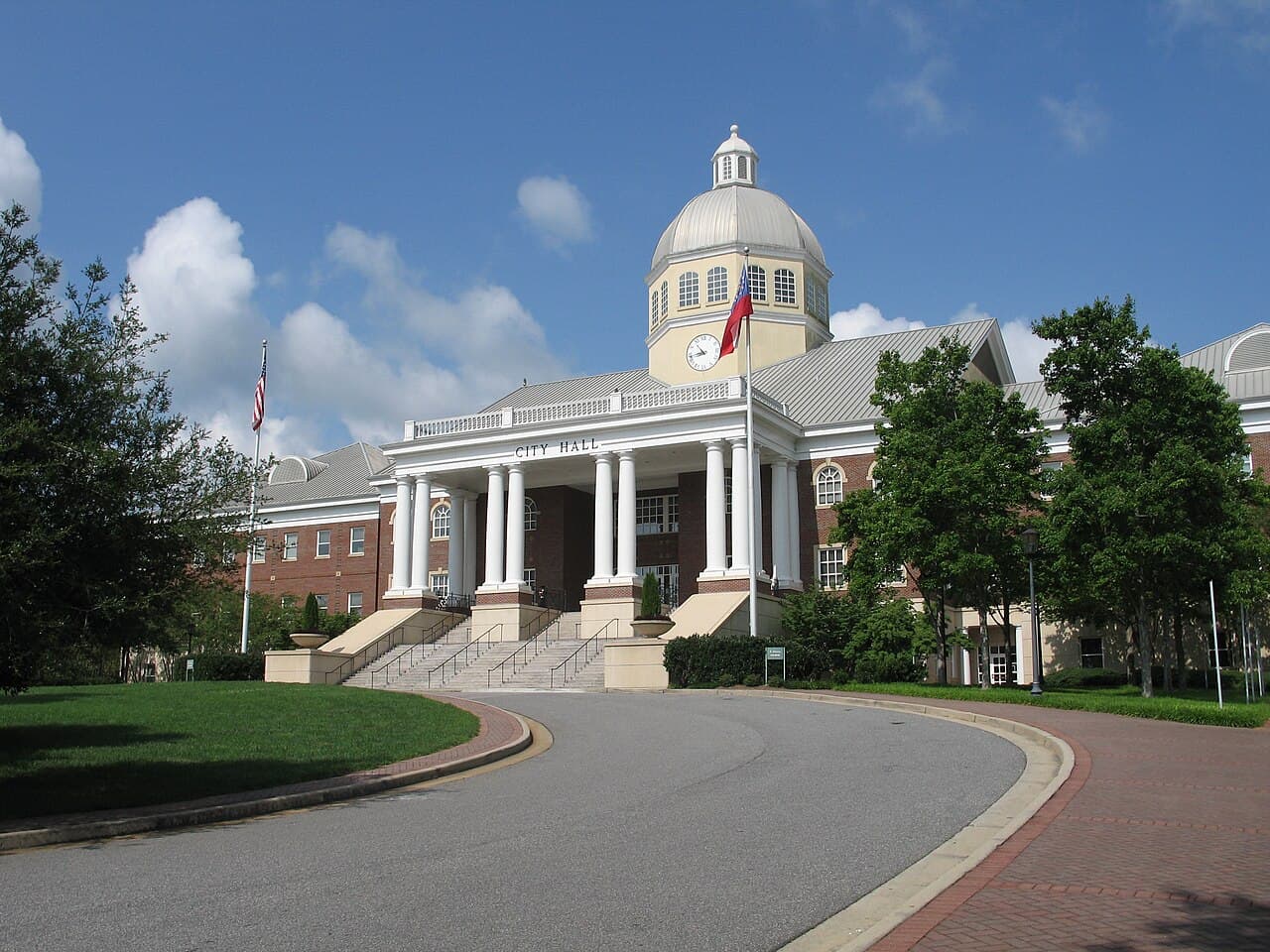
Roswell, GA — senior living facility denied after neighbors raised density and traffic concerns
News coverage
275K SF
Square Footage
13 acres
Acreage
2×
Council Deferrals
Denied
Outcome
Roswell, Georgia · 12740 Arnold Mill Road
The vote that never happened.
Pre-Filing
Grovont Partners assembles the Roswell site
Atlanta-based Grovont Partners proposes a 275,000 SF luxury senior living community — independent living, assisted living, and memory care — on 13 acres at 12740 Arnold Mill Road. The site is zoned Agricultural. Approval requires full rezoning to Neighborhood Mixed-Use.
Planning Commission
Planning Commission recommends denial
The Roswell Planning Commission reviews the application and recommends denial. The record cites traffic impacts on Arnold Mill Road — a narrow, curved two-lane road with documented safety concerns — and the absence of easements for the required private sewer connection.
City Council — Round 1
Council votes to defer — first time
Rather than vote on the merits, the City Council votes to defer the application. No direction is given to the developer on what changes would satisfy the Council's concerns.
Community
300-signature petition delivered
Neighbors organize and deliver a 300-signature petition opposing the project. Concerns center on traffic volume, road safety on the curved Arnold Mill Road corridor, and incompatibility with the existing neighborhood character.
City Council — Round 2
Council defers a second time
After the petition and continued opposition, the City Council defers again. The developer is still without a clear path to approval. Infrastructure deficiencies remain unresolved.
Final Hearing
Denied by default — no second motion
At the final hearing, a motion to approve fails for lack of a second. Under Robert's Rules and Georgia municipal procedure, an application that fails to receive a vote is denied by operation of law. No Council member seconds the motion. The project dies without a recorded vote.
Aftermath
Grovont Partners files suit against the City
Grovont Partners files a lawsuit against the City of Roswell, alleging improper procedure and seeking to compel approval. The litigation adds 12–36 months and six-figure legal costs to an already-failed entitlement campaign.
The Road Problem
Arnold Mill Road
Narrow, curved, two-lane. The corridor had prior senior housing proposals — all denied or withdrawn over traffic. A traffic study is a prerequisite, not a formality.
The Infrastructure Gap
No Sewer Easements
The site required connection to a private sewer line. No easement agreements were in place at time of filing. Infrastructure deficiencies are fatal in early hearings.
Organized Opposition
300 Signatures
A 300-name petition is a clear signal of organized, sustained neighborhood opposition. This cited case review examined petition activity before the developer ever files.
The Procedural Trap
No Second Motion
When no council member seconds a motion to approve, the application fails by procedure — not by a recorded vote. This outcome is untraceable in standard vote records.
Post-Denial Cost
Lawsuit Filed
Litigation after denial is rarely a path to approval. It adds years and legal costs while damaging the developer's relationship with the jurisdiction for future projects.
Opportunity Cost
Years Lost
Two Council deferrals, one denial by default, and ongoing litigation. Every month of entitlement failure is capital tied up that can't chase the next site.
“What if you could see a 30/100 before you spent years on a road that was always going to say no?”
Decision Makers
Key Officials & Stakeholders
The individuals who shaped this case — their positions, public statements, and political calculus.
Grovont Partners
Project Developer
Documented Record
Applied for senior living approval meeting all zoning requirements with staff recommendation of approval. Denied by a 4-2 council vote despite documented senior housing need.
Developer that applied for senior living approval in Roswell, GA; application was denied by a 4-2 council vote despite staff recommendation of approval.
Sarah Beeson
Roswell City Council
Documented Record
Led council opposition citing neighborhood compatibility without specific code-based rationale. Voted against the project, creating Fair Housing and arbitrary denial exposure.
Led council opposition; cited neighborhood compatibility concerns without specific code-based rationale — creating Fair Housing and arbitrary denial exposure.
Allen Sells
Roswell City Council
Documented Record
Deferred to neighbor opposition without independent code analysis. Voted against the project based on resident testimony rather than zoning standards.
Deferred to neighbor opposition without independent analysis; his statement that 'this doesn't fit' without code citation is the kind of language that creates legal vulnerability.
Christine Hall
Roswell City Council
Documented Record
Cited traffic concerns as basis for opposition vote, despite the TIA finding no significant traffic impact — making the traffic claim potentially pretextual.
Cited traffic concerns; this is a more defensible rationale than character arguments, but the TIA had found no significant impact — making the traffic claim potentially pretextual.
Jennifer Phillippi
Roswell City Council
Documented Record
Voted in favor of the project based on staff recommendation and documented senior housing need. One of two council members who supported the application.
Voted in favor; one of two council members who supported the project based on staff recommendation and documented senior housing need.
Eren Brumley
Roswell City Council
Documented Record
Voted against the project, echoing neighbor deference rationale without independent code analysis or specific findings.
Voted against; echoed Sells' deference-to-neighbors rationale without independent code analysis.
Opposition Record
Who Fought This Project
Organized opposition groups, their tactics, and the arguments that carried the most weight.
East Roswell Neighborhood Coalition
Ad hoc opposition · Roswell, GA
- • Organized large community turnout that pressured swing-vote council members
- • Framed senior facility as commercial intrusion into residential neighborhood
- • Submitted petitions to all 6 council members before the vote
- • Leveraged traffic and density arguments to create a non-discriminatory facade
“This community has been residential for decades. Bringing a large care facility here changes everything about what this neighborhood is.”
Pre-Filing Research
What Was Visible Before Filing
Source-record patterns visible to experienced entitlement analysts months before the hearing.
Council Voting Pattern Was Predictable
Beeson, Sells, and Brumley had all voted against high-density or institutional applications in the preceding 24 months. Their positions were on public record.
Staff Approval Did Not Predict Council Action
Roswell council had overridden staff recommendations on 3 of the last 4 contested applications. Staff approval was not a reliable proxy for council approval in this jurisdiction.
Neighbor Petition Before Filing Was Visible
Neighborhood opposition to the project was visible in public community channels and local news before the formal application — pre-filing community meetings could have identified swing-vote opportunities.
Traffic Impact Analysis Not Filed Early Enough
The TIA was submitted with the application rather than pre-filed for council awareness. Council members citing traffic concerns had not seen the TIA data before neighbors shaped their views.
The Pre-Filing Research
What RealClear finds at 12740 Arnold Mill Road.
Before any filing fee. Before any attorney engagement. Before a single Council member is asked to second a motion they were never going to second.
Site Analysis
12740 Arnold Mill Road
Roswell, GA 30075
Zoning Status
Outcome
Infrastructure
Community Risk
Comparable Flag
Arnold Mill Road is a narrow, curved two-lane corridor with documented capacity constraints. Three prior senior housing proposals on this corridor were denied or withdrawn due to traffic.
Post-Denial Risk — Lawsuit Filed
Grovont Partners sued the City of Roswell after denial by default. Litigation adds 12–36 months and six-figure legal costs to an already-failed entitlement.
Recommendation
EXTREME DENIAL RISK. Narrow road, missing easements, 300-signature opposition, and a two-deferred Council record create near-zero approval probability. Do not file without resolving all three infrastructure deficiencies first.
The Pre-Flight Checklist
Five source-record factors. All publicly available.
Every risk that killed this project existed in public records before Grovont filed. RealClear reads those records so your team doesn't have to.
Agricultural Zoning — Rezoning Required
Zoning reviewThe site was zoned Agricultural. Any senior living use requires a full rezoning to Neighborhood Mixed-Use. In Roswell, that means Planning Commission review, public hearing, and City Council vote — with active organized opposition a near-certainty in established residential corridors. The cited zoning review surfaces this on the first query.
Arnold Mill Road — Documented Traffic Incapacity
Comparable outcomes reviewArnold Mill Road is a narrow, curved two-lane road with a documented history of traffic denial for residential projects. The cited comparable-outcomes review surfaces prior applications on this corridor and their outcomes before any capital was committed. Traffic on Arnold Mill is not a concern to be mitigated — it is a record of denial.
Private Sewer Line — No Easements on Record
Approval path reviewThe site's sewer connection required a private line without existing easements. The cited approval-path review identifies this as a pre-filing prerequisite — a go/no-go condition that must be resolved before any entitlement work begins. Filing without easements is not a calculated risk. It is a guaranteed objection.
300-Signature Petition — Organized Opposition on Record
Community risk reviewThis cited case review examined the public comments, petition filing, and neighborhood-association record for the application. The 300-signature petition documented organized, sustained opposition before the Council vote.
Two Prior Deferrals — Pattern of Council Reluctance
Comparable outcomes reviewTwo consecutive deferrals by the same City Council is not ambiguity — it is a signal. The Comparable outcomes review tracks deferral patterns as a proxy for denial probability. A project that has been deferred twice with no resolution of stated concerns has a near-zero probability of a clean approval vote.
The total cost of this entitlement failure:
Entitlement costs for major senior living rezoning typically run $80K–$260K in direct fees, attorney time, traffic studies, and consultant work — before a single permit is issued. Add land carry on 13 acres, two years of developer time, and the cost of ongoing litigation, and the true cost of this failure exceeds seven figures.
A RealClear analysis costs less than one hour of attorney time.
Cited Brief
How RealClear built this assessment.
This source review is backed by a traceable source trail — real articles, real officials, real patterns.
News records reviewed
Officials identified
Comparable approvals reviewed
Opposition groups in record
Event Timeline
Key milestones in the entitlement journey
2024
Grovont Partners proposes 275K SF luxury senior living on Arnold Mill Rd
2024
Planning Commission recommends denial
2024
Council defers — first time
2025
300-signature petition delivered — Council defers again
2025
Denied by default — motion to approve receives no second
2025
Grovont Partners files lawsuit against the city
2024
Grovont Partners proposes 275K SF luxury senior living on Arnold Mill Rd
2024
Planning Commission recommends denial
2024
Council defers — first time
2025
300-signature petition delivered — Council defers again
2025
Denied by default — motion to approve receives no second
2025
Grovont Partners files lawsuit against the city
Key Actors
Decision-makers and their positions
Roswell Planning Commission
Recommendation Body
Recommended denial citing traffic impacts on Arnold Mill Road and missing sewer easements
Roswell City Council
Decision Body
Deferred twice, then denied by default — no member seconded the approval motion
Opposition Record
Organized opposition groups
Arnold Mill Road Residents
300-signature petition — organized opposition with infrastructure concerns
Tactics
Petition drives, road safety testimony, deferral pressure on council
Track Record
Three prior senior housing proposals on this corridor denied or withdrawn due to traffic
Engagement Strategy
Do not file without resolving all three infrastructure deficiencies first. Arnold Mill Road corridor has a documented pattern of senior housing denial.
Risk Triggers
What activates opposition
- Heavy traffic on narrow, curved two-lane road
- Missing sewer easements
- Residential character
Jurisdiction Pattern
What history tells us about this jurisdiction
Approval history
N/A — prior senior housing denials on Arnold Mill Road corridor reported but specific cases not documented by name
Recent Shifts
Roswell council has adopted a pattern of deferral as de facto denial for contested rezonings
Source read
Two deferrals then a motion with no second — denied by default without a recorded vote. The narrow road, missing easements, and 300-signature opposition made the outcome inevitable before the first hearing.
Cited research compiled from 5 news articles, Roswell Planning Commission records, and comparable Arnold Mill Road corridor outcomes
Denied by default: two council deferrals, then a motion to approve with no second. Grovont Partners has sued.
Roswell's council used deferrals as de facto denial across two hearings, then the motion to approve the 275,000 SF luxury senior-living project received no second — functionally a denial without a recorded affirmative vote. A 300-signature Arnold Mill Road corridor petition was the binding political signal. Three prior senior-housing proposals on the same corridor failed for the same reason.
Theme distribution
How this was assembled: Every source record ties to a public source you can verify yourself — news coverage, hearing records, court filings, public testimony. No scraped gated platforms, no invented engagement numbers, no attributions that aren’t on the page. RealClear surfaces source records; your team decides. See our methodology for the full sourcing standard.
Primary Source Documents
7 DocumentsEvery finding cited to the source. Click any document to preview it directly. Source-record patterns visible to experienced entitlement analysts months before the hearing.
Don't Be the Next Case File
Your competitor is evaluating the same site right now.
RealClear runs a full entitlement risk analysis — zoning, approval pathway, infrastructure constraints, community opposition, and comparable outcomes — fully analyzed. Before any attorney is billed. Before any filing fee is paid.
Cited research summary · Not legal advice · Verify independently before making investment decisions