Case File
Saline Township Voted No. Related Sued. Stargate Moved Forward.
575-acre Stargate campus moved forward through consent judgment after rezoning denial, litigation, a $14M community package, and parallel utility approvals.
Case File · Saline Township, Washtenaw County, Michigan
Township voted no. Related sued. Settlement rewrote the deal.
Saline Township denied Related Digital's 575-acre rezoning request 4-1 on September 10, 2025. Two days later, RD Michigan Property Owner I LLC and landowners sued. By October 15, the parties had a consent judgment with $14 million in community funding, strict operating conditions, and a litigation-driven path to approval. By March 2026, township updates showed active site work underway.
Cited site read: 59/100 — viable only for a well-capitalized developer prepared for litigation, concessions, and a parallel utility path.
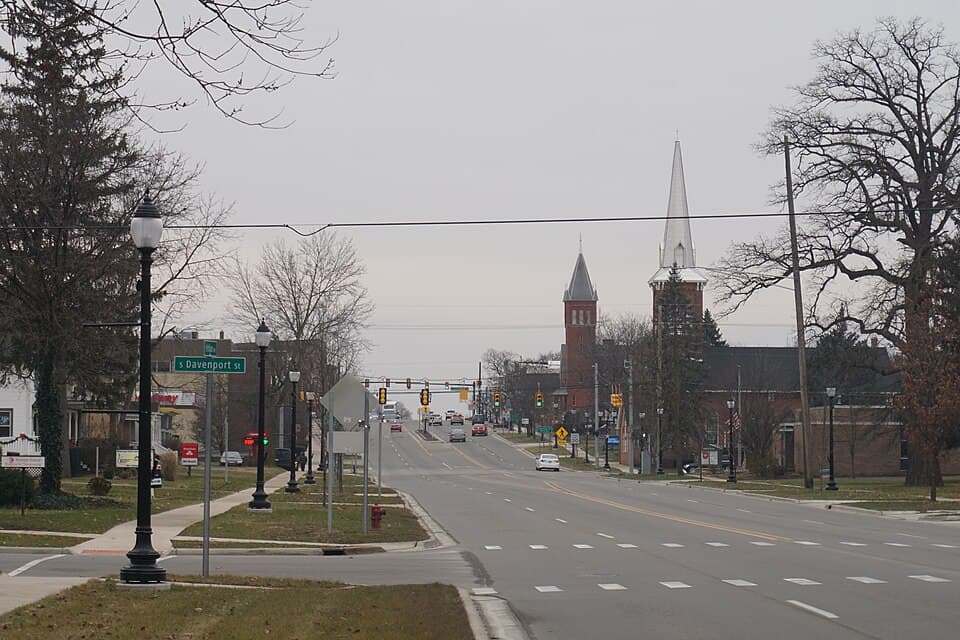
Saline Township, MI — site near this rural community proposed for the $7B Oracle/OpenAI Stargate campus
Wikimedia Commons
$7B
Project Value
1,383 MW
Capacity
4-1
Board Denial
$14M
Settlement
3-0
MPSC Vote
59/100
RealClear Score
Saline Township, Michigan · 2025 — 2026
The complete timeline.
From filing to denial to consent judgment to active site work. Every public milestone here is tied to a document, minutes, or agency record we could actually substantiate.
- Pre-Filing
- Regulatory Process
- Community Opposition
- Construction
July 10, 2025
Related Digital files conditional rezoning request
The developer files to rezone roughly 575 acres from A-1 agricultural to I-1 Industrial/Research for a multi-building data center campus. Public materials describe development on fewer than 250 acres, with the balance left in open space, wetlands, or agricultural use.
approx.August 2025
Developer circulates proposal and project Q&A
Related Digital's public proposal says the campus would start initial site work in October 2025, move to full construction in Q1 2026, avoid high-water-use evaporative cooling, preserve about 200 acres, and include an initial $3.1 million package for fire services, community investment, and cemeteries.
September 10, 2025
Township board denies rezoning 4-1
The Saline Township board denies the rezoning request by a 4-1 vote. Clerk Kelly Marion is the lone vote against the denial motion. The public record shows concerns about master-plan consistency, emergency response, traffic, noise, water, and preserving the township's rural character.
September 12, 2025
RD Michigan and landowners sue
Two days after the denial, RD Michigan Property Owner I LLC and landowners file suit in Washtenaw County Circuit Court. Township minutes summarize the three counts as exclusionary zoning, declaratory relief/violation of law, and violation of due process of law.
September 24, 2025
Township holds joint public meeting on the lawsuit
Township officials, counsel, RD representatives, and DTE answer public questions about the lawsuit, cooling, traffic, Bridgewater land purchases, wells, fire protection, and sound. Minutes note there was no request for monetary damages at that time, though attorneys said the complaint could be amended.
October 1, 2025
Board votes 4-1 to move toward settlement
After a closed session, the board votes 4-1 to move forward with trying to settle the lawsuit. Jim Marion is again the lone dissenting vote. The meeting marks the political swing from outright denial to settlement negotiations.
October 15, 2025
Consent judgment entered with $14M community package
The consent judgment resolves the case and authorizes the project subject to detailed restrictions. Key terms include a $4 million farmland trust, $2 million community fund, $7 million for the Saline Area Fire Department, $500,000 each for Clinton Township and Manchester fire departments, 55-decibel noise limits, Michigan Avenue access only, no high-water-use evaporative cooling, no material expansion, and decommissioning security.
October 30, 2025
Stargate is publicly announced in Michigan
Governor Whitmer, OpenAI, Oracle, and Related Digital publicly announce the project as a Stargate site. The state says it is the largest one-time investment in Michigan history and highlights 2,500 union construction jobs and more than 450 jobs on site.
November 6, 2025
Attorney General Nessel intervenes at the MPSC
Before the MPSC acts, Attorney General Dana Nessel intervenes in the DTE special-contract case and asks for a formal public hearing to test whether other ratepayers could be exposed to project-related costs.
approx.December 3, 2025
MPSC public hearing draws statewide opposition
Critics attack the expedited review and raise concerns about ratepayer exposure, energy demand, and environmental impacts. DTE argues the special contracts include strong customer protections and are needed to serve the load on the required timeline.
approx.December 18, 2025
MPSC approves DTE contracts 3-0 with conditions
The MPSC conditionally approves special contracts totaling 1,383 MW. The public issue brief highlights a 19-year minimum duration, 80% minimum billing demand, customer-funded energy storage, quarterly reporting, and a requirement that DTE file a generally applicable large-load tariff within 90 days.
January 21, 2026
Township reports wetlands and generator permits in hand
Advisory committee updates say EGLE has issued wetlands permits and permits to install generators, and that monitoring-well permits have been obtained. The focus shifts from rezoning and settlement to compliance, wells, traffic, sound, and construction staging.
February 5, 2026
AG Nessel moves to reopen DTE contracts
Michigan Attorney General Dana Nessel files a motion to reopen the MPSC's conditional approval, arguing that DTE's acceptance changed key language from a firm guarantee to flexible 'aggregate revenues' wording that could allow cost-shifting to residential ratepayers. Nessel also intervenes in six 'heavily redacted' battery storage contracts supporting the data center.
February 20, 2026
Judge denies Haushalter's intervention — settlement stands
A Washtenaw County judge denies Kathryn Haushalter's motion to intervene in the data center settlement, finding the request came too late and any intervention rights apply only to ongoing litigation, not concluded settlements. The ruling removes the last procedural obstacle for the project.
March 18, 2026
Township reports site work is underway
Township advisory updates report that Compute 1 pylons are finished, utility and foundation work is underway, about 60% of gravel hauling is complete, and the concrete batch plant is expected to be operational in early April. By March 2026, the project is clearly in active site-work mode rather than in a purely paper approval phase.
The People Who Decided This Case
Key officials and community leaders.
Board members, special counsel, state officials, and resident challengers whose actions changed the path of the project.
Jim Marion
Township Supervisor
Saline Township
Documented Record
Voted for the Sept. 10 denial motion and remained the lone no vote on the Oct. 1 motion to move toward settlement.
The most consistent public opponent on the board. His position captured the township's farmland-preservation politics, even after the lawsuit shifted the board's posture.
Kelly Marion
Township Clerk
Saline Township
Documented Record
Cast the lone vote against the Sept. 10 denial motion and seconded the Oct. 1 motion to pursue settlement.
She was the earliest visible signal that not every township official believed total resistance was sustainable once the case reached court.
Jennifer Zink
Township Treasurer
Saline Township
Documented Record
Voted for denial on Sept. 10, then joined the 4-1 majority that moved toward settlement on Oct. 1.
Her switch matters because it shows how quickly the board moved from political rejection to legal damage control once the lawsuit was filed.
Fred Lucas
Township Special Counsel
Legal Counsel
Documented Record
At the Sept. 24 public meeting, he and David Landry explained the lawsuit counts, said no monetary damages were then requested, and laid out the options to settle, negotiate a consent judgment, or fight in court.
The public record supports that counsel framed the board's options. It does not support more dramatic claims that a court loss was automatic.
Gretchen Whitmer
Governor of Michigan
Documented Record
On Oct. 30, 2025, she called the Stargate site the largest one-time investment in state history and highlighted 2,500 union construction jobs and more than 450 jobs on site.
Once the project became public, state political support was emphatic. That mattered for narrative and momentum, even though the township dispute had already settled.
Dana Nessel
Michigan Attorney General
Documented Record
Intervened in the DTE case in November 2025 and moved to reopen the approval on Feb. 5, 2026 over revised 'aggregate revenues' language and related battery-storage contracts.
Her fight was about ratepayer protections and utility process, not about the township's rezoning decision. It was the main remaining state-level threat after settlement.
Kathryn Haushalter
Saline Township Resident
Petitioner for Intervention
Documented Record
Filed a post-settlement challenge and sought to intervene in the case; Judge Julia Owdziej denied intervention on Feb. 20, 2026.
She led the most serious resident legal challenge after settlement. Important politically, but it did not reopen the underlying approval path.
Tim Bruneau
Saline Township Resident
Documented Record
Became a visible critic on energy, air, wetlands, traffic, and ratepayer questions as the fight expanded from local zoning into MPSC and permit battles.
Useful marker for how the opposition evolved: first a farmland and land-use fight, then a broader utility and environmental fight.
Opposition Record
Opposition was real. Its leverage was uneven.
Residents shaped the denial, the public narrative, and the later regulatory fights. What they did not do was stop the project once the township chose settlement and the utility approvals kept moving.
Local residents and farmland advocates
Meeting testimony, online organizing, signage, and later court challenges
Primary OppositionPlatform
Meetings + public pages
Petitioning
Online and local
Visible Voices
Fred Gall, Kathryn Haushalter, nearby residents
Tactics Deployed
Utility and environmental critics
Residents focused on air, wetlands, water, traffic, and the DTE contract structure
Environmental FocusPublic criticism widened from land use into a broader attack on backup engines, wetlands impacts, water use, traffic, and whether the DTE special contracts could keep other ratepayers whole. Those arguments did not stop settlement, but they helped push the MPSC and AG fights into view.
Best read: this strand of opposition was more effective at creating statewide scrutiny than at reversing the township settlement itself.
Michiganders Against Data Centers
Statewide anti-data-center coalition visible by late 2025
Statewide InfrastructureBy late 2025, Saline had become part of a broader Michigan backlash against hyperscale data centers. Statewide critics helped move the conversation from a single rezoning fight to a larger debate about power, land use, and ratepayer risk.
The Key Differentiator
Source records that existed before Related Digital filed.
None of these signals required guesswork. They came from the application posture, the site itself, and the kinds of permits and board actions this project was always going to trigger.
Early 2025 — Pre-Filing
35/100
A-1 agricultural zoning with no industrial precedent. Five-member township board with 2-3 likely opposed. DTE special-contract approval required separately from MPSC. Wetlands, wells, and noise as permit stress points.
October 2025 — Post-Settlement
59/100
Consent judgment entered with $14M community package. MPSC approved 1,383 MW contracts 3-0. Construction authorized. But AG Nessel motion to reopen (Feb 2026) and ongoing permitting keep the score below 70.
Cited reads evolve as new source records enter the public record. The pre-filing cited read recommends budgeting for litigation and concessions. The post-settlement score reflects a viable but still-contested path.
Conditional Rezoning, Not a By-Right Site
The site was zoned A-1 agricultural. Related Digital had to secure a political rezoning vote to reach I-1 Industrial/Research before anything else could happen. That alone made this a board-level entitlement fight rather than a technical site-plan exercise.
Rural Character Was A Political Headwind
A 575-acre farmland site in a township that repeatedly described itself as rural was always going to trigger preservation politics. Traffic, emergency response, water, and visual character were obvious flash points before the first denial vote was ever cast.
Five-Member Board, Fast Swings
Small township boards can harden quickly and flip quickly. That is exactly what happened here: a 4-1 denial on Sept. 10 became a 4-1 move toward settlement on Oct. 1 once the lawsuit forced the legal question onto the table.
Power Delivery Was A Second Track
The project needed more than local zoning relief. DTE still had to win MPSC approval for special contracts and customer-backed storage commitments at a scale later described by the Commission as 1,383 MW.
Permitting Stress Points Were Obvious
Wetlands, generators, wells, noise, and lighting were never side issues. The later township and agency record confirms that those items stayed live deep into the construction phase, which means they belonged in the risk picture from day one.
Community Concessions Were Not Optional
The final deal concentrated money and conditions around the exact things the township was worried about: fire response, farmland preservation, community funding, access, cooling, noise, and decommissioning. A serious concessions package was always the realistic outcome.
The Pre-Filing Research
What RealClear finds at 575 acres, Saline Township.
Before the first filing. Before the 4-1 denial. Before the lawsuit and consent judgment that turned a rejected rezoning into a project with conditions, money, and ongoing oversight.
Township FAQ · Consent Judgment · Sept. 10 / Sept. 24 / Oct. 1 / Oct. 15 minutes · MPSC Docket U-21990
The Pre-Flight Checklist
Six signals. No guesswork required.
Every major risk in this case was visible in public records or predictable from the approval path. The point is not clairvoyance. The point is disciplined reading of the record.
01
This was always a political rezoning
ZoningA 575-acre agricultural site seeking a data center use was never headed for routine staff-level approval. The central question was whether the board would rezone the land, and the answer was always likely to be political before it became legal.
02
Legal leverage existed, but not a guaranteed court win
LitigationMichigan exclusionary-zoning law gave the developer a real argument, but the safer underwriting conclusion was narrower: expect denial, expect litigation risk, and expect settlement pressure if the township could not defend the record at acceptable cost.
03
Underwriting needed a serious concession reserve
UnderwritingThe eventual consent judgment shows where the money had to go: farmland preservation, community funding, fire response, decommissioning, and operating restrictions. Whether the number was $10 million or $14 million, this was never a zero-concessions site.
04
DTE and the MPSC had to run in parallel
PowerThe local rezoning fight was only half the job. The project still needed special power contracts, customer-funded storage, and an agency finding that existing ratepayers would not be left holding the bill.
05
Permits and operating conditions would shape the endgame
PermittingEven after the case settled, wetlands permits, generator approvals, well work, sound review, truck routing, and lighting complaints kept shaping the project. The entitlement did not end at the vote; it rolled straight into compliance management.
06
The realistic endgame was settlement, not consensus
PoliticsThis project did not become locally popular. It became legally and politically manageable for the township to settle. That distinction matters, because it is the difference between a clean approval and a sponsor-driven, court-backed path through resistance.
The lesson this case teaches:
A 59/100 score means this was never impossible, but it was never routine either. The zoning gap, the litigation leverage, the concession package, and the state-level power process were all readable signals before the first denial vote. That is exactly how it played out.
The source records were there. RealClear reads them.
What Happened Next
The aftermath.
Saline Township set a template for hyperscale data center development in Michigan — not because the fight vanished, but because the fight moved from rezoning into contracts, permits, compliance, and construction oversight.
Regulatory Challenge
AG Nessel Moves to Reopen DTE Contracts
In February 2026, Attorney General Dana Nessel filed to reopen the MPSC's conditional approval, alleging DTE weakened key ratepayer protection language. She also intervened in six “heavily redacted” battery storage contracts. The regulatory fight continues even as construction proceeds.
Resident Challenge
Judge Denies Post-Settlement Intervention
On February 20, 2026, Judge Julia Owdziej denied Kathryn Haushalter's motion to intervene. The ruling did not erase resident opposition, but it did leave the Oct. 15 consent judgment standing.
Compliance Phase
Permits, Wells, Noise, and Traffic Stay Live
Township advisory updates in January and February 2026 show the project moving into a detailed oversight phase: monitoring wells, sound review, wetlands permits, generator permits, truck routing, lighting complaints, and batch plant preparation all remained active issues after the legal fight was over.
Project Status
Site Work Underway by March 2026
The March 18 township update says Compute 1 pylons are finished, utility and foundation work is underway, roughly 60% of gravel hauling is complete, and the concrete batch plant is expected to be operating in early April. In plain English: the project moved from lawsuit to dirt-moving in roughly six months.
Primary Source Documents
17 DocumentsEvery finding cited to the source. Click any document to preview it directly. Source-record patterns visible to experienced entitlement analysts months before the hearing.
Cited Brief
How RealClear built this assessment.
This source review is backed by a traceable source trail — real articles, real officials, real patterns.
News records reviewed
Officials identified
Comparable approvals reviewed
Opposition groups in record
Event Timeline
Key milestones in the entitlement journey
Jul 2025
Conditional rezoning filed for 575-acre A-1 site
Sept 2025
Township denies 4-1; RD Michigan and landowners sue
Oct 2025
Consent judgment entered with $14M package and operating restrictions
Dec 2025
MPSC conditionally approves DTE contracts in U-21990
Mar 2026
Township reports active site work, utility work, and foundations
Jul 2025
Conditional rezoning filed for 575-acre A-1 site
Sept 2025
Township denies 4-1; RD Michigan and landowners sue
Oct 2025
Consent judgment entered with $14M package and operating restrictions
Dec 2025
MPSC conditionally approves DTE contracts in U-21990
Mar 2026
Township reports active site work, utility work, and foundations
Key Actors
Decision-makers and their positions
Saline Township Board
Township Board
Denied the rezoning 4-1, then shifted to a 4-1 vote to pursue settlement once the lawsuit landed
RD Michigan Property Owner I LLC
Developer Plaintiff
Filed the Sept. 12 complaint with landowners and kept the project on a litigation-and-settlement track
Michigan Public Service Commission / DTE
Parallel Utility Track
The project still needed special-contract approval for 1,383 MW plus customer-funded storage and ratepayer protections
Dana Nessel
Michigan Attorney General
Challenged the DTE approval path on ratepayer-protection grounds even after the township case had settled
Kathryn Haushalter
Resident Challenger
Tried to intervene after settlement; the court denied intervention on Feb. 20, 2026
Opposition Record
Organized opposition groups
Local residents and farmland advocates
Visible across board meetings, protest turnout, petitions, and post-settlement challenges
Tactics
Meeting testimony, online organizing, protest activity, and litigation after settlement
Track Record
Helped produce the 4-1 denial but did not reverse the consent judgment
Utility and environmental critics
Focused on air, wetlands, wells, traffic, and DTE cost recovery
Tactics
MPSC testimony, public pressure, permit scrutiny, and statewide messaging
Track Record
Did not stop the project, but helped sustain regulatory scrutiny into 2026
Statewide anti-data-center advocates
Broader Michigan coalition visible by late 2025
Tactics
Cross-community organizing and statewide framing
Track Record
Expanded the political argument beyond Saline, even as the township case was already on a settlement path
Jurisdiction Pattern
What history tells us about this jurisdiction
Approval history
N/A — no comparable-settlement rate published or relied on here
Recent Shifts
Michigan hyperscale projects are increasingly being fought on zoning, utility, water, air, and ratepayer fronts at the same time
Source read
This was not a clean rezoning win. It was a litigation-and-settlement approval path backed by a sponsor willing to absorb a lawsuit, a parallel MPSC track, and a large community package.
Cited research compiled from 3 news articles, 10 township/state/court documents, and Michigan case law on exclusionary zoning
Saline Township's 4-1 denial in September 2025 was reversed by a $14M-package consent judgment one month later — a litigation-and-settlement path, not a rezoning win.
A July 2025 conditional rezoning filing produced a 4-1 township denial in September, an immediate RD Michigan breach-of-contract suit with landowner co-plaintiffs, and an October consent judgment with a $14M package and operating restrictions. A parallel MPSC track conditionally approved DTE contracts in December 2025. Attorney General Nessel challenged the utility approval on ratepayer-protection grounds. By March 2026 the site was in active construction. The public record carries the full shape of a project that survived because the sponsor was willing to absorb litigation.
Theme distribution
Record questions still open: Individual resident-side participant names (including Kathryn Haushalter, who attempted post-settlement intervention) are in the court record but not surfaced here by CIS in this pass — the production engine will fill in per-actor profiles when it runs.
How this was assembled: Every source record ties to a public source you can verify yourself — news coverage, hearing records, court filings, public testimony. No scraped gated platforms, no invented engagement numbers, no attributions that aren’t on the page. RealClear surfaces source records; your team decides. See our methodology for the full sourcing standard.
Decision Framework
What a disciplined team would do differently.
Three decision points. Each one changes the outcome.
01
If screening this jurisdiction
Saline Township’s A-1 agricultural zoning had no industrial precedent and no pathway to by-right data center use. A five-member board with 2–3 likely opposed meant denial was the base case, not the exception. RealClear’s Approval path review surfaces the conditional rezoning requirement and the parallel DTE/MPSC utility track before site control. Recommendation: in five-member township boards, a single swing vote changes everything — profile every member before filing.
02
If committed to this site
Budget $14M+ for community concessions from day one — farmland trust, fire service upgrades, community investment fund. File the rezoning and the DTE special-contract application simultaneously to run both tracks in parallel. Prepare litigation strategy before the denial vote, not after. The consent judgment path (deny → sue → settle) is viable for well-capitalized sponsors but adds 6–12 months.
03
Pattern for similar sites
Agricultural rezonings for data centers in Michigan townships follow a predictable pattern: deny at the board level, developer sues on exclusionary-zoning grounds, township settles to avoid litigation costs. Budget 0.15–0.25% of project value for community concessions. The consent judgment becomes the controlling document — negotiate it carefully, because it governs operations for decades.
This Is Entitlement Research
Screen a site for your next project.
This page is what entitlement research looks like. Every risk. Every actor. Every source-record factor — surfaced before you spend a dollar on land assembly, attorneys, or consultants.
RealClear runs a full entitlement risk analysis — zoning posture, litigation exposure, regulatory pathway, and political signals — fully analyzed. Before any filing. Before any lawsuit.
Cited research summary · Not legal advice · Verify independently before making investment decisions