Case File · Village of Caledonia, Racine County, Wisconsin
Plan commission said yes. Microsoft said never mind.
Microsoft's “Project Nova” won a 5-2 plan commission vote to rezone 244 acres. Six days before the village board vote, Microsoft withdrew. “Based on the community feedback we heard, we have chosen not to move forward with this site.” A 2,000-signature petition and 40+ speakers killed a project that had already won regulatory approval.
Cited site read: 28/100 before Microsoft filed a single document.
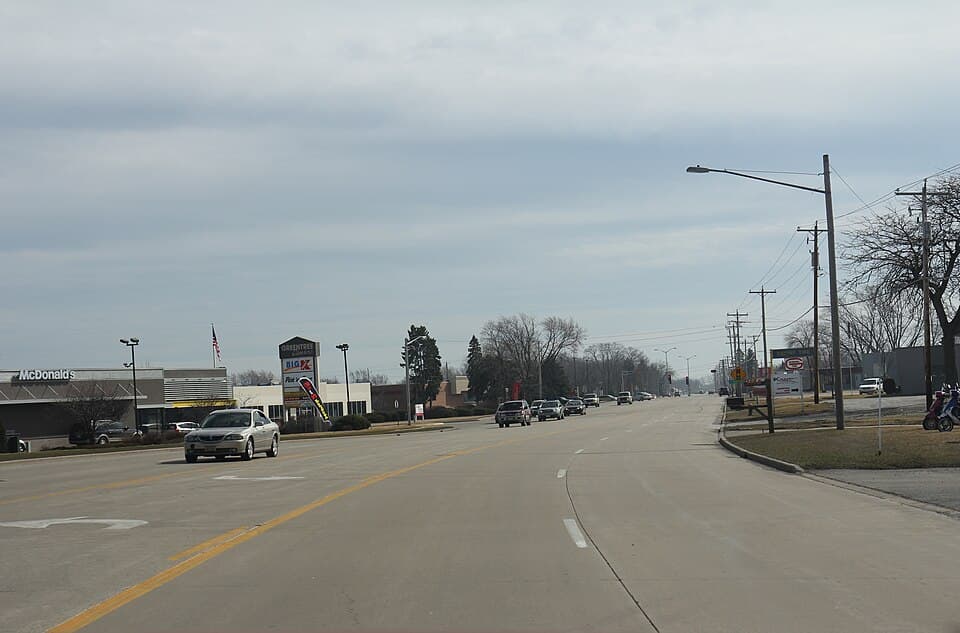
Caledonia, WI — Microsoft data center denied after residents fought the 1,000-acre campus proposal
Wikimedia Commons
244 ac
Acreage
~2,000
Petition Sigs
40+
Public Speakers
5-2 Yes
Plan Comm Vote
Never
Board Vote
28/100
RealClear Score
Village of Caledonia, WI · 2025
The complete timeline.
From anonymous filing to corporate withdrawal in under three months.
2024-2025
Microsoft identifies 244-acre site in Caledonia
Microsoft identifies a 244-acre agricultural parcel in the Village of Caledonia, Racine County, Wisconsin, for a data center campus codenamed 'Project Nova.' The site is across from the Oak Creek Power Plant. Microsoft already operates two data centers in adjacent Mount Pleasant — this would be the third Wisconsin facility.
August 2025
TMJ4 reveals Microsoft is behind 'Project Nova'
TMJ4 News exclusively reports that Microsoft is the company behind the newly proposed Caledonia data center. The revelation transforms the application from an anonymous corporate filing into a nationally recognized brand. Residents begin organizing — within weeks, close to 2,000 sign a petition opposing the project.
September 2025
Plan commission hearing draws 40+ opponents
The Caledonia Plan Commission holds a public hearing extending past two hours. Over 40 residents speak against the project, raising concerns about water consumption, energy demand, traffic, construction noise, and light pollution. The opposition is organized, specific, and deeply personal — residents chose this community for its rural character.
September 29, 2025
Plan commission votes 5-2 to approve rezoning
Despite overwhelming opposition testimony, the Caledonia Plan Commission votes 5-2 to approve both the land use plan amendment (agricultural to transitional light industrial) and the rezoning. Village Trustee Nancy Pierce, also a plan commission member, votes against both motions.
Early October 2025
Village board vote scheduled for October 14
The application advances to the full Village Board. Opponents mobilize, planning testimony and coordinating media outreach. The 2,000-signature petition is formally submitted.
October 8, 2025
Microsoft withdraws — 'Based on the community feedback we heard'
Six days before the scheduled village board vote, Microsoft withdraws the application. 'Based on the community feedback we heard, we have chosen not to move forward with this site.' Microsoft states it remains committed to the region and will seek an alternate location.
October 2025
Microsoft begins searching for alternate Wisconsin sites
Microsoft confirms it is actively searching for an alternate site in southeastern Wisconsin. The Caledonia withdrawal adds to a growing national pattern of data center withdrawals in the face of organized community opposition.
The People Who Decided This Case
Key officials and community leaders.
A plan commission. 2,000 petitioners. One corporate withdrawal.
Nancy Pierce
Village Trustee / Plan Commissioner
Caledonia
Documented Record
Cast one of two dissenting votes on the plan commission against the rezoning. Also serves on the village board, positioning her as the most visible elected opponent of Project Nova.
The lone dissenting voice on the plan commission who also sits on the village board. Her dual role made her the most visible elected opponent.
Plan Commission Majority (5)
5 Commissioners who voted yes
Documented Record
Voted 5-2 to approve both the land use plan amendment and the rezoning from agricultural to transitional light industrial, despite two hours of opposing public testimony.
Five commissioners voted to approve despite two hours of opposing testimony — but Microsoft withdrew before the village board could act on their recommendation.
Microsoft Corporate
Applicant — Project Nova
Documented Record
Withdrew the application on October 8, 2025 — six days before the scheduled village board vote — citing community feedback as the reason for not moving forward with the Caledonia site.
Microsoft's withdrawal reflected a brand calculation: fighting a community is more expensive than finding an alternate site when you're a consumer-facing company.
Caledonia Residents (~2,000)
Petition Signers
Documented Record
Collected approximately 2,000 petition signatures opposing the project. Over 40 residents testified against the rezoning at the plan commission hearing, citing water, energy, traffic, noise, and rural character concerns.
~2,000 signatures in a village of ~25,000 represents 8% of the population — indicating community-wide opposition, not just adjacent-neighbor NIMBYism.
Construction Workers
Building Trades
Documented Record
Testified in support of the project at the plan commission hearing, citing years of construction employment the data center campus would generate for building trades members.
Testified in support at the plan commission hearing. Their support was genuine but insufficient to overcome community-wide opposition in a residential village.
Opposition Record
One community. One devastating petition.
The opposition wasn't a formal organization. It was an entire community that decided a data center didn't belong in their village.
Caledonia Community Opposition
~2,000 petition signatures · 40+ public speakers · Organized via word of mouth and local networks
Petition
~2,000 signatures
Testimony
40+ speakers, 2+ hours
Outcome
Corporate withdrawal
Concerns Raised
The Key Differentiator
Source records that existed before Microsoft filed.
Every one of these source-record factors was visible in public data before Project Nova was announced.
Rural Residential Character
Caledonia is a village of ~25,000 with a strong rural residential identity. The 244-acre site is surrounded by farmland and homes. Residents chose this community for its semi-rural character — exactly the identity a data center campus would destroy.
Oak Creek Power Plant Adjacency
The site sits across from the Oak Creek Power Plant. Residents already live with one large industrial neighbor. Adding a second created cumulative impact concerns that individually might be manageable but collectively felt overwhelming.
Two-Step Approval — Plan Commission + Village Board
Wisconsin villages require plan commission recommendation followed by a separate village board vote. This two-step process creates two political veto points. Microsoft understood this and withdrew before the board vote.
Consumer Brand Sensitivity
Microsoft is a consumer-facing brand. Unlike data center REITs, Microsoft's brand is directly associated with the project. Community opposition generates media coverage that damages the broader brand — a risk the company was unwilling to accept.
Rapid Petition Mobilization
Close to 2,000 residents signed the opposition petition within weeks. For a village of ~25,000, that's 8% of the population — indicating community-wide opposition, not just adjacent-neighbor NIMBYism.
Two Existing Microsoft Data Centers Nearby
Microsoft already operates two data centers in Mount Pleasant. The community's experience with those facilities informed opposition to a third. Previous local experience with the developer can be an asset or liability — here, it was a liability.
The Pre-Filing Research
What RealClear finds at 244 acres, Caledonia.
Before the first filing. Before the 2,000-signature petition. Before Microsoft decided the brand damage wasn't worth it.
Site Analysis
Project Nova (Microsoft)
Village of Caledonia, Racine County, WI — 244 acres
Material Constraints
- 244 acres of active farmland in rural residential area — community identity conflict
- Village board vote required after plan commission — political veto point
- Adjacent to Oak Creek Power Plant — cumulative industrial impact concerns
- Consumer brand (Microsoft) = low withdrawal threshold
- Two existing Microsoft data centers in adjacent Mount Pleasant = informed opposition
Approval Pathway
Plan Commission → Village Board VETO POINT
Community Risk
Zoning Status
Brand Risk
Recommendation
HIGH DENIAL RISK. Agricultural rezoning with organized opposition in a rural-identity community. Consumer brand creates low withdrawal threshold. Do not proceed without pre-negotiated community benefit agreement and village board majority commitment.
The Pre-Flight Checklist
Six source-record factors. All publicly available.
Every risk that killed this project was visible before Microsoft identified the site.
Rural residential character = ag rezoning will trigger identity conflict
Zoning reviewThe Zoning review identifies the site's agricultural zoning and surrounding residential land use. Any ag-to-industrial rezoning in a community that defines itself by rural character will generate opposition.
Power plant adjacency = cumulative impact argument
Community risk reviewThe Community risk review identifies the Oak Creek Power Plant and flags cumulative industrial impact as a near-certain opposition argument.
Two-step approval = two veto points
Approval path reviewThe Approval path review identifies the plan commission + village board structure and flags both as political decision points.
Consumer brand = low withdrawal threshold
Entity AnalysisRealClear's entity analysis identifies Microsoft as a consumer brand with significant reputational sensitivity, creating a lower threshold for withdrawal than a data center REIT.
Mount Pleasant experience = informed local opposition
Comparable outcomes reviewThe Comparable outcomes review surfaces Microsoft's existing facilities and flags that community experience with the developer informs opposition.
Small village = high petition-to-population ratio probability
Community risk reviewA community risk review flags that in villages under 30,000, organized petition drives regularly achieve 5-10% of population — a politically devastating number.
The cost of this entitlement failure:
Site selection costs. Legal fees. Community engagement. Brand damage. And months spent on a 28/100 site while competitors secured community-friendly locations.
A RealClear analysis costs less than one hour of attorney time.
What Happened Next
The aftermath.
Microsoft withdrew. The community celebrated. The lesson applies to every consumer brand considering data center development.
Microsoft's Next Move
Searching for Alternate Wisconsin Sites
Microsoft confirmed it remains committed to southeastern Wisconsin and is actively searching for alternate sites.
National Pattern
$64B in Data Center Projects Blocked or Delayed
Caledonia joins Google Indianapolis and other high-profile withdrawals. $64 billion in projects have been blocked or delayed nationwide.
The Lesson
Brand Value Exceeds Site Value
For consumer-facing companies, fighting a community is more expensive than relocating. Microsoft's withdrawal was rational brand management.
Timeline Impact
Months Lost on a 28/100 Site
The entire process consumed months of development team time. A pre-filing source review surfaces the community risk before the first dollar was spent.
Primary Source Documents
11 DocumentsEvery finding cited to the source. Click any document to preview it directly. Source-record patterns visible to experienced entitlement analysts months before the hearing.
Cited Brief
How RealClear built this assessment.
This source review is backed by a traceable source trail — real articles, real officials, real patterns.
News records reviewed
Officials identified
Comparable approvals reviewed
Opposition groups in record
Event Timeline
Key milestones in the entitlement journey
2025
Microsoft files 244-acre agricultural rezoning in Caledonia
2025
Three other Wisconsin communities defeat data center proposals
Hearing
40 of 49 speakers oppose — 82% opposition rate
Oct 2025
Microsoft withdraws citing 'community feedback'
2025
Microsoft files 244-acre agricultural rezoning in Caledonia
2025
Three other Wisconsin communities defeat data center proposals
Hearing
40 of 49 speakers oppose — 82% opposition rate
Oct 2025
Microsoft withdraws citing 'community feedback'
Key Actors
Decision-makers and their positions
Caledonia Planning Commission
Planning Commission
82% community opposition at a single hearing signals no viable path — commission had no basis for recommending approval
Microsoft
Applicant
Withdrew citing 'community feedback' — language acknowledging pre-application community engagement was absent
Opposition Record
Organized opposition groups
Caledonia Residents
40 of 49 speakers opposed — 82% opposition rate
Tactics
Direct testimony, agricultural land preservation framing, quality-of-life concerns
Track Record
Fourth Wisconsin data center defeat in 2025 — part of a documented statewide pattern
Jurisdiction Pattern
What history tells us about this jurisdiction
Approval history
No data center proposals reported as advancing in Wisconsin agricultural communities in 2025 — specific comparable cases not independently verified
Recent Shifts
Wisconsin became the most active data center opposition battleground in the Midwest — four defeats in 2025 established a clear statewide pattern
Source read
82% opposition is not a challenging entitlement environment — it is categorical rejection. Wisconsin's 2025 pattern made any agricultural data center application in the state high-risk before the first hearing.
Cited research compiled from 7 news articles, 2 government documents, and comparable data from 4 Wisconsin data center opposition cases
Microsoft withdrew a 244-acre Caledonia data center rezoning in October 2025 after 40 of 49 speakers — 82% — took a critical stance at a single hearing.
Caledonia was the fourth Wisconsin data center project to fail in 2025 — establishing a documented statewide pattern. Microsoft's withdrawal language specifically cited 'community feedback,' acknowledging that pre-application engagement had not been done. A single hearing with 82% critical-stance testimony is not a challenging entitlement environment; it is categorical rejection.
Theme distribution
How this was assembled: Every source record ties to a public source you can verify yourself — news coverage, hearing records, court filings, public testimony. No scraped gated platforms, no invented engagement numbers, no attributions that aren’t on the page. RealClear surfaces source records; your team decides. See our methodology for the full sourcing standard.
This Is Entitlement Research
Screen a site for your next project.
RealClear runs a full entitlement risk analysis — community identity, petition probability, brand exposure, and approval pathway — fully analyzed. Before any filing.
Cited research summary · Not legal advice · Verify independently before making investment decisions