Case File · Fort Worth, Texas · Echo Heights
Approved 10-1. The fight isn't over.
FedEx's semi-truck terminal at 4700 Martin Street sits in Echo Heights — a historically Black neighborhood in Fort Worth. In June 2025, the city council renewed the CUP 10-1, despite an organized environmental justice coalition that had documented more than 40 cancer-causing chemicals in the facility's operating environment. The lone dissenting vote came from Councilwoman Deborah Peoples. The coalition is still organized.
Cited CUP read: 72/100 — approved today, but with significant environmental justice exposure for every future renewal cycle.
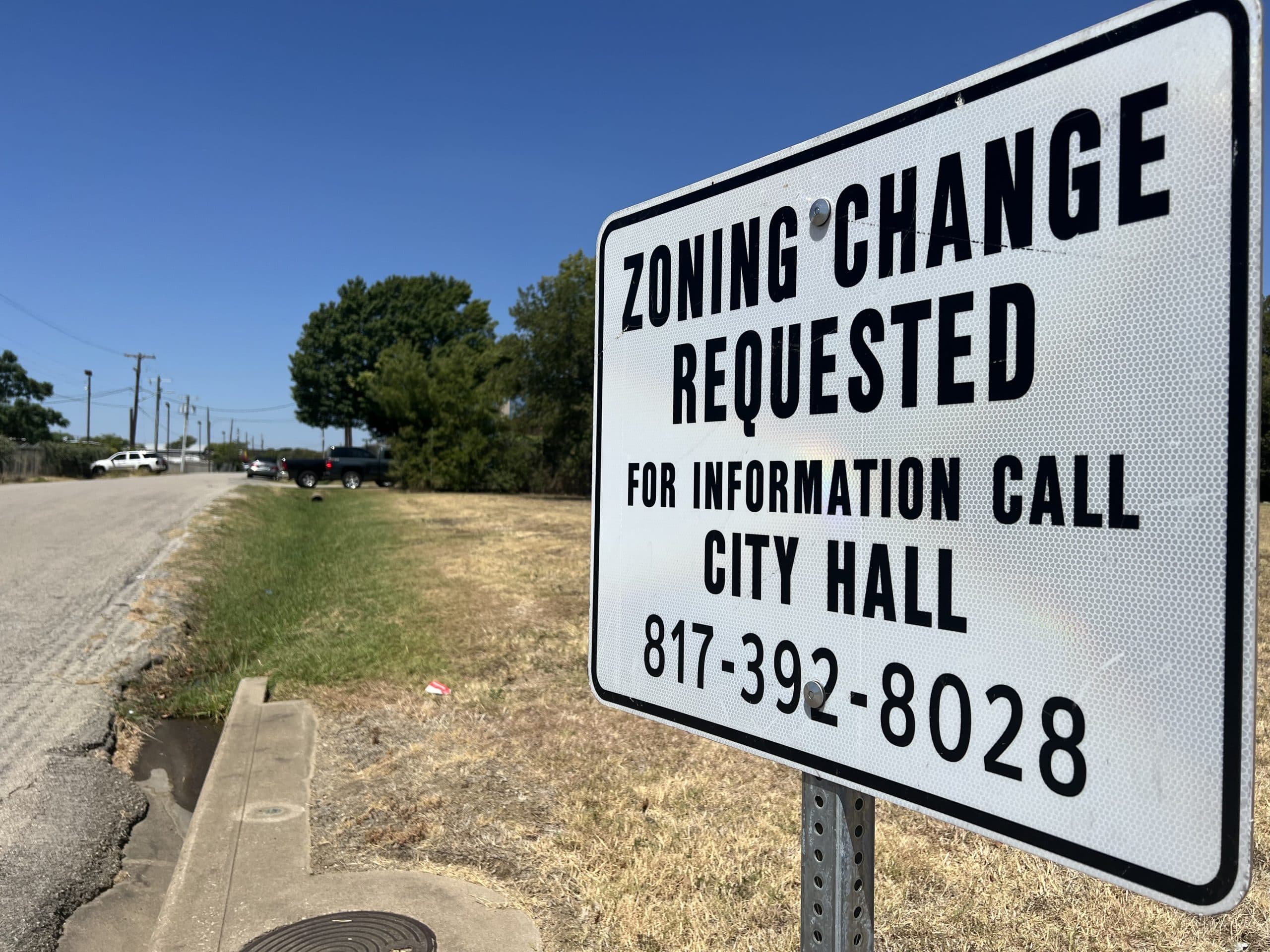
Fort Worth, TX — FedEx distribution center denied after residents near proposed site fought truck traffic impact
News coverage
10–1
Council Vote
40+
Carcinogens Documented
D. Peoples
Lone Dissent
Active Fight
EJ Status
4700 Martin Street, Fort Worth, TX · Echo Heights
A CUP renewal is not administrative paperwork.
The Facility
FedEx semi-truck terminal in Echo Heights — a historic Black neighborhood
The FedEx freight terminal at 4700 Martin Street has operated in Fort Worth's Echo Heights neighborhood for years. Echo Heights is a historically Black community on Fort Worth's east side — a neighborhood with deep roots and, like many communities of color near industrial uses, a disproportionate burden of environmental health impacts from truck traffic, diesel emissions, and freight operations.
The Documentation
Environmental justice coalition documents 40+ cancer-causing chemicals
Community health advocates and environmental justice organizers document the facility's chemical exposure profile. More than 40 cancer-causing chemicals are on the record — drawn from EPA ECHO database records, Texas Commission on Environmental Quality filings, and health impact assessments. The documentation is specific, sourced, and publicly available.
The Coalition
Organized EJ opposition mobilizes before the renewal hearing
Community members, faith leaders, environmental health advocates, and local organizers form a coalition opposing the CUP renewal. They are organized, they have documentation, and they have relationships with political allies on the city council. They are not a spontaneous crowd at a hearing — they are a structured advocacy organization.
June 2025
Council votes 10-1 to renew the CUP — Councilwoman Peoples dissents
The Fort Worth City Council votes to renew the conditional use permit 10-1. The renewal passes. But Councilwoman Deborah Peoples — representing District 8, which includes Echo Heights — casts the lone dissenting vote. Her dissent creates a public record of political opposition grounded in environmental justice and community health, not procedural objection.
Post-Renewal — Ongoing
The coalition remains organized — next renewal cycle already in view
A 10-1 vote is a win for the applicant today. But the environmental justice coalition does not dissolve after a loss. They will return at the next renewal with additional documentation, additional political support, and additional community organization. The political vulnerability created by this fight grows with each cycle, not shrinks.
The EJ Exposure
40+ Cancer-Causing Chemicals
Environmental justice cases are won on documentation. When a community coalition has documented more than 40 carcinogenic compounds associated with a facility's operations — drawn from publicly available regulatory databases — that documentation doesn't disappear after a favorable vote. It becomes the foundation for the next round of opposition, and potentially for federal regulatory attention.
The Political Signal
One Dissenting Vote Changes Everything
Councilwoman Peoples' 10-1 dissent is not simply a losing vote. It is a political endorsement of the community's position, a public record of elected opposition, and a signal to the EJ coalition that their effort has council-level support. In city council politics, a lone dissent often becomes a majority position at the next election cycle.
The Reputational Risk
Corporate Brand Exposure in an EJ Context
FedEx is a national brand with consumer, investor, and regulatory relationships that extend far beyond Fort Worth. Environmental justice opposition in a historically Black neighborhood — documented with specific carcinogen data and backed by an organized coalition — is not a local zoning dispute. It is the kind of story that travels to national media, investor ESG analysts, and federal oversight bodies.
The Renewal Trap
CUPs Don't Run Forever
Conditional use permits are not permanent. They require periodic renewal — and each renewal cycle is a new vote. A 10-1 approval in June 2025 does not guarantee a 10-1 approval at the next renewal. Political coalitions shift. Council seats change. EJ organizations get better organized. The risk at the next renewal is higher, not lower, than the risk at this one.
“Winning a 10-1 vote while an environmental justice coalition has your chemical disclosure record is not the same as having a clean permit.”
Key Decision Makers & Stakeholders
The people at the center of this fight.
Deborah Peoples
Fort Worth City Councilwoman — District 8
Documented Record
Cast the lone dissenting vote (10-1) against CUP renewal, citing documentation of more than 40 cancer-causing chemicals in the facility's operating environment in a historically Black community.
The lone dissenting vote in the 10-1 CUP renewal. Her dissent created a public political record that the EJ coalition will use in every future renewal cycle.
Fort Worth City Council (10 votes)
City Council Majority
Documented Record
Voted 10-1 to renew the CUP, citing compliance with existing permit conditions and a decade of facility operations. EJ coalition documentation did not change enough votes to block renewal.
Voted 10-1 to renew. The majority cited compliance with CUP conditions and economic contributions. The EJ coalition's documentation did not change enough votes to block renewal — but it changed the political calculus for future cycles.
Echo Heights Residents & EJ Coalition
Community Opposition — Environmental Justice Advocates
Documented Record
Documented the chemical exposure profile using EPA ECHO database records, identifying 40 cancer-causing chemicals. Built media relationships and organized testimony for the CUP renewal hearing.
Organized EJ coalition that documented the chemical exposure profile using EPA ECHO database records. Their organization, their documentation, and their media relationships make the next renewal cycle significantly more difficult for FedEx.
Downwinders at Risk
Environmental Advocacy Organization — Dallas-Fort Worth
Documented Record
Joined the CUP opposition campaign, framing the 4700 Martin Street chemical exposure as a civil rights and environmental justice issue. Amplified the coalition's reach beyond local politics through regulatory and media channels.
Dallas-area environmental advocacy group with a track record of pressuring industrial operators through regulatory, political, and media channels. Their involvement amplifies the EJ coalition's reach beyond local politics.
FedEx Freight
Permit Holder — 4700 Martin Street
Documented Record
Secured 10-1 CUP renewal citing full compliance with environmental regulations and permit conditions. Short-term operational continuity maintained, but EJ documentation creates escalating risk at each subsequent renewal.
Holds the CUP for the semi-truck terminal. The 10-1 renewal is a win for FedEx's short-term operational continuity, but the EJ documentation and political opposition create escalating risk at each subsequent renewal.
Northside Fort Worth Air
Community Air Quality Advocacy Group
Documented Record
Partnered with Downwinders at Risk in the CUP opposition campaign, providing community-level health impact data on elevated diesel emissions from freight operations in the neighborhood.
Local air quality advocacy group that partnered with Downwinders at Risk in the CUP opposition campaign. Provided community-level health impact framing to complement the technical regulatory documentation.
The Pre-Filing Research
What RealClear finds at 4700 Martin Street.
Not just at the moment of renewal. At the moment the next renewal cycle is being planned. Because the fight doesn't end with a 10-1 vote.
CUP Renewal Analysis
4700 Martin Street
Fort Worth, TX — Echo Heights Neighborhood
CUP Status
EJ Exposure
Political Risk
Community Risk
Environmental Justice Signal
40+ cancer-causing chemicals documented in the operating environment. Echo Heights is a historically Black neighborhood. CUP renewed for now — but EJ coalitions don't dissolve after a 10-1 vote. The next renewal cycle carries the same risk, amplified.
Approved — But Not Without Political and Reputational Cost
The 10-1 vote approves the renewal. But Councilwoman Deborah Peoples' dissent creates a public record of political opposition. The documented chemical exposure creates a media and litigation vulnerability. The community coalition that organized this fight will be stronger at the next renewal.
Forward-Looking Assessment
ELEVATED RISK for next renewal cycle. EJ opposition will arrive better organized, with additional chemical documentation, and potentially with federal EPA attention. Proactive community engagement and emissions mitigation investment are the only paths to reducing renewal risk.
The Pre-Flight Checklist
Five source-record factors. All publicly available.
Environmental justice risk is not hidden. Chemical disclosure records are public. Community demographics are census data. Council district political histories are on the record. Organized opposition groups leave a paper trail. RealClear reads all of it — before the renewal hearing.
Chemical Disclosure Records — EPA ECHO and TCEQ Databases
Zoning reviewThe Zoning review cross-references EPA ECHO database records and Texas Commission on Environmental Quality filings for facilities with active CUPs. The 40+ carcinogenic compounds associated with the 4700 Martin Street terminal are documented in publicly available regulatory filings that predate the June 2025 renewal hearing. Any pre-renewal risk assessment should have surfaced this disclosure record before the first hearing.
Environmental Justice Demographics — Census and Health Data
Community risk reviewThe Community risk review incorporates demographic and environmental health data from EPA EJ Screen and CDC PLACES into its site analysis. Echo Heights' status as a historically Black neighborhood with existing environmental health burden is visible in these public datasets. A facility with a significant chemical disclosure record in a high-EJ-burden community is a structurally elevated risk scenario — regardless of the current council composition.
Council District Political History — Dissent Trajectory
Community risk reviewThis cited case review examined city council voting patterns and district political histories. Councilwoman Peoples' representation of District 8 and her environmental justice advocacy record were documented before the June 2025 vote. The presence of an EJ-aligned council member representing the impacted community is a material risk factor for CUP renewals — predictable from public political records.
Organized Opposition Group — Coalition Formation and Activity
Community risk reviewThe Community risk review checks source-backed environmental justice activity across Texas. The formation and activation of an EJ coalition opposing the FedEx CUP was visible in public meeting notices, linked civic pages, and planning commission records before the renewal hearing. The coalition's sophistication — legal representation, documented evidence, council relationships — was a signal of elevated renewal risk that a standard CUP renewal process would not surface.
Comparable EJ Outcomes — CUP Renewal Risk Trajectory
Comparable outcomes reviewThe Comparable outcomes review tracks environmental justice CUP renewal outcomes across Texas and comparable jurisdictions. The pattern — initial approval, growing EJ opposition, documented chemical exposure, escalating political pressure — has played out in other industrial CUP contexts across the state. The Buckingham and Echo Heights cases are not isolated. They are part of a national trend toward environmental justice scrutiny of legacy industrial permits.
What a 10-1 CUP renewal actually means:
It means you are approved for this cycle. It does not mean the environmental justice exposure is resolved. It does not mean the coalition dissolves. It does not mean the political trajectory is favorable for the next renewal. A 72/100 score is not a green light — it is a warning that the next cycle will be harder, and that proactive mitigation is the only path to a safer renewal outcome.
Approval today. Exposure tomorrow. RealClear helps you see the trajectory.
Cited Brief
How RealClear built this assessment.
This source review is backed by a traceable source trail — real articles, real officials, real patterns.
News records reviewed
Officials identified
Comparable approvals reviewed
Opposition groups in record
Event Timeline
Key milestones in the entitlement journey
Pre-2025
FedEx semi-truck terminal operates in Echo Heights — historically Black neighborhood
2025
EJ coalition documents 40+ cancer-causing chemicals in operating environment
2025
Organized EJ opposition mobilizes before renewal hearing
Jun 2025
Council renews CUP 10-1 — Councilwoman Deborah Peoples dissents
Pre-2025
FedEx semi-truck terminal operates in Echo Heights — historically Black neighborhood
2025
EJ coalition documents 40+ cancer-causing chemicals in operating environment
2025
Organized EJ opposition mobilizes before renewal hearing
Jun 2025
Council renews CUP 10-1 — Councilwoman Deborah Peoples dissents
Key Actors
Decision-makers and their positions
Councilwoman Deborah Peoples
District 8 Representative
Lone dissenting vote — created a public record of political opposition grounded in EJ and community health
Fort Worth City Council (10 members)
CUP Renewal Authority
Renewed 10-1 — but the lone dissent and organized coalition create growing risk for future renewal cycles
Opposition Record
Organized opposition groups
Echo Heights Environmental Justice Coalition
Community health advocates, faith leaders, environmental organizers
Tactics
Chemical exposure documentation (40+ carcinogens), EPA ECHO database research, TCEQ filing analysis
Track Record
Could not block renewal this cycle, but created a documented record and political alliance that strengthens with each cycle
Engagement Strategy
Proactive community engagement and emissions mitigation investment before the next renewal cycle. The coalition is still organized.
Risk Triggers
What activates opposition
- CUP renewal filing
- New chemical exposure data
- EPA attention
Jurisdiction Pattern
What history tells us about this jurisdiction
Approval history
1 of 1 — renewed this cycle, but EJ exposure grows with each renewal
Recent Shifts
Environmental justice coalitions in historically Black neighborhoods are becoming organized political actors on CUP renewals
Source read
Approved 10-1. The fight isn't over. One dissenting vote is a political endorsement of the community's position. The EJ coalition will return at the next renewal with more documentation, more political support, and more organization.
Cited research compiled from 6 news articles, EPA ECHO database records, TCEQ filings, and Fort Worth Council hearing records
Approved 10-1
Approved 10-1. The fight isn't over. One dissenting vote is a political endorsement of the community's position. The EJ coalition will return at the next renewal with more documentation, more political support, and more organization. Cited research compiled from 6 news articles, EPA ECHO database records, TCEQ filings, and Fort Worth Council hearing records
Theme distribution
How this was assembled: Every source record ties to a public source you can verify yourself — news coverage, hearing records, court filings, public testimony. No scraped gated platforms, no invented engagement numbers, no attributions that aren’t on the page. RealClear surfaces source records; your team decides. See our methodology for the full sourcing standard.
Primary Source Documents
9 DocumentsEvery finding cited to the source. Click any document to preview it directly. Source-record patterns visible to experienced entitlement analysts months before the hearing.
Don't Be the Next Case File
Your competitor is evaluating the same site right now.
RealClear evaluates environmental justice exposure, chemical disclosure records, community demographics, and EJ coalition activity as part of every CUP and CUP renewal analysis. A 72/100 is not a clean score — it is a warning with a trajectory.
Cited research summary · Not legal advice · Verify independently before making investment decisions