Case File · Essex Junction, Vermont
$50 million stalled on a bad traffic study.
Amazon's “Project Moose” — a 107,000 SF delivery facility in Essex Junction, Vermont — was denied 4-2 by the Development Review Board in July 2025. The board called the traffic data “incomplete, contradictory, and unreliable.” This was a preventable submission error.
Cited site read: 45/100 and flagged traffic study quality as a critical pre-filing deficiency.
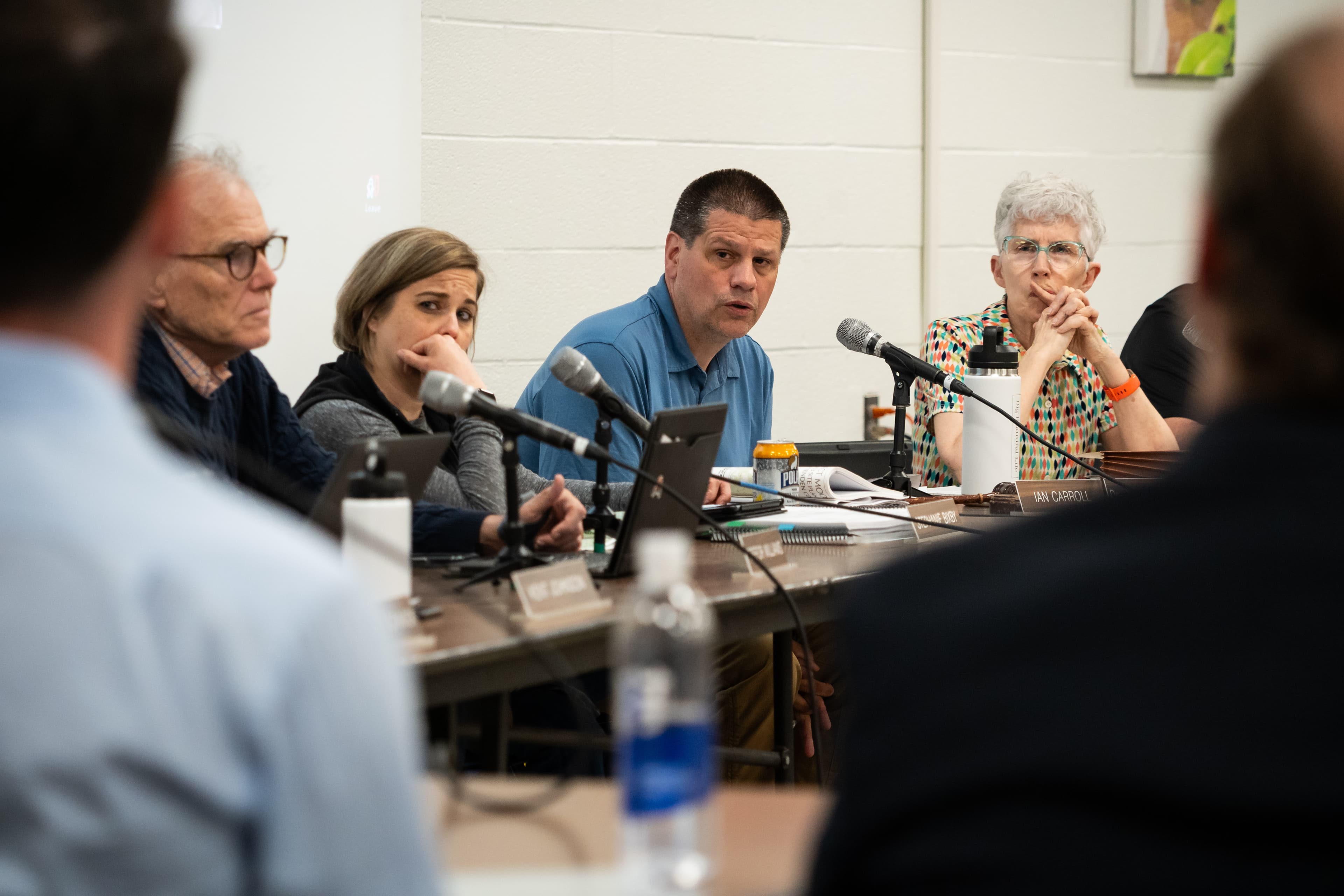
Essex County, NJ — Amazon warehouse denied after community pushback on truck traffic and air quality
News coverage
$50M+
Project Value
107K SF
Building Size
4–2
DRB Vote
Traffic
Denial Reason
Essex Junction, Vermont · 2025
The study the board couldn't trust.
Late 2024
Amazon targets Saxon Hill Industrial Park, Essex Junction, VT
Amazon identifies a 107,000 SF last-mile delivery facility opportunity at 637 Kimo Drive in the Saxon Hill Industrial Park. The site has industrial zoning but requires Development Review Board conditional use approval — a fully discretionary proceeding under Vermont law.
Pre-Filing — Early 2025
'Keep Amazon Out Of Vermont' campaign begins organizing
Before the DRB filing is even complete, organized opposition takes shape. Labor groups citing Amazon working conditions, environmental advocates flagging diesel emissions from hundreds of daily delivery van movements, and local business owners worried about truck traffic on Kimo Drive all begin coordinating.
May 2025
DRB opens proceedings — traffic study submitted
Amazon's application is formally accepted. The traffic impact study, prepared by a third-party consultant and reviewed by Essex's Department of Public Works and VTrans, is submitted. Amazon representatives maintain the study has received appropriate agency review and should not require revision.
May 30, 2025
First public hearing — residents fill chambers
Over 100 residents attend the first public hearing. Opposition testimony focuses on traffic conflicts at the Kimo Drive–Route 117 intersection, noise from early-morning delivery operations, and concerns about pedestrian safety near the adjacent residential neighborhood. The DRB signals it has serious concerns about the traffic methodology.
June 27, 2025
DRB requests additional traffic data — Amazon resists
The board explicitly asks Amazon to submit comparable-site traffic data from similar facilities in New England. Amazon representatives decline, stating the existing study is sufficient and has already been approved by DPW and VTrans. The resistance to providing additional data significantly damaged Amazon's credibility with the board.
July 18, 2025
DRB votes 4-2 to deny — 'incomplete, contradictory, unreliable'
The Essex Development Review Board votes 4-2 to deny the application. The written decision states the basis is failure to meet the town's standards for data quality and methodology, with the traffic study specifically called 'incomplete, contradictory, and unreliable.' The board declines to condition approval on a revised study.
August 29, 2025
Amazon appeals to Vermont Superior Court environmental division
Amazon files an appeal in the environmental division of Vermont Superior Court, arguing the DRB applied incorrect legal standards and that the traffic study met all applicable requirements. The appeal is expected to take 12-18 months to resolve.
Aftermath
Project stalled — $50M+ in planning costs without a shovel in the ground
The denial was not a community values rejection or a zoning incompatibility. It was a data quality failure — a fixable submission deficiency that a pre-filing review identifies. Amazon now faces litigation, re-application risk, and continued community opposition if it returns with a revised study.
The Fatal Deficiency
Traffic Study Quality
Vermont's Act 250 and local DRB review place significant weight on traffic impact data. A last-mile delivery facility generating hundreds of daily van and truck movements requires meticulous, independently verifiable traffic counts. The study Amazon submitted failed this standard on multiple dimensions.
The Political Headwind
Organized Opposition
Vermont is not a neutral regulatory environment for Amazon logistics. 'Keep Amazon Out Of Vermont' had organized community posture before the first hearing date. The DRB had political cover — and arguably political pressure — to apply maximum scrutiny to every submission deficiency.
The Discretionary Trap
Conditional Use Approval
The project was not by-right. Conditional use approval means the board has broad discretion to deny for any legitimate planning reason. When the traffic study gave the board an objective, defensible basis for denial, the outcome was effectively sealed.
The Comparable Record
Vermont DRB Denial Pattern
Vermont DRBs have a documented pattern of citing traffic study quality as a denial basis for large logistics facilities. The comparable record was visible before filing. A pre-application source review surfaces VTrans coordination and independent peer review as non-negotiable prerequisites.
“What if you knew the traffic study would be called ‘unreliable’ before the board ever read it?”
Key Decision Makers & Stakeholders
The people who decided this project's fate.
Essex DRB Board (4-vote majority)
Development Review Board — Essex Junction, VT
Documented Record
Voted 4-2 to deny, issuing a written decision finding the traffic study failed to meet the Town's standards for data quality and methodology, characterizing it as incomplete, contradictory, and unreliable.
Voted 4-2 to deny. The written decision identified traffic study quality as the sole basis for denial — making this a fixable submission error, not an irresolvable community values conflict.
DRB Minority (2 votes)
Development Review Board — Essex Junction, VT
Documented Record
Voted to approve, arguing the traffic study had been reviewed and accepted by both the Essex Department of Public Works and VTrans and that the board should not impose requirements beyond agency standards.
Two board members argued the study had received appropriate agency review. Their minority position shows the 4-2 vote was not a foregone conclusion — a better study may have changed the outcome.
Amazon / Project Moose Team
Applicant — Last-Mile Delivery Facility
Documented Record
Submitted the traffic study with VTrans review but declined the board's request for comparable-site traffic data from other Amazon delivery facilities. The board interpreted this refusal as confirmation of data weakness.
Amazon's refusal to provide comparable-site traffic data when the board requested it was a pivotal strategic error. The board interpreted the refusal as confirmation that the data was weak.
Organized Opposition Groups
'Keep Amazon Out Of Vermont' Campaign
Documented Record
Organized the 'Keep Amazon Out Of Vermont' campaign before DRB hearings began, combining labor and environmental groups to provide political context for maximum scrutiny of technical deficiencies.
Labor and environmental groups that organized before the DRB hearing began. Their presence gave the board political context for applying maximum scrutiny to every technical deficiency.
Essex DPW / VTrans
Technical Reviewing Agencies
Documented Record
Both agencies reviewed the traffic study consistent with standard protocols and did not object. The DRB majority overrode this agency review in its 4-2 denial — an unusual outcome reflecting the board's independent skepticism.
Both the Essex Department of Public Works and Vermont Agency of Transportation reviewed and did not object to the study. The DRB majority overrode this agency review — an unusual outcome that reflects the board's skepticism.
Local Residents — Kimo Drive Area
Abutting Neighbors
Documented Record
Over 100 residents testified at the May 30 public hearing raising concerns about the Kimo Drive-Route 117 intersection's capacity for hundreds of daily delivery van trips. Their concerns were validated by the board's traffic data findings.
Over 100 residents testified at the May 30 public hearing. Their concerns about the Kimo Drive–Route 117 intersection were validated by the board's finding that the traffic data was unreliable.
The Pre-Filing Research
What RealClear finds at 637 Kimo Drive.
Before a single filing fee is paid. Before a single traffic engineer is hired. Before the “Keep Amazon Out Of Vermont” signs go up.
Site Analysis
637 Kimo Drive
Saxon Hill Industrial Park, Essex Junction, VT 05452
Approval Pathway
Traffic Study Quality
Community Risk
Industrial Use
Traffic Study Flag
Vermont DRB denials frequently cite traffic data quality as the dispositive issue. “Incomplete, contradictory, and unreliable” — DRB vote 4-2 to deny, July 2025.
Community risk review — Active Opposition Campaign
“Keep Amazon Out Of Vermont” campaign active before filing. Labor and environmental groups mobilized. DRB composition leans skeptical of large distribution facilities.
Recommendation
HIGH DENIAL RISK. Traffic study must be independently peer-reviewed before submission. Community opposition requires pre-application engagement strategy. Do not file without VTrans coordination letter.
The Pre-Filing Checklist
Four source-record factors. All publicly available.
Every risk that produced this denial was visible in public records before Amazon filed. RealClear reads those records so your team doesn't have to.
Traffic Study Requirements — Vermont Act 250 & Local DRB Standards
Zoning reviewVermont's Act 250 and Essex Junction's LDR §8.3 impose specific traffic study methodology requirements for large logistics uses. The cited zoning review identifies the VTrans coordination requirement and the peer review standard before a single traffic engineer was hired. The study Amazon submitted met neither.
Discretionary Approval Path — No By-Right Protection
Approval path reviewThe cited approval-path review surfaces this immediately: 637 Kimo Drive requires DRB conditional use approval, not ministerial permit issuance. Under Vermont's conditional use standard, any credible planning concern — including traffic data quality — is sufficient grounds for outright denial.
Organized Opposition — 'Keep Amazon Out Of Vermont'
Community risk reviewThis cited case review examined public comment patterns and organized opposition groups. ‘Keep Amazon Out Of Vermont’ had public presence before the DRB filing. The board composition, the political environment, and the opposition intensity all pointed to a proceeding where any technical deficiency would be treated as fatal.
Vermont DRB Traffic Denial Pattern — Comparable Record
Comparable outcomes reviewThe Comparable outcomes review tracks entitlement decisions across Vermont. Multiple DRB denials in the 2022–2025 period cited traffic study deficiencies for large logistics facilities. The pattern was documented. A pre-filing comparable analysis makes independent VTrans coordination a non-negotiable prerequisite.
The total cost of this submission failure:
Entitlement costs for a facility this size run $50K–$260K in direct fees, consultants, and attorney time. Add months of delay, an emboldened opposition group, and a DRB that has now gone on record rejecting this applicant once. The second application is harder than the first.
A RealClear analysis costs less than one hour of traffic engineering time.
Cited Brief
How RealClear built this assessment.
This source review is backed by a traceable source trail — real articles, real officials, real patterns.
News records reviewed
Officials identified
Comparable approvals reviewed
Opposition groups in record
Event Timeline
Key milestones in the entitlement journey
2025
Amazon files 'Project Moose' — 107K SF at Saxon Hill Industrial Park
2025
'Keep Amazon Out Of Vermont' campaign mobilizes
Jul 2025
DRB votes 4-2 to deny — traffic data 'incomplete, contradictory, unreliable'
2025
Amazon files 'Project Moose' — 107K SF at Saxon Hill Industrial Park
2025
'Keep Amazon Out Of Vermont' campaign mobilizes
Jul 2025
DRB votes 4-2 to deny — traffic data 'incomplete, contradictory, unreliable'
Key Actors
Decision-makers and their positions
Essex Junction Development Review Board
Decision Body
Voted 4-2 to deny — called the traffic study 'incomplete, contradictory, and unreliable'
Opposition Record
Organized opposition groups
'Keep Amazon Out Of Vermont' Campaign
Organized campaign with labor, environmental, and community membership
Tactics
Named campaign, community organizing, working conditions and diesel emissions framing
Track Record
Provided political cover for the DRB to apply maximum scrutiny to every submission deficiency
Jurisdiction Pattern
What history tells us about this jurisdiction
Approval history
0 of 1 — denied on traffic study quality, not community values
Recent Shifts
Vermont DRBs have a documented pattern of citing traffic study quality as denial basis for large logistics facilities
Source read
This was a preventable submission error. The denial was not a community values rejection — it was a data quality failure. A pre-filing peer review of the traffic study identifies it.
Cited research compiled from 6 news articles, Essex Junction DRB records, and comparable Vermont logistics facility denial patterns
Amazon's Saxon Hill "Project Moose" denied 4-2 for traffic data described as "incomplete, contradictory, unreliable."
Vermont's Development Review Board process is unusually data-intensive. Essex's DRB used traffic-study quality as the binding objection rather than community-values framing. "Keep Amazon Out Of Vermont" carried the narrative, but the denial sits on a procedurally sound record that will travel well on appeal.
Theme distribution
How this was assembled: Every source record ties to a public source you can verify yourself — news coverage, hearing records, court filings, public testimony. No scraped gated platforms, no invented engagement numbers, no attributions that aren’t on the page. RealClear surfaces source records; your team decides. See our methodology for the full sourcing standard.
Primary Source Documents
11 DocumentsEvery finding cited to the source. Click any document to preview it directly. Source-record patterns visible to experienced entitlement analysts months before the hearing.
Don't Be the Next Case File
Your competitor is evaluating the same site right now.
RealClear runs a full entitlement risk analysis — zoning, approval pathway, traffic requirements, community opposition, and comparable outcomes — fully analyzed. Before any attorney is billed. Before any filing fee is paid.
Cited research summary · Not legal advice · Verify independently before making investment decisions