Case File · Albuquerque, New Mexico · 2026
Three gas stations already. 24 pumps. How many is too many?
Maverik bought the former Whole Foods site at Carlisle Boulevard and Indian School Road in Albuquerque and applied for a conditional use variance to build a 12-pump gas station. Eight neighborhood associations formed a coalition to oppose it, citing gas station saturation: three stations with 24 pumps already exist within a half-mile. Maverik would add 12 more — a 50% increase.
The ZHE hearing drew 100+ participants. ZHE Robert Lucero's decision is expected by April 1, 2026. The saturation theory is the legal question.
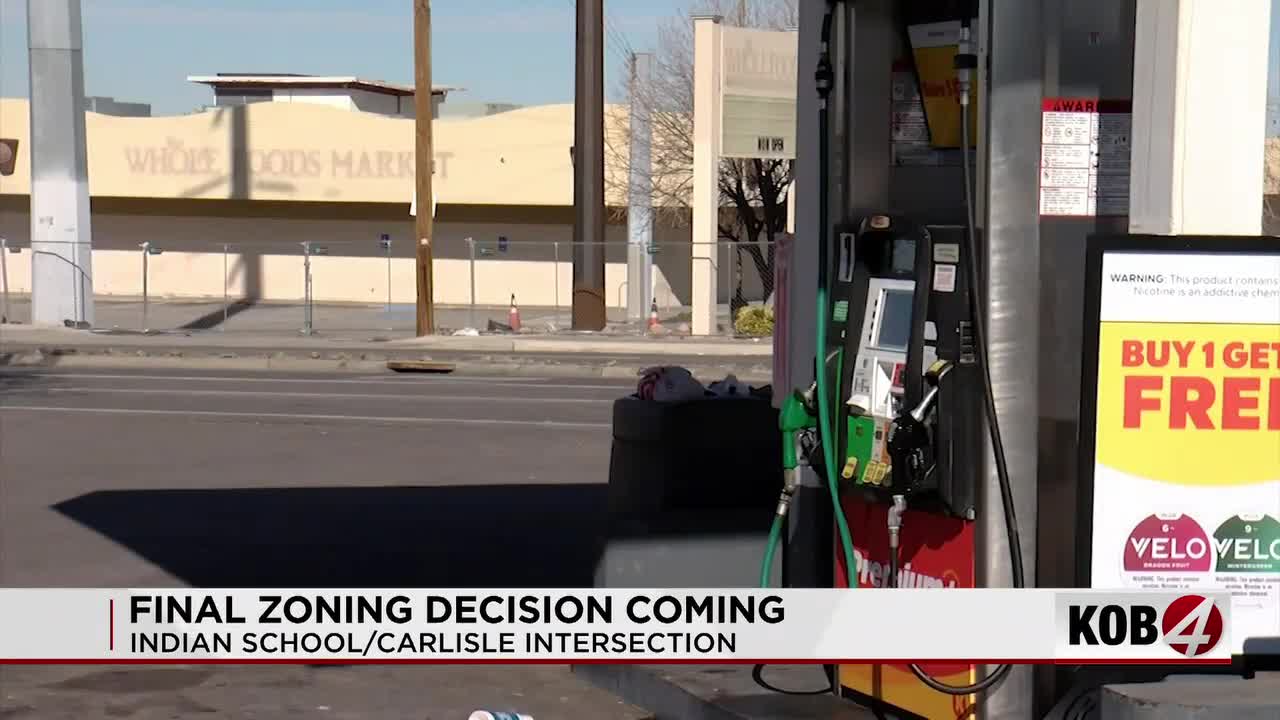
Albuquerque — Maverik's fuel station CUP denied after neighborhood opposition over traffic and aesthetics
News coverage
Location
Carlisle & Indian School
Albuquerque, NM — Former Whole Foods
Existing Gas Stations
3 Stations, 24 Pumps
Within 0.5-mile radius
Opposition
8 Neighborhood Assoc.
100+ at March 17 hearing
Traffic Impact
3x Peak Volume
Cited Brief
How RealClear built this assessment.
This source review is backed by a traceable source trail — real articles, real officials, real patterns.
News records reviewed
Officials identified
Comparable approvals reviewed
Opposition groups in record
Event Timeline
Key milestones in the entitlement journey
2025
Maverik files CUP for fuel and convenience at Indian School & Carlisle
2026
Eight neighborhood associations organize before hearing
Mar 2026
100+ participants at public hearing — staff recommends denial
2025
Maverik files CUP for fuel and convenience at Indian School & Carlisle
2026
Eight neighborhood associations organize before hearing
Mar 2026
100+ participants at public hearing — staff recommends denial
Key Actors
Decision-makers and their positions
Albuquerque City Planning Staff
Technical Review
Recommended denial citing gas station saturation — four competing stations within blocks
Eight Neighborhood Associations
Organized Opposition Coalition
Organized before the hearing was scheduled — institutional memory across multiple election cycles
Opposition Record
Organized opposition groups
Indian School/Carlisle Neighborhood Coalition (8 Associations)
Eight organized neighborhood associations — 100+ hearing participants
Tactics
Coalition coordination, gas station saturation argument, staff lobbying, mass hearing attendance
Track Record
Assembled before the first public hearing — significant institutional capacity
Engagement Strategy
Competitor proximity mapping before LOI. Association density check — 8 associations exceeds the 3-association high-risk threshold.
Risk Triggers
What activates opposition
- Fifth gas station in blocks-wide radius
- Former Whole Foods site redevelopment
- MX-L discretionary review
Jurisdiction Pattern
What history tells us about this jurisdiction
Approval history
Low approval rate reported for fuel retail CUPs in dense Albuquerque commercial corridors (2022-2026) — specific comparable cases not independently verified
Recent Shifts
Gas station saturation has moved from informal opposition argument to formal staff denial recommendation — a precedent-setting shift
Source read
MX-L zoning permits fuel retail but requires a CUP. CUPs are discretionary. Eight organized associations plus a staff denial recommendation on saturation grounds — this is a new type of entitlement risk for fuel retail nationwide.
Cited research compiled from 6 news articles, Albuquerque Integrated Development Ordinance, and comparable fuel retail CUP outcomes across Mountain West jurisdictions
MX-L zoning permits fuel retail but requires a CUP
MX-L zoning permits fuel retail but requires a CUP. CUPs are discretionary. Eight organized associations plus a staff denial recommendation on saturation grounds — this is a new type of entitlement risk for fuel retail nationwide. Cited research compiled from 6 news articles, Albuquerque Integrated Development Ordinance, and comparable fuel retail CUP outcomes across Mountain West jurisdictions
Theme distribution
How this was assembled: Every source record ties to a public source you can verify yourself — news coverage, hearing records, court filings, public testimony. No scraped gated platforms, no invented engagement numbers, no attributions that aren’t on the page. RealClear surfaces source records; your team decides. See our methodology for the full sourcing standard.
RealClear Analysis
The saturation theory: when does density become a legal denial ground?
The Albuquerque Maverik case presents a novel legal question: can a zoning hearing examiner deny a gas station application on grounds that the market is already saturated? The answer depends entirely on what Albuquerque's zoning code says.
36 pumps at one intersection is measurable saturation
Three gas stations with 24 pumps within a half-mile is an objective, quantifiable metric. Maverik's own traffic study shows a 3x peak volume increase over the former anchor. These are not character arguments — they are measurable facts.
Eight associations is the maximum opposition structure
A coalition of eight neighborhood associations filing formal opposition is the highest-intensity organized opposition a ZHE can encounter. The coalition's resources, coordination, and community credibility make their arguments structurally difficult to ignore.
Saturation as denial grounds depends on the code
Whether a ZHE can deny a use-by-right application based on market saturation depends on whether Albuquerque's CUV standards include a density or compatibility criterion. If they do, Lucero has a basis. If they don't, the coalition's argument — however logical — may be legally insufficient.
Site Analysis
Maverik — Carlisle Blvd & Indian School Rd
Albuquerque, NM — Former Whole Foods Site
Fatal Risk Factors
- Saturation: 3 gas stations within 0.5 miles — 24 pumps already; Maverik adds 12 more (50% increase)
- Coalition of 8 neighborhood associations in formal opposition — 100+ at ZHE hearing
- Traffic impact study: 3x peak traffic increase over former Whole Foods tenant
- Former Whole Foods anchor: neighborhood expected retail/grocery replacement, not 4th gas station
- ZHE Robert Lucero: decision expected April 1, 2026 — community posture strongly negative
Gas Station Density
3 within 0.5 miles
SATURATION THRESHOLDPump Count
24 existing + 12 Maverik
50% INCREASETraffic Impact
3x Peak Volume
vs. Whole Foods baselineOpposition
8 Neighborhood Assoc.
100+ at hearingCase Timeline · 2024–2026
From anchor vacancy to saturation showdown.
The Maverik case is a compressed timeline: purchase, notification, coalition formation, hearing — all within three months of the January 5 notification date.
2024
Whole Foods closes at Carlisle & Indian School — anchor vacancy created
A Whole Foods Market at Carlisle Boulevard and Indian School Road in Albuquerque closes, leaving a significant commercial anchor vacancy at a major intersection near I-40. The closure creates a community expectation — reinforced by neighborhood association statements — that the space would be replaced by retail or grocery use.
January 5, 2026
Maverik notifies neighborhood associations of purchase and CUV application
Maverik, the Utah-based convenience store chain, notifies area neighborhood associations that it has purchased the former Whole Foods land and submitted a conditional use variance (CUV) application to the City of Albuquerque to build a 12-pump gas station and convenience store. The notification is required under Albuquerque's neighborhood association process. The date — January 5 — triggers the 30-day comment period.
January–March 2026
Coalition of 8 neighborhood associations mobilizes
Eight neighborhood associations in the Carlisle/Indian School corridor form a coalition to oppose the Maverik application. The coalition's core argument: the Carlisle/Indian School intersection already has three gas stations with 24 pumps within a half-mile. Adding 12 more pumps represents a 50% increase in fuel dispensing capacity in a corridor that is already, by any reasonable measure, saturated.
March 17, 2026
ZHE hearing — 100+ participants, saturation argument presented
More than 100 concerned parties participate in the March 17 public hearing before Zoning Hearing Examiner Robert Lucero. The coalition presents its saturation argument: 24 pumps + 12 more = 36 total pumps at a single intersection. The traffic impact study shows a 3x peak traffic increase over the former Whole Foods anchor. Maverik's representative Carl Garcia counters that market research shows sufficient pass-through traffic to support four stations.
April 1, 2026
ZHE Robert Lucero's decision expected
ZHE Robert Lucero commits to issuing his written decision within 15 days of the March 17 hearing — meaning a decision is expected by approximately April 1, 2026. The saturation theory has been presented as a primary denial grounds. Lucero must determine whether Albuquerque's zoning code provides a saturation-based denial standard, or whether Maverik's use-by-right entitlement on the commercially zoned site is not subject to neighborhood density objections.
Key Officials & Stakeholders
The examiner, the coalition, and the applicant.
Robert Lucero
Zoning Hearing Examiner (ZHE)
City of Albuquerque
Documented Record
Committed to issuing a written decision within 15 days of the hearing's conclusion. Sole decision-maker in the first instance under Albuquerque's zoning hearing process.
Lucero is the sole decision-maker in the first instance. His ruling will turn on whether Albuquerque's zoning code provides a basis for denial based on market saturation — a theory that is well-established in some jurisdictions but not universal. His written decision will be the first definitive answer.
Eric Kruger / North Campus Neighborhood Organization
Lead Opposition Coalition Coordinator
Coalition of 8 neighborhood associations
Documented Record
Led coalition of 8 neighborhood associations arguing the intersection cannot economically support a fourth gas station with 12 additional pumps on top of the 24 already operating at three existing stations.
Kruger's framing — economic saturation rather than character objection — is legally sophisticated. It avoids the appearance of pure NIMBY opposition and provides a measurable, analytical basis for denial. Whether Albuquerque's code supports saturation-based denial is the key legal question.
Maverik / Carl Garcia (Representative)
Applicant
Former Whole Foods Site, Carlisle & Indian School
Documented Record
Submitted market research showing year-long location analysis determined sufficient pass-through traffic to support four stations in close proximity. Filed conditional use application for the former Whole Foods site.
Maverik's market research argument — pass-through traffic justifies four stations — is commercially reasonable but legally insufficient if Albuquerque's code provides a density-based denial mechanism. The 3x traffic increase figure from the impact study is Maverik's biggest problem.
8 Neighborhood Associations
Community Opposition Coalition
Carlisle/Indian School corridor
Documented Record
Filed formal opposition citing the expectation of a grocery or retail anchor to replace Whole Foods, not a fourth gas station at an intersection already served by three. Submitted traffic and pump-count data to support saturation argument.
The coalition's community expectation argument — Whole Foods replacement should be retail, not gas — is politically powerful but legally weaker than the saturation argument. The coalition is smart to lead with the measurable pump count and traffic data rather than the character argument.
Primary Source Documents
9 DocumentsEvery finding cited to the source. Click any document to preview it directly. Source-record patterns visible to experienced entitlement analysts months before the hearing.
RealClear
Know the gas station density at any intersection before you buy the land.
RealClear analyzes competitive density, identifies saturation thresholds, and flags corridors where neighborhood association opposition is likely to be organized and well-resourced.
Screen a site