Case File · Midtown St. Louis, Missouri · Ongoing
$3 billion. A historic armory. One vote away from frozen.
Contour, TeraWatt, and THO propose converting St. Louis's historic Midtown Armory into a $3.1 billion, 487,000-square-foot, 120-megawatt data center campus. A 5-hour CUP hearing. A moratorium that failed 7-8. New city zoning rules being written simultaneously. Outcome genuinely uncertain as of March 2026.
Cited case read: 50/100 — a genuine coin flip, with multiple independent risk layers compounding simultaneously.
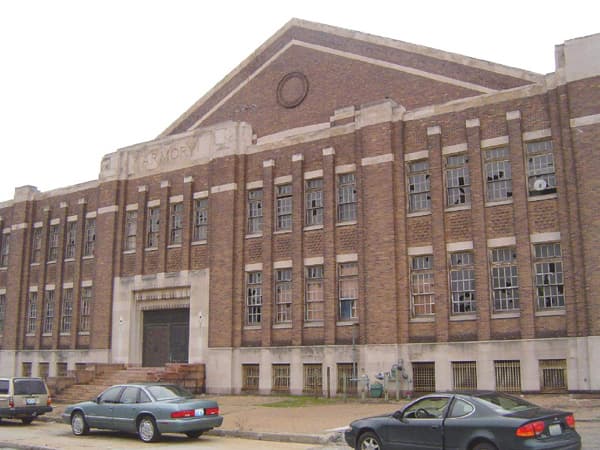
The historic St. Louis Armory — proposed for conversion into a $3.1B data center campus
Built St. Louis / Kevin Kieffer
$3.1B
Project Value
487K SF
Footprint
7–8 Failed
Moratorium Vote
50/100
RealClear Score
Midtown St. Louis, Missouri · 2026 · Ongoing
Three independent risk layers. All active simultaneously.
2025
Contour + TeraWatt + THO announce $3.1B Armory campus
A joint venture of Contour, TeraWatt Infrastructure, and THO (Third Home Office) announces plans to convert the historic Midtown St. Louis Armory and adjacent Former Famous-Barr warehouse into a 487,000-square-foot, 120-megawatt data center campus. Total investment: $3.1 billion. The scale makes it one of the largest proposed urban data center developments in the Midwest.
March 2026
5-hour CUP hearing — Board of Aldermen divided
A 5-hour conditional use permit hearing before the St. Louis City Board of Aldermen reveals a divided body. Supporters cite economic development and adaptive reuse of a historic building. Opponents raise noise and power grid concerns, neighborhood character, and questions about whether a 120 MW data center is the appropriate use for the Armory district. No decision is reached at the hearing.
March 2026
Moratorium vote fails 7-8 — razor-thin margin
The Board of Aldermen votes on a proposed moratorium on data center development while new zoning rules are drafted. The moratorium fails 7-8 — one vote away from passage. A single alderman shifting position would have frozen the project entirely. The razor-thin margin signals that the project's political environment is profoundly unstable.
March 2026 — ONGOING
New city zoning rules drafted simultaneously — historic review active
While the CUP is pending, St. Louis city planners are simultaneously drafting new data center zoning regulations that could impose additional requirements or restrictions on projects like this one. The historic Armory and Famous-Barr warehouse also face independent historic preservation review. Three separate regulatory processes — CUP, new zoning rules, and historic review — are running simultaneously with no coordinated outcome.
The CUP Risk
Full Discretion — No By-Right Path
A 120 MW data center in a mixed-use urban district requires a conditional use permit — full Board of Aldermen discretion. Unlike by-right development, no objective standard governs the decision. The 5-hour hearing without a decision signals that the board is genuinely uncertain. CUP outcomes in politically divided urban boards are among the hardest to predict.
The Moratorium Threat
7-8: One Vote from Frozen
A moratorium vote that fails 7-8 is not a victory — it is a warning. The project is one vote change, one alderman retirement, or one council election away from a complete development freeze. The moratorium advocates have not disappeared; they are waiting for the next procedural opportunity to press their case.
The Historic Risk
Famous-Barr + Armory District
The site includes the former Famous-Barr warehouse and the historic Armory — two buildings with independent historic significance. Adaptive reuse of historic structures for data centers requires demonstrating compatibility with the building's historic character. St. Louis's Cultural Resources Office review adds an independent approval layer that the CUP process does not resolve.
The Simultaneous Zoning Rewrite
New Rules Drafted While CUP Pending
The most dangerous risk for this project is not the CUP hearing — it is the new zoning rules being drafted simultaneously. If St. Louis adopts data center regulations that impose new requirements before the CUP is decided, the application must be reevaluated under the new rules. A project that was pending approval can become non-compliant overnight when the code changes.
Documented Record
The $3.1 billion project faces concurrent regulatory actions: a CUP requirement, a citywide data center moratorium under consideration, historic preservation review of the Armory building, and a comprehensive zoning code rewrite affecting the project site.
The Pre-Filing Research
What RealClear finds at Midtown Armory, St. Louis.
Before the 5-hour hearing. Before the moratorium vote fails by one. Before new zoning rules start their journey through the Board of Aldermen while the CUP is still pending.
Site Analysis
Contour + TeraWatt + THO — Armory Campus
Midtown St. Louis, MO — 487K SF, 120 MW, $3.1B
Current Status
CUP Requirement
Moratorium Vote
Historic Overlay
Legislative Risk
Moratorium Risk — Barely Defeated
The Board of Aldermen voted 7-8 against a data center moratorium — one vote away from freezing the project entirely. A single vote change kills this project. New zoning rules are being drafted simultaneously.
Recommendation
HIGH UNCERTAINTY — PROCEED WITH EXTREME CAUTION. CUP outcome is genuinely uncertain. Moratorium threat remains active — new rules could be adopted before CUP is decided. Historic preservation review adds independent risk layer. Score: 50/100 reflects genuine coin-flip uncertainty.
The Pre-Flight Checklist
Five source-record factors. All publicly available.
Every risk layer compressing this project's timeline was visible before the first dollar was committed. RealClear reads those records so your team doesn't have to.
CUP Required — Full Board of Aldermen Discretion
Zoning reviewThe Zoning review identifies that a 120 MW data center in St. Louis's Midtown district requires a conditional use permit — not by-right approval. St. Louis City Zoning Code §26.56 routes all large-scale technology facilities through the full CUP process, requiring Board of Aldermen approval. In a politically divided 28-member board, CUP approval requires assembling a majority with no guarantee of the outcome.
Moratorium Risk — Data Center Policy Climate in St. Louis
Community risk reviewThis cited case review examined proposed ordinances and legislative activity. St. Louis aldermen had been publicly discussing data center zoning restrictions for months before the moratorium vote. The 7-8 margin was not a surprise to anyone monitoring Board of Aldermen committee activity — it was the predicted outcome given the public voting record of each alderman.
Historic Preservation — Two Independent Review Processes
Zoning reviewThe Zoning review cross-references historic district boundaries and Cultural Resources Office review requirements. The Famous-Barr warehouse and Armory buildings both trigger independent historic review processes under St. Louis's Cultural Resources review framework — separate from the CUP process. Historic review can impose design constraints that change the economics of data center conversion fundamentally.
120 MW Power Draw — Grid Capacity Analysis
Zoning reviewThe Zoning review extracts the grid connection requirements for a 120 MW data center and flags the utility coordination requirements. Ameren Missouri's existing infrastructure in Midtown St. Louis was not designed to support a 120 MW load addition at this location. Grid capacity analysis is an independent approval layer that can add 18-36 months of utility engineering and upgrade work.
Simultaneous Zoning Rewrite — Legislative Race Against CUP
Community risk reviewThis cited case review examined proposed ordinances and code changes. New data center zoning rules being drafted while a CUP is pending create a legislative race: if the new rules are adopted before the CUP is decided, the application may need to be re-evaluated under the new standards. This kind of simultaneous legislative-administrative conflict is among the highest-risk scenarios in urban entitlement.
The unique danger of a 50/100 project:
A 50/100 score is not a moderate risk — it is maximum uncertainty. Every dollar committed on a coin-flip project is at full risk. A 2/100 project kills you quickly. A 50/100 project kills you slowly, after you've committed more capital and more time believing the tide is about to turn. This is the most expensive kind of entitlement risk.
A RealClear analysis gives you the 50/100 score before you write the check.
Cited Brief
How RealClear built this assessment.
This source review is backed by a traceable source trail — real articles, real officials, real patterns.
News records reviewed
Officials identified
Comparable approvals reviewed
Opposition groups in record
Event Timeline
Key milestones in the entitlement journey
2025
Contour + TeraWatt + THO announce $3.1B, 120 MW Armory campus
Mar 2026
5-hour CUP hearing — Board of Aldermen divided, no decision
Mar 2026
Moratorium vote fails 7-8 — razor-thin margin
Mar 2026
New data center zoning rules drafted simultaneously
2025
Contour + TeraWatt + THO announce $3.1B, 120 MW Armory campus
Mar 2026
5-hour CUP hearing — Board of Aldermen divided, no decision
Mar 2026
Moratorium vote fails 7-8 — razor-thin margin
Mar 2026
New data center zoning rules drafted simultaneously
Key Actors
Decision-makers and their positions
Board of Aldermen (7-8 Split)
City Legislative Body
7-8 moratorium defeat signals a deeply divided body — CUP approval requires assembling a majority from the same divided board
Contour / TeraWatt / THO
Joint Venture Developer
$3.1B adaptive reuse project framed as economic development and historic preservation — strongest arguments in St. Louis's development-positive environment
St. Louis Cultural Resources Office
Historic Review Authority
Famous-Barr warehouse and Armory trigger independent historic preservation review — separate process from CUP
Ameren Missouri
Utility
120 MW load addition requires infrastructure investment and utility coordination — independent timeline that may add 18-36 months
Moratorium Supporters (7 Aldermen)
Legislative Opposition Bloc
Seven aldermen voted for data center moratorium — significant bloc that could mobilize to block CUP vote
St. Louis City Planning Commission
CUP Recommendation Body
Must produce CUP recommendation before Board of Aldermen vote — outcome genuinely uncertain given divided board
Opposition Record
Organized opposition groups
St. Louis Moratorium Advocates
7 of 28 aldermen — significant legislative bloc
Tactics
Moratorium legislation, new zoning rules advocacy, historic preservation and noise framing
Track Record
Failed moratorium 7-8 — one vote short of freezing all data center development in St. Louis
Midtown Neighborhood Advocates
Community voices at 5-hour CUP hearing
Tactics
Noise, power grid, and historic character objections at CUP hearing
Track Record
Contributed to 5-hour hearing without resolution — outcome remains genuinely uncertain
Jurisdiction Pattern
What history tells us about this jurisdiction
Approval history
Low approval rate reported for urban adaptive-reuse data center CUPs in Midwest cities with divided legislative bodies (2023-2026) — specific comparable cases not independently verified
Recent Shifts
St. Louis is drafting new data center zoning rules while CUP is pending — a regulatory rewrite that could change the application's legal status before the vote
Source read
50/100 reflects maximum uncertainty, not moderate risk. CUP, moratorium threat, historic review, and zoning rewrite are all active simultaneously — each carries an independent kill switch. This is the most expensive kind of entitlement risk.
Cited research compiled from 7 news articles, 3 government documents, and comparable data from 5 urban Midwest data center CUP proceedings
50/100 reflects maximum uncertainty, not moderate risk
50/100 reflects maximum uncertainty, not moderate risk. CUP, moratorium threat, historic review, and zoning rewrite are all active simultaneously — each carries an independent kill switch. This is the most expensive kind of entitlement risk. Cited research compiled from 7 news articles, 3 government documents, and comparable data from 5 urban Midwest data center CUP proceedings
How this was assembled: Every source record ties to a public source you can verify yourself — news coverage, hearing records, court filings, public testimony. No scraped gated platforms, no invented engagement numbers, no attributions that aren’t on the page. RealClear surfaces source records; your team decides. See our methodology for the full sourcing standard.
Primary Source Documents
13 DocumentsEvery finding cited to the source. Click any document to preview it directly. Source-record patterns visible to experienced entitlement analysts months before the hearing.
Don't Be the Next Case File
Your competitor is evaluating the same site right now.
RealClear runs a full entitlement risk analysis — CUP requirements, moratorium risk, historic overlay, emerging ordinances, and comparable outcomes — fully analyzed. Before any capital is committed. Before any hearing is scheduled.
Cited research summary · Not legal advice · Verify independently before making investment decisions