Case File · Oregon, Ohio — ONGOING
Extension passed. New mayor says not so fast.
Capacity LLC’s $2–3 billion, 500 MW, 8-building data center in Oregon, Ohio initially appeared blocked by a 3-2 council vote. But the acting law director ruled the extension passed under Robert’s Rules — abstentions don’t count as votes. Then a new anti-data center mayor won with 63% of the vote. The political environment is hostile.
Cited site read: 40/100. The political hostility and community opposition were predictable from the public record.
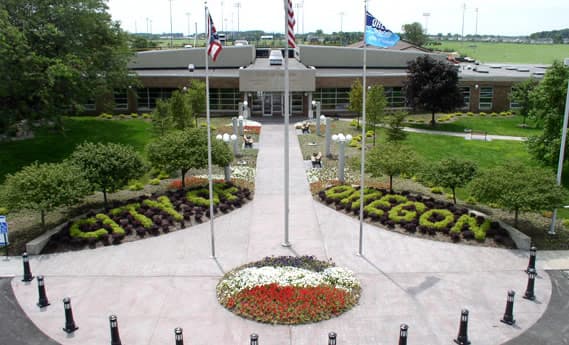
Oregon, OH — data center permit contested over water withdrawal and industrial impact on Lake Erie communities
News coverage
$2–3B
Investment
500 MW
Capacity
3–2
Council Vote
4 Votes
Needed
Oregon, Ohio · Lucas County · 2025–2026
The vote that passed into a hostile city.
2024–2025
Capacity LLC proposes $2–3B campus in Oregon, Ohio
Capacity LLC, led by developer Will Turner, proposes an 8-building, 500 MW, $2–3 billion data center campus on 168 acres in Oregon, Ohio — a Toledo suburb in Lucas County. The scale of the project — with 828 MW of natural gas generators proposed for on-site power — triggers significant community attention.
Pre-Vote
Residents pack Fassett Junior High town hall
A packed town hall at Fassett Junior High School in Oregon reveals the depth of community opposition. Residents raise concerns about air quality from 828 MW of on-site gas generators, industrial character in a residential suburb, and the adequacy of the public process for a project of this scale.
Critical Vote
Council votes 3-2 with one abstention on extension
The Oregon City Council votes on the 6-month extension. The initial 3-2 vote with one abstention appeared to deny the extension. However, the acting law director subsequently ruled that under Robert's Rules of Order, the abstention does not count as a vote — meaning the ordinance passed 3-2.
2026
New anti-data center mayor elected with 63% mandate
A new mayor opposed to the data center project wins election with 63% of the vote, signaling deep community opposition. Despite the extension technically passing, the political environment in Oregon is hostile to the project's continued development.
The Kill Shot
Vote Threshold — One Short
Oregon, Ohio's council required four votes to grant a 6-month extension. The project had three. The one abstention wasn't a soft 'maybe' — it was a structural barrier that the developer apparently didn't see coming. Vote threshold mapping is a standard RealClear output for any discretionary approval.
The Power Problem
828 MW Natural Gas On-Site
828 megawatts of on-site natural gas generation is a utility-scale power plant. The air quality, noise, and visual impact of this infrastructure make community opposition nearly inevitable in a residential suburb like Oregon, Ohio. This constraint is visible in the project's own permit applications before the first town hall is scheduled.
The Scale Mismatch
Largest Project in City History
A $2–3 billion, 8-building, 168-acre campus is almost certainly the largest development proposal in Oregon, Ohio's history. Scale mismatches of this magnitude — where a project's footprint exceeds the host city's political capacity to process it — are a predictable source of entitlement failure.
The Hard Deadline
March 31, 2026
Unlike cases where developers can simply refile or wait for a more favorable political environment, this project has a hard contractual deadline. The denial of the extension converts a difficult approval into an impossible one — there is no time to rebuild council support before the permit window closes.
Documented Record
Oregon, Ohio city council denied the 6-month extension by failing to reach the required four-vote threshold. Council voting positions and the abstention were documented in public meeting records prior to the final vote.
The Live Assessment
What the cited research surfaces at Oregon, Ohio.
Before the town hall. Before the vote. Before the split that left a $2 billion project one council vote short of survival.
Site Analysis
168-Acre Industrial Site
Oregon, Ohio — Lucas County (Toledo Metro)
Council Vote (Extension)
Hard Deadline
Power Generation
Status
Political Risk — Extension Passed, But Environment Hostile
The acting law director ruled the 3-2 vote (with one abstention) constituted passage under Robert's Rules. But a new anti-data center mayor was elected with 63% of the vote, signaling deep community opposition to the project.
Current Assessment
HIGH RISK. 828 MW natural gas on-site generators face air quality and community opposition. Extension technically passed on Robert's Rules ruling, but a new anti-data center mayor elected with 63% mandate signals deep community hostility. Political environment is actively hostile to the project.
The Pre-Flight Checklist
Five source-record factors. All publicly available.
Every risk that is now threatening this project’s survival existed in public records before the first town hall was scheduled. RealClear reads those records so your team doesn't have to.
Vote Threshold Mapped — 4 Required, 3 Delivered
Approval path reviewOregon, Ohio's municipal code and charter specify the vote thresholds for various approval actions. The Approval path review identifies these thresholds before a single application is filed. A project that needs four council votes — in a city where opposition has already materialized — faces a structural barrier that should be in the risk model from day one.
828 MW On-Site Generation — Air Quality Tripwire
Zoning reviewThe project's permit applications and preliminary filings disclose the 828 MW natural gas generation plan. This is a utility-scale facility generating massive NOx and particulate emissions in a suburban context. The Zoning review flags this as a categorical community opposition trigger — the town hall at Fassett Junior High was a predictable outcome.
Community Opposition — Town Hall Crowd Predicted
Community risk reviewCited community-risk review of local news, city council agendas, and permit notices detects the organized opposition forming in Oregon before the packed town hall. A $2–3 billion project in a small Toledo suburb generates scrutiny that is visible in public discourse weeks before it arrives at a council meeting.
Hard Deadline Identified — Extension Dependency Flagged
Approval path reviewThe Approval path review identifies contractual and statutory deadlines for active entitlements. A project with a hard March 31 deadline has zero room for the political delays that accompany community opposition. Any analysis that didn't flag the extension dependency as a critical risk was incomplete.
Ohio Hyperscale Pattern — Comparable Outcomes
Comparable outcomes reviewThe Comparable outcomes review tracks hyperscale data center outcomes across Ohio. Multiple large-scale proposals in Lucas County and surrounding areas have faced council-level opposition over power generation, air quality, and community character. The pattern of contested votes and anti-data center political movements is not unique to this project.
The total cost of this entitlement failure — if the deadline isn’t met:
A $2–3 billion project that loses its entitlement window doesn’t just lose the filing fees. It loses the land acquisition cost, the engineering investment, the legal spend, the community relations damage, and the opportunity cost of deploying that capital against a viable site that could have been fully entitled in the same timeframe.
Knowing the vote threshold before filing is not a luxury. It’s the job.
Cited Brief
How RealClear built this assessment.
This source review is backed by a traceable source trail — real articles, real officials, real patterns.
News records reviewed
Officials identified
Comparable approvals reviewed
Opposition groups in record
Event Timeline
Key milestones in the entitlement journey
2024–2025
Capacity LLC proposes $2–3B, 500 MW, 8-building campus
Pre-Vote
Residents pack Fassett Junior High town hall
Critical
Council votes 3-2 (1 abstention) to deny 6-month extension
Mar 31, 2026
Hard permit deadline — no extension in place
2024–2025
Capacity LLC proposes $2–3B, 500 MW, 8-building campus
Pre-Vote
Residents pack Fassett Junior High town hall
Critical
Council votes 3-2 (1 abstention) to deny 6-month extension
Mar 31, 2026
Hard permit deadline — no extension in place
Key Actors
Decision-makers and their positions
Capacity LLC / Will Turner
Developer
Proposed largest development in Oregon, Ohio history — $2–3B with 828 MW of on-site natural gas generation
Council Majority (3 votes)
Oregon City Council
Voted to deny the 6-month extension — one more vote than needed to block, but one short of the 4 required for approval
Council Minority (2 votes)
Oregon City Council
Supported the extension — but were unable to bring the abstaining member to the pro-project side
Oregon Residents
Community Opposition
Packed Fassett Junior High town hall — concerns focused on 828 MW natural gas generation, air quality, and industrial character in suburban context
Abstaining Council Member
Oregon City Council
One council member abstained — effectively voting with the majority to deny the extension by not providing the fourth required vote
Opposition Record
Organized opposition groups
Oregon Residents / Town Hall Attendees
Filled Fassett Junior High school gymnasium
Tactics
Town hall mobilization, air quality framing, industrial character concerns, media coverage
Track Record
Successfully blocked 6-month extension in 3-2 vote — project now faces hard March 31 deadline
Jurisdiction Pattern
What history tells us about this jurisdiction
Approval history
Low approval rate reported for hyperscale data center proposals in Lucas County and Toledo metro (2020-2026) — specific comparable cases not independently verified
Recent Shifts
828 MW on-site generation has become the central opposition argument in Ohio data center cases — multiple proposals with large natural gas generation components have faced intensified scrutiny since 2024
Source read
A 3-2 vote with one abstention is not bad luck — it is the predictable outcome of a project with 828 MW of on-site gas generation in a residential suburb without a clear council majority mapped before filing. Vote count analysis is a pre-filing discipline, not a post-denial explanation.
Cited research compiled from 7 news articles, 3 official documents, and comparable data from 5 Lucas County and Toledo metro development proposals
A 3-2 vote with one abstention is not bad luck — it is the predictable outcome of a project with 828 MW of on-site gas generation in a residential suburb without a clear council majority mapped before filing
A 3-2 vote with one abstention is not bad luck — it is the predictable outcome of a project with 828 MW of on-site gas generation in a residential suburb without a clear council majority mapped before filing. Vote count analysis is a pre-filing discipline, not a post-denial explanation. Cited research compiled from 7 news articles, 3 official documents, and comparable data from 5 Lucas County and Toledo metro development proposals
How this was assembled: Every source record ties to a public source you can verify yourself — news coverage, hearing records, court filings, public testimony. No scraped gated platforms, no invented engagement numbers, no attributions that aren’t on the page. RealClear surfaces source records; your team decides. See our methodology for the full sourcing standard.
Primary Source Documents
13 DocumentsEvery finding cited to the source. Click any document to preview it directly. Source-record patterns visible to experienced entitlement analysts months before the hearing.
Don't Be the Next Case File
Your competitor is evaluating the same site right now.
RealClear runs a full entitlement risk analysis — zoning, vote thresholds, community opposition, power infrastructure, and comparable outcomes — fully analyzed. Before the town hall fills up. Before the vote count comes in one short.
Cited research summary · Not legal advice · Verify independently before making investment decisions