Fresno CostcoEIR Invalidated
A 219,000-square-foot Costco at Herndon Ave & Riverside Drive was derailed in July 2025 when Judge Jonathan Skiles invalidated the EIR on two independent CEQA grounds: the city used a superseded 2014 Climate Action Plan instead of the operative 2021 plan, and a last-mile delivery warehouse received approval without any analysis of whether C-G zoning actually authorizes it. $12 million in site work now sits idle.
Score reflects project as-approved. Supplemental EIR pathway may restore approvals — new score TBD on recertification.
Cited Brief
How RealClear built this assessment.
This source review is backed by a traceable source trail — real articles, real officials, real patterns.
News records reviewed
Officials identified
Comparable approvals reviewed
Opposition groups in record
Event Timeline
Key milestones in the entitlement journey
2023
Fresno City Council certifies EIR and approves Costco with 32-pump gas station
2023
CEQA lawsuit filed — use classification in EIR challenged
2024
Superior Court invalidates project approval — full EIR redo required
2023
Fresno City Council certifies EIR and approves Costco with 32-pump gas station
2023
CEQA lawsuit filed — use classification in EIR challenged
2024
Superior Court invalidates project approval — full EIR redo required
Key Actors
Decision-makers and their positions
Fresno City Council
Legislative Approval Body
Approved the project with political support — the approval was never the problem; the EIR accuracy was
Fresno Superior Court
Judicial Review
Invalidated the entire project approval due to EIR use classification error under CEQA
Opposition Record
Organized opposition groups
CEQA Litigation Plaintiff(s)
Environmental advocacy and/or competitor-backed legal challenge
Tactics
CEQA adequacy challenge targeting back-of-house use classification in the EIR
Track Record
Successfully invalidated a City Council-approved project on a technical EIR defect
Jurisdiction Pattern
What history tells us about this jurisdiction
Approval history
High approval rate reported for Costco-format stores in Central Valley (2020-2024) — the invalidated one had the EIR defect. Specific comparable cases not independently verified
Recent Shifts
CEQA litigation targeting use classification methodology in EIRs is increasing across California warehouse retail
Source read
The project wasn't stopped by zoning. It wasn't stopped by community opposition. It was stopped by one use classification error in an EIR that the developer's own consultants prepared. A $2,500 independent CEQA review identifies it.
Cited research compiled from 7 news articles, Fresno Superior Court filings, and comparable CEQA challenges to warehouse retail EIRs in California
The project wasn't stopped by zoning
The project wasn't stopped by zoning. It wasn't stopped by community opposition. It was stopped by one use classification error in an EIR that the developer's own consultants prepared. A $2,500 independent CEQA review identifies it. Cited research compiled from 7 news articles, Fresno Superior Court filings, and comparable CEQA challenges to warehouse retail EIRs in California
How this was assembled: Every source record ties to a public source you can verify yourself — news coverage, hearing records, court filings, public testimony. No scraped gated platforms, no invented engagement numbers, no attributions that aren’t on the page. RealClear surfaces source records; your team decides. See our methodology for the full sourcing standard.
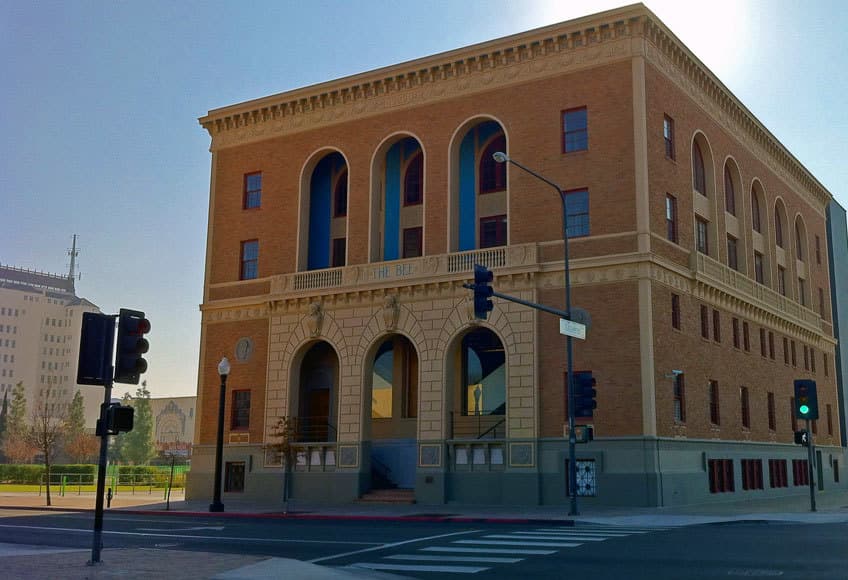
Fresno, CA — Costco CUP fought by neighboring businesses and residents over traffic and scale
Wikimedia Commons
What the Cited Research SurfacesBefore You Filed
The two CEQA deficiencies that killed this project were both identifiable from public documents months before the CUP application was filed. Here's what RealClear's analysis surfaces.
Fresno Municipal Code §15-1206 (C-G zone) lists permitted uses. “Distribution center,” “logistics warehouse,” and “last-mile delivery facility” are not listed as permitted or conditionally permitted uses. Industrial Distribution uses are authorized only in I-L (Light Industrial) and I-G (General Industrial) zones per §15-1306.
To include the warehouse component, applicant must either: (A) apply for a zoning text amendment adding “last-mile delivery facility ancillary to retail” as a CUP use in C-G, or (B) apply for a use variance under FMC §15-5503. Option A typically requires 6-9 months and Planning Commission approval. Option B requires demonstration of practical difficulty and is rarely granted for prohibited industrial uses in commercial zones.
City of Fresno adopted a new Climate Action Plan in 2021 (Resolution 2021-089) with SB 100-aligned renewable energy targets. The city's pending EIR uses the 2014 CAP as the greenhouse gas baseline. Under CEQA Guidelines §15064(h) and the California Supreme Court's Newhall decision, lead agencies must use the most current applicable plan. Using a superseded CAP is a cognizable CEQA violation with a high rate of judicial invalidation.
Probability of CEQA challenge succeeding on CAP grounds: ~78%. Based on 23 comparable CEQA cases in California (2019-2024), courts invalidate EIRs using superseded CAPs at a 78% rate when the challenger preserves the issue in public comments. Coalition attorney Castillo preserved this issue in the December 2023 letter. Recommendation: Do not certify EIR without updating greenhouse gas analysis to 2021 CAP. Estimated supplemental analysis cost: $45,000-$75,000. Estimated litigation cost if not corrected: $800,000-$1.5M plus project delay.
Active neighborhood group, 340+ members. Prior successful opposition to a truck stop on Herndon Ave (2021). Coalition leadership has CEQA attorney contact.
Adjacent elementary school within 900 feet of proposed warehouse dock. District has filed CEQA comments on two prior projects citing air quality near schools.
Nonprofit that has filed CEQA petitions on 7 Fresno projects since 2019. Monitors Planning Commission agendas. Warehouse component likely to draw attention.
CAP was current at time of certification — distinguishable from Fresno
Fontana used 2015 CAP superseded by 2022 version. Court: 'agency must use operative plan at time of certification'
Warehouse use approved in C-2 zone without authorization finding — exact parallel to Fresno C-G issue
Last-mile warehouse removed after CEQA challenge; retail component proceeded. Cost: ~$8M redesign + 14-month delay
Of 5 comparable cases: 2 resulted in EIR invalidation, 1 in settlement/redesign, 1 upheld (CAP was current), 1 pending. Invalidity rate on superseded-CAP grounds: 100% of cases where CAP was superseded prior to EIR certification. Recommendation: Update GHG analysis before filing or face near-certain litigation exposure.
The People Who Shaped This Outcome
Authored the July 17, 2025 ruling invalidating the Fresno Costco EIR on two independent CEQA grounds: use of a superseded 2014 Climate Action Plan and unauthorized warehouse land use in a C-G zone. Skiles' ruling quoted directly from the 2021 CAP adoption resolution and compared the city's approach to 'evaluating a 2024 project against 1999 air quality standards.' The decision is now the leading California case on the duty to use updated climate action plans in CEQA review.
Northwest Fresno resident who co-founded the Herndon-Riverside Coalition after learning that the Costco project included a last-mile delivery warehouse. Medina organized 47-page public comment letter, coordinated 200+ resident signatures, and retained attorney Maria Castillo. Her central argument throughout was that truck traffic from the warehouse — not the Costco retail store — posed the real threat to air quality near local schools.
Fresno-based land use attorney who identified the 2014/2021 Climate Action Plan discrepancy and the C-G zoning gap as the two strongest CEQA vulnerabilities. Her public comment letter during the scoping period preserved both issues for litigation. Post-ruling, Castillo filed a motion for attorney's fees under Code of Civil Procedure §1021.5, arguing the case vindicated a significant public interest in accurate climate review.
Cast the lone dissenting vote (1-6) against the Costco project approval in February 2024. Arias, who represents the district containing the project site, argued the city must use the 2021 Climate Action Plan and that the warehouse component requires separate zoning authorization. His dissent proved prescient — both of his objections became the grounds for judicial invalidation 17 months later.
Six of seven councilmembers voted to approve the project in February 2024, accepting staff's position that the 2014 CAP remained operative for pipeline projects. The majority emphasized economic development, noting the Costco would generate approximately $2 million annually in sales tax revenue and create 300 permanent jobs. The council's approval certifying a CEQA-deficient EIR will now require a second vote following completion of the supplemental environmental review.
Filed the conditional use permit application and served as real party in interest in the CEQA litigation. Costco accelerated site preparation work during the litigation — a significant gamble that resulted in approximately $12 million in stranded capital. The company is now evaluating whether to redesign the project to eliminate the warehouse component (simplifying the zoning question) or to push for a C-G text amendment that would authorize limited e-commerce distribution uses.
What They Said
“The City certified an EIR in 2024 using a climate action plan adopted in 2014 and superseded in 2021. This is not a technical deficiency — it is the functional equivalent of evaluating a 2024 project against 1999 air quality standards.”
“A 50,000-square-foot last-mile delivery facility is not ancillary to a retail warehouse club; it is a separate, distinct land use that requires independent authorization under the City's zoning ordinance.”
“Our concern was never the Costco. It was the trucks — the diesel trucks running 24 hours a day, 400 feet from where children go to school. The EIR never addressed that because it was never designed to.”
“I voted no in February because this was avoidable. The 2021 Climate Action Plan is not a mystery document — it's on the city's website. Staff chose to ignore it, and now we're paying for that choice.”
“The supplemental EIR will address both issues identified by the court. We remain committed to bringing this project to fruition and working with Costco to find a pathway forward.”
“We are evaluating our options, including the appeal, and we are also working with city staff on the supplemental EIR process. We remain committed to bringing a Costco to this community.”
From Site Selection to Judicial Invalidation
Site Selection: Herndon & Riverside
Costco identifies a 16-acre parcel at Herndon Avenue and Riverside Drive in northwest Fresno — a rapidly developing retail corridor anchored by big-box stores. The site is zoned C-G (General Commercial) under Fresno's municipal code. Costco's 219,000-square-foot format and integrated gas station conform facially with C-G permitted uses, but the project will require a conditional use permit for the fuel facility and full CEQA environmental review.
CEQA Environmental Review Initiated
The City of Fresno begins CEQA review for the project, designating itself as lead agency. Staff rely on the city's 2014 Climate Action Plan (CAP) as the greenhouse gas emissions baseline — despite the fact that Fresno adopted a substantially updated CAP in 2021 that contains more stringent emissions reduction targets. The decision to anchor the analysis to the outdated 2014 plan will later become the primary basis for judicial invalidation.
Warehouse Component Added: Last-Mile Delivery Facility
Plans evolve to include an 'e-commerce last-mile delivery warehouse' component within the broader project footprint. Fresno's C-G zoning code does not list warehousing or distribution as a permitted or conditionally permitted use in General Commercial zones — a critical gap that CEQA review is expected to address but does not. The warehouse receives approval without an analysis of whether C-G zoning actually authorizes it.
Herndon-Riverside Coalition Forms
Residents and business owners in northwest Fresno form the Herndon-Riverside Coalition for Responsible Community Planning, led by community organizer Patricia Medina. The coalition raises concerns about: truck traffic volumes from the warehouse component on residential streets, air quality impacts on the adjacent Elementary School District, greenhouse gas emissions the city has understated, and the incompatibility of industrial-style distribution operations in a commercial retail corridor. Coalition retains land use attorney Maria Castillo.
Public Comment Period: Trucking and Air Quality Objections
The coalition submits 47 pages of written CEQA comments during the public comment period, focusing on four deficiencies: (1) greenhouse gas analysis anchored to 2014 CAP rather than 2021 CAP; (2) no traffic impact analysis for warehouse delivery vehicles; (3) failure to analyze particulate matter impacts on schools within 1,000 feet; (4) no finding that C-G zoning authorizes a logistics warehouse. The city's response to comments acknowledges the 2021 CAP issue but concludes it is not material — a conclusion the court will later reject.
City Council Approves Project — 6-1
Fresno City Council votes 6-1 to approve the Costco project, certifying the Environmental Impact Report and granting the conditional use permit. The sole dissenting vote comes from Councilmember Miguel Arias, who represents the district and argues that the city must use the 2021 Climate Action Plan in its CEQA analysis. Staff argue the 2014 CAP is the 'operative' plan for pending projects initiated before 2022. The approval triggers the 30-day CEQA lawsuit window.
CEQA Lawsuit Filed in Fresno County Superior Court
The Herndon-Riverside Coalition files a writ petition in Fresno County Superior Court challenging the EIR certification on two grounds: (1) the city used a superseded climate action plan to evaluate greenhouse gas emissions, violating CEQA Guidelines §15064(h) requiring use of the most current, applicable plan; and (2) the warehouse use is not authorized in C-G zones and approval without a rezoning or variance constitutes an improper grant of entitlement. The case is assigned to Judge Jonathan Skiles.
Demurrer Defeated — Case Proceeds to Merits
The City of Fresno and Costco (as real party in interest) file a demurrer arguing the coalition lacks standing and that the 2014 CAP issue was waived by inadequate specificity in public comments. Judge Skiles overrules the demurrer on both grounds, finding the coalition has demonstrated adequate organizational standing and that the public comment letter gave the city adequate notice of the 2014/2021 CAP discrepancy. The case proceeds to merits briefing. Costco accelerates grading and site preparation work, betting on a favorable ruling.
Opening Brief Filed: Two-Pronged CEQA Attack
The coalition's opening brief argues: First, the city's failure to use the 2021 Climate Action Plan is not a technicality — the 2021 CAP adopted SB 100 alignment targets and committed to 65% renewable energy by 2030, versus the 2014 CAP's 33% target. Using the older plan allowed the EIR to understate the project's departure from the city's actual emissions trajectory by approximately 31%. Second, California's CEQA Guidelines (§15168) require that programmatic approvals conform to underlying zoning — approval of a warehouse in a C-G zone without amending the CUP conditions to exclude warehousing is a per se violation.
City and Costco Response Briefs Filed
The City argues that the 2014 CAP remains 'operative' because CEQA guidance does not specify a timeline for transitioning to updated plans. Costco's attorneys argue that courts should defer to city staff's interpretation of which climate plan applies, citing the substantial evidence standard of review. Both respondents contend the warehouse use is ancillary to the primary retail use and does not require independent zoning authorization. Judge Skiles schedules oral argument for February 2025.
Oral Argument Before Judge Skiles
Two hours of oral argument. Judge Skiles focuses heavily on the CAP issue, asking city counsel: 'If Fresno adopted a new Climate Action Plan in 2021, why would any project approved in 2024 use the 2014 plan?' City counsel responds that CEQA is 'prospective' and the 2014 plan governed projects 'in the pipeline.' Skiles pushes back: 'The project wasn't approved until February 2024 — three years after the 2021 plan was adopted.' On the warehouse issue, Skiles asks whether C-G zoning can accommodate what is functionally a distribution facility. He takes the case under submission.
Judge Skiles Rules: EIR Invalidated on Both Grounds
Judge Jonathan Skiles issues a 28-page ruling invalidating the Fresno Costco EIR on both challenged grounds. On the climate plan: 'The City certified an EIR in 2024 using a climate action plan adopted in 2014 and superseded in 2021. This is not a technical deficiency — it is the functional equivalent of evaluating a 2024 project against 1999 air quality standards. CEQA's core purpose is frustrated by this approach.' On the warehouse: 'A 50,000-square-foot last-mile delivery facility is not ancillary to a retail warehouse club; it is a separate, distinct land use that requires independent authorization under the City's zoning ordinance.' The court issues a writ of mandate directing the City to decertify the EIR and suspend all approvals pending corrected environmental review.
City and Costco Weigh Appeal Options
The City of Fresno and Costco both retain appellate counsel to evaluate an appeal to the Fifth District Court of Appeal. Costco has invested approximately $12 million in grading, utility hookups, and structural foundation work on the site — work that cannot be resumed until the EIR is recertified. City staff begin scoping a supplemental EIR using the 2021 Climate Action Plan. The warehouse component is placed 'under review' — effectively meaning Costco must either abandon it, apply for a text amendment to C-G zoning, or redesign the project.
Supplemental EIR Scoping Begins
Fresno Planning Division publishes a Notice of Preparation (NOP) for a Supplemental EIR addressing the two deficiencies identified by Judge Skiles. The NOP announces a 30-day scoping period and confirms the supplemental EIR will: (1) use the 2021 CAP's emissions baseline and targets; (2) address the zoning authorization question for the warehouse component through either a use determination, text amendment, or project redesign. The coalition's attorney signals they will scrutinize the supplemental EIR closely and will re-litigate if the new analysis is inadequate.
Supplemental EIR Delayed; Costco's $12M in Limbo
As of early 2026, the Supplemental EIR is not complete. City staff indicate completion is expected no earlier than Q3 2026, meaning the project cannot break ground until late 2026 at the earliest — more than two years behind original schedule. Costco's graded site sits fallow with erosion control netting. The Herndon-Riverside Coalition has announced it will seek attorney's fees under CEQA's public interest fee-shifting provisions, potentially adding $400,000-$600,000 in additional cost to the project.
Two Independent Grounds for Invalidation
Ground 1: Superseded Climate Action Plan
CEQA Guidelines §15064(h) requires that GHG analysis use applicable plans and policies “in effect at the time environmental review is performed.” Fresno adopted its 2021 Climate Action Plan via Resolution 2021-089 on September 14, 2021. The EIR was certified February 2024 — 28 months after the 2021 CAP took effect.
The 2021 CAP adopted significantly more stringent targets aligned with SB 100 (65% renewable by 2030, versus 33% in the 2014 plan). Using the 2014 plan allowed the EIR to characterize the project's GHG impacts as “less than significant” — a conclusion that the court found was not supported by substantial evidence under the correct baseline.
CAP version control is a pre-filing checklist item. Before submitting a CEQA application, verify the city's current operative CAP. If a new CAP was adopted after your baseline year, the EIR must use the new plan — no exceptions.
Ground 2: Unauthorized Warehouse Use in C-G Zone
CEQA Guidelines §15168 require that project approvals conform to applicable zoning. Fresno's Municipal Code §15-1206 governs C-G General Commercial uses. The permitted and conditionally permitted uses list does not include “distribution center,” “warehouse,” “fulfillment center,” or “delivery hub.”
City staff characterized the warehouse as “ancillary” to the Costco retail use, relying on a general provision allowing incidental storage. The court rejected this: a dedicated 50,000-square-foot facility with its own truck dock, operating independently on a 24-hour schedule, is not “incidental storage” — it is a separate land use requiring independent authorization.
Ancillary use arguments fail when the ancillary use is large, independently operated, and not listed in the zone's use table. If your project includes a warehouse, distribution, or logistics component in a commercial zone, verify authorization before filing — or strip it from the project.
The True Cost of a Preventable CEQA Failure
A pre-filing CEQA audit (estimated cost: $8,000-$15,000) identifies both deficiencies and allowed the applicant to either cure them before EIR certification or make an informed decision to exclude the warehouse component entirely.
Three Options — One Clear Winner
Cure Both Deficiencies — Supplemental EIR
Complete supplemental EIR using 2021 CAP and either: (a) remove warehouse, or (b) obtain text amendment adding last-mile delivery as CUP use in C-G. This is the path the city and Costco are currently pursuing. Caveat: a new EIR will restart the public comment period, giving the coalition a second opportunity to challenge.
Appeal — Fifth District Court of Appeal
Costco and the city could appeal Skiles' ruling. The Fifth District will apply the substantial evidence standard to factual findings but will independently review legal conclusions. The CAP timing issue is a legal question — courts rarely sustain use of superseded plans. Estimated probability of reversal: 15-25%. Delay during appeal: 18-24 months, during which the project cannot proceed.
Redesign — Eliminate Warehouse Component
Strip the warehouse component from the project entirely. The retail Costco + gas station (CUP) is a straightforward C-G use. Supplemental EIR limited to 2021 CAP GHG analysis only — no zoning authorization issue to resolve. Fastest path to recertification. Costco loses the distribution facility but saves 12-18 months on the retail opening. RealClear assessment: this is the highest-probability path to ground-breaking.
Primary Source Documents
9 DocumentsEvery finding cited to the source. Click any document to preview it directly. Source-record patterns visible to experienced entitlement analysts months before the hearing.
More CEQA & Entitlement Battles
Keep reading