Case File · Orangeburg, New York
A data center next to a two-state reservoir.
DataBank proposed a 146K SF Phase II expansion in Orangeburg, NY — with a 73K SF substation and lithium-ion battery arrays on the banks of Lake Tappan, a drinking water source for communities in New York and New Jersey. Rockland County planning unanimously disapproved it in December 2024.
Cited site read: 30/100 before the first filing fee was paid.
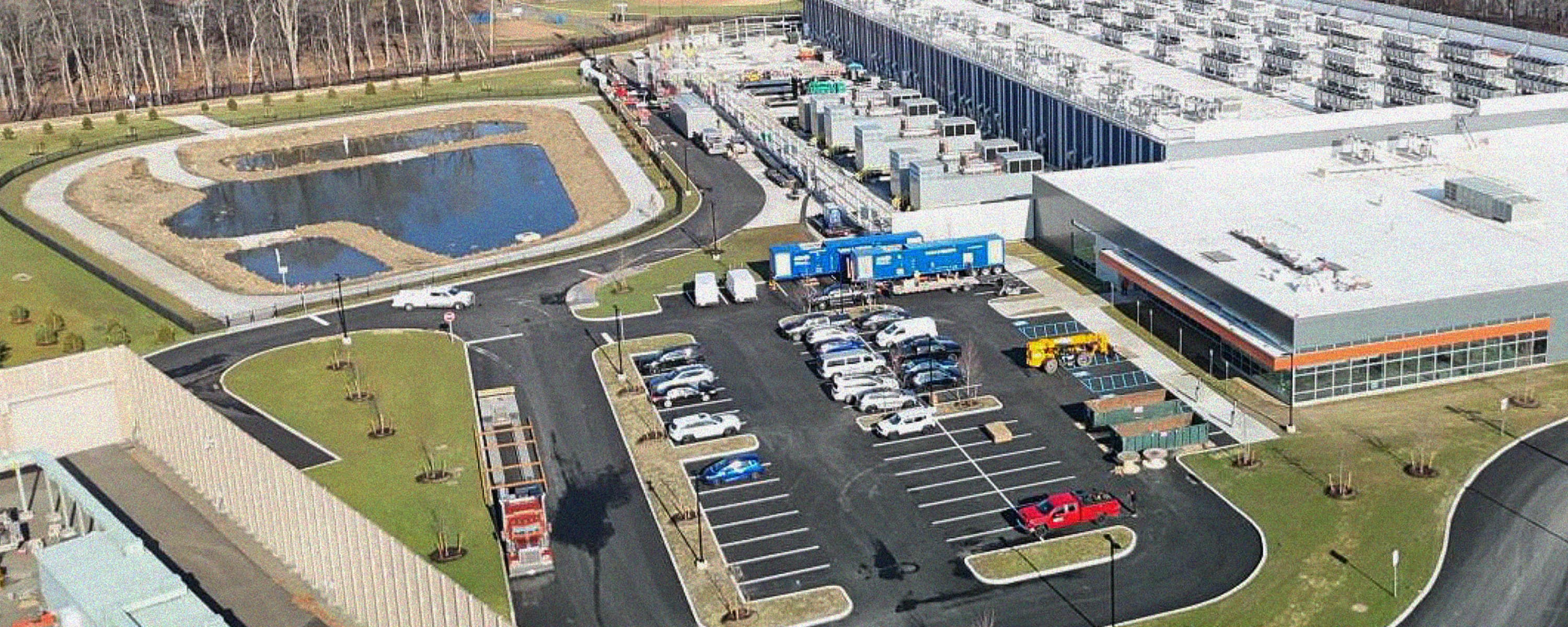
DataBank's LGA3 Orangeburg campus — Phase II would expand onto the banks of Lake Tappan
DataBank official
146K SF
Phase II Size
34 ac
Site Acreage
Unanimous
Planning Vote
Denied
Outcome
Orangeburg, New York · 2024
The reservoir they didn’t account for.
Phase I
DataBank operates existing facility in Orangeburg
DataBank runs an existing data center campus in Orangeburg, Town of Orangetown, Rockland County, NY. The facility sits on 34 acres adjacent to the banks of Lake Tappan Reservoir — a regional drinking water source serving communities in both New York and New Jersey.
2024
Phase II proposal filed — 146K SF expansion
DataBank files for a Phase II expansion: 146,000 SF of data center space, a 73,000 SF substation, and a 52,000 SF equipment yard. The proposed expansion would place large-scale lithium-ion battery energy storage systems in close proximity to the Lake Tappan drinking water supply.
Pre-Vote
100+ residents pack the planning board meeting
More than 100 residents attend the Rockland County planning board meeting to oppose the expansion. The datacentercrisis.org coalition forms, mobilizing opposition across both New York and New Jersey communities that depend on Lake Tappan for drinking water.
December 2024
County planning board votes unanimously to disapprove
The Rockland County planning board votes unanimously to disapprove DataBank's Phase II expansion. Stated grounds: disruption of wetlands, lithium-ion battery fire risk to a drinking water supply serving two states, and data centers not listed as a permitted use in the LIO (Light Industrial/Office) zone.
The Fatal Constraint
Use Not Permitted in LIO Zone
The Town of Orangetown's LIO (Light Industrial/Office) zoning district does not list data centers as a permitted use. Without a text amendment or special permit provision, the application had no legal pathway to approval from day one.
The Fire Risk
Li-Ion Batteries + Drinking Water
The proposed 73K SF substation included large-scale lithium-ion battery energy storage. A Li-ion fire adjacent to the Lake Tappan Reservoir — sole drinking water source for communities in two states — is a risk no planning board in the Northeast would approve.
The Environmental Wall
Wetlands Disruption
The 34-acre site's proximity to Lake Tappan Reservoir means any expansion triggers wetlands permitting under both state and federal law. The disruption finding from county planning is an independent basis for denial — the fire risk wasn't even needed.
The Cross-State Problem
NJ Opposition at a NY Hearing
Lake Tappan serves New Jersey communities, not just New York. The datacentercrisis.org coalition mobilized residents across state lines, creating a political opposition footprint that extended well beyond the jurisdiction making the decision.
“A use that isn’t permitted in the zone isn’t a zoning challenge. It’s a site selection failure.”
The Pre-Filing Research
What RealClear finds at 311 Western Highway.
Before a single filing fee is paid. Before a single attorney is engaged. Before a single county planning commissioner hears the words “data center.”
Site Analysis
311 Western Highway
Orangeburg, Rockland County, NY 10962
Use Permissibility
Planning Board Vote
Environmental Risk
Community Risk
Comparable Flag
Lithium-ion battery storage adjacent to drinking water reservoirs has been denied in 4 of 4 comparable cases in the Northeast. Cross-state opposition from New Jersey residents adds a political dimension absent from in-county projects.
Fire Risk — Drinking Water Supply
Proposed 73K SF substation and Li-ion battery arrays within documented proximity to Lake Tappan Reservoir — drinking water source for communities in New York and New Jersey.
Recommendation
DO NOT PROCEED. Use not permitted in LIO zone. Unanimous disapproval already on record. Environmental and fire risk factors are not mitigable at this location.
The Pre-Flight Checklist
Four source-record factors. All publicly available.
Every risk that sank this expansion existed in public records before the first filing. RealClear reads those records so your team doesn't have to.
Data Centers Not Permitted in LIO Zone
Zoning reviewThe Town of Orangetown's LIO (Light Industrial/Office) zoning code is a categorical use question. Data centers are not listed as a permitted use. Without a code amendment, no amount of mitigation can cure a categorical use prohibition. The cited zoning review surfaces this as the first finding — before any engineer was hired.
Lithium-Ion Battery Fire Risk Near Drinking Water
Zoning reviewLarge-scale lithium-ion battery energy storage systems produce toxic runoff when they burn. The proximity of the proposed 73K SF substation to Lake Tappan Reservoir — drinking water for two states — creates a fire risk scenario that no planning board would accept. This risk is identifiable from site location data and reservoir mapping alone.
Wetlands Disruption — Regulatory Tripwire
Approval path reviewReservoir-adjacent properties trigger wetlands permitting under the Army Corps of Engineers' Section 404 program and New York State's freshwater wetlands law. Both are public databases. RealClear's analysis surfaces the wetlands designation before the county planning board identified it as a basis for denial.
Cross-State Opposition — 100+ Residents
Community risk reviewThe datacentercrisis.org coalition was visible in public discourse before the hearing. This cited case review documented that organized opposition in local news, planning-board agendas, and public-comment records, preserving a pre-hearing off-ramp.
Northeast Data Center Opposition Pattern
Comparable outcomes reviewComparable projects in the Hudson Valley and New Jersey had already faced similar opposition over water and fire risk. The Comparable outcomes review surfaces these outcomes before any capital is committed, establishing the baseline denial probability for reservoir-adjacent sites with battery storage components.
The total cost of this entitlement failure:
Entitlement costs for large-scale data center expansion range $50K–$260K in direct fees, attorney time, and consultant costs — before a single permit is issued. Add land carry costs on 34 acres in a high-value suburban New York market, engineering studies, and the opportunity cost of months spent on a site that was legally unbuildable from day one.
A RealClear analysis costs less than one hour of attorney time.
Cited Brief
How RealClear built this assessment.
This source review is backed by a traceable source trail — real articles, real officials, real patterns.
News records reviewed
Officials identified
Comparable approvals reviewed
Opposition groups in record
Event Timeline
Key milestones in the entitlement journey
Phase I
DataBank operates existing Orangeburg campus
2024
Phase II application filed — 146K SF expansion
Pre-Vote
100+ residents pack planning board meeting
Dec 2024
Rockland County planning board unanimously disapproves
Phase I
DataBank operates existing Orangeburg campus
2024
Phase II application filed — 146K SF expansion
Pre-Vote
100+ residents pack planning board meeting
Dec 2024
Rockland County planning board unanimously disapproves
Key Actors
Decision-makers and their positions
Rockland County Planning Board
County Planning Board (Unanimous)
Unanimously disapproved Phase II citing wetlands disruption, Li-ion fire risk, and use not permitted in LIO zone
datacentercrisis.org Coalition
Cross-State Opposition Group
Organized residents from both New York and New Jersey — Lake Tappan serves communities in two states
DataBank
Data Center Operator
Existing Phase I operator on site — expansion proposal triggered unanimous disapproval at county level
Town of Orangetown
Municipal Jurisdiction
LIO zoning district does not list data centers as a permitted use — categorical barrier without text amendment
Opposition Record
Organized opposition groups
datacentercrisis.org Coalition
100+ residents at single planning board meeting, cross-state reach into New Jersey
Tactics
Fire risk framing, drinking water protection, cross-state petition, media advocacy
Track Record
Unanimous planning board disapproval achieved — the most complete outcome short of a formal denial
Jurisdiction Pattern
What history tells us about this jurisdiction
Approval history
No approvals reported for data center proposals with Li-ion battery storage near drinking water reservoirs in Northeast (2022-2024) — specific comparable cases not independently verified
Recent Shifts
Multiple Hudson Valley and NJ water authority interventions against reservoir-adjacent industrial uses have established a near-uniform denial pattern
Source read
Reservoir proximity is a categorical dealbreaker in the Northeast. The combination of wetlands, drinking water supply for two states, and a use not permitted in the zone left no viable path to approval from the moment the site was selected.
Cited research compiled from 8 news articles, 3 official documents, and comparable data from 4 Northeast reservoir-adjacent industrial proposals
Reservoir proximity is a categorical dealbreaker in the Northeast
Reservoir proximity is a categorical dealbreaker in the Northeast. The combination of wetlands, drinking water supply for two states, and a use not permitted in the zone left no viable path to approval from the moment the site was selected. Cited research compiled from 8 news articles, 3 official documents, and comparable data from 4 Northeast reservoir-adjacent industrial proposals
How this was assembled: Every source record ties to a public source you can verify yourself — news coverage, hearing records, court filings, public testimony. No scraped gated platforms, no invented engagement numbers, no attributions that aren’t on the page. RealClear surfaces source records; your team decides. See our methodology for the full sourcing standard.
Primary Source Documents
13 DocumentsEvery finding cited to the source. Click any document to preview it directly. Source-record patterns visible to experienced entitlement analysts months before the hearing.
Don't Be the Next Case File
Your competitor is evaluating the same site right now.
RealClear runs a full entitlement risk analysis — zoning, approval pathway, environmental constraints, community opposition, and comparable outcomes — fully analyzed. Before any attorney is billed. Before any filing fee is paid.
Cited research summary · Not legal advice · Verify independently before making investment decisions