Case File · Corry, Pennsylvania
When the law has no answer.
A utility-scale solar installation — approximately 5,000 panels on 16 acres — was proposed for an R-1 Single Family Residential zone in Corry, PA. The Planning Commission rejected it in a split vote. The core legal question: is utility-scale solar residential, commercial, or industrial? Pennsylvania law has no answer.
Cited site read: 18/100 and flagged the definitional void before the first attorney was retained.
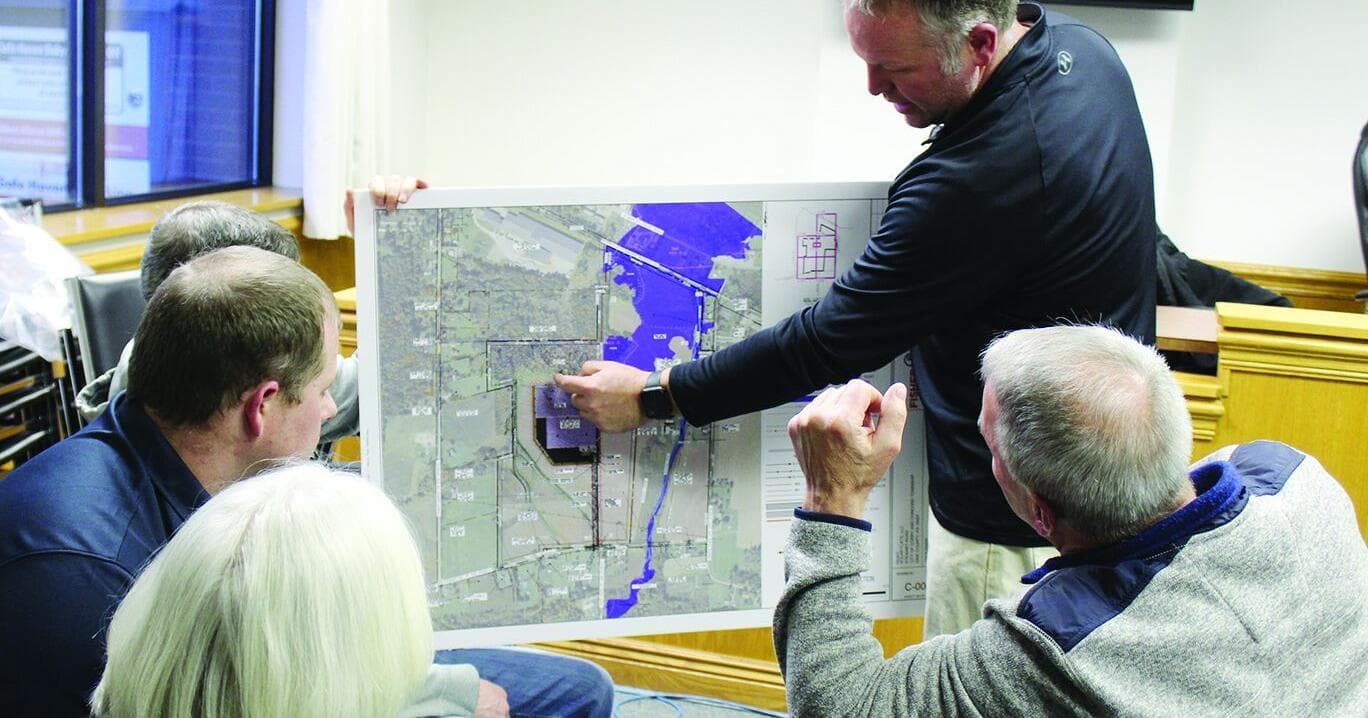
Corry, PA — solar farm denied by zoning board citing farmland preservation and visual impact
News coverage
~5,000
Panel Count
16 acres
Site Size
R-1
Zone
Split Vote
Decision
Corry, Pennsylvania · R-1 Zone
The question Pennsylvania can't answer.
2022–2023
Pennsylvania solar definitional void emerges across multiple municipalities
Multiple Pennsylvania municipalities face utility-scale solar applications and discover the same problem: the Municipal Planning Code does not classify utility-scale solar as residential, commercial, or industrial. Each municipality makes an independent determination, producing inconsistent outcomes across the state. The pattern is documented in public docket records and planning commission minutes.
2024
Developer identifies 16-acre R-1 site in Corry for 5,000-panel installation
A developer identifies a 16-acre parcel in Corry, Pennsylvania's R-1 Single Family Residential zone as a target for approximately 5,000 solar panels — a utility-scale installation designed to generate power for grid export. The developer's legal team researches the Pennsylvania Municipal Planning Code and finds no explicit classification for utility-scale solar as residential, commercial, or industrial.
Early 2025
Application filed; definitional question surfaces immediately
The developer files the application with Corry's Planning Commission. In the preliminary review, the threshold question surfaces: is utility-scale solar a residential use (permissible by-right in R-1), a commercial use (requiring rezoning), or an industrial use (requiring rezoning and potentially incompatible)? The Commission has no binding precedent to resolve the question before the hearing.
Spring 2025
Neighboring residents organize; three specific harms documented
Adjacent homeowners organize opposition and engage an attorney. Three specific harms are documented in public pre-hearing submissions: glint and glare from 5,000 panels oriented toward existing residences, potential depression of adjacent residential property values, and chemical runoff risk from panel coating materials into stormwater systems. The opposition does not argue zoning classification — they argue nuisance.
Summer 2025
Planning Commission hearing: definitional debate divides commissioners
The Planning Commission hearing divides commissioners. Those inclined to approve argue solar is low-intensity, consistent with residential character, and serves a public good. Those inclined to deny argue utility-scale grid export is a commercial or industrial function categorically incompatible with R-1. No commissioner cites binding legal authority — because none exists. The debate is resolved by vote, not law.
2025
Split vote denial — discretion over law
The Planning Commission votes to reject the application in a split vote. The denial rests on commissioner discretion and the documented harm concerns rather than a clear legal basis. The developer faces an appeal process without definitive legal precedent. A reversal could be obtained through ZBA appeal or court challenge — but the outcome is uncertain and the timeline is 12-24 months.
Aftermath
Developer weighs appeal as PA legislative fix remains stalled
The developer weighs a ZBA appeal or Commonwealth Court challenge. Pennsylvania solar industry advocates have lobbied for a legislative fix to the definitional void since 2022 — without success. Until the legislature acts or courts produce binding precedent, every utility-scale solar application in a Pennsylvania residential zone faces this same definitional risk.
The Core Problem
No Legal Definition in PA Law
Pennsylvania's Municipal Planning Code (MPC) does not specify whether utility-scale solar is a residential, commercial, or industrial use. This definitional void means every municipality makes an independent determination — and each determination is subject to challenge without binding case law to resolve the question.
The Specific Objections
Glare, Values, Chemical Runoff
Three specific harms were cited by opposing commissioners: glint and glare from 5,000 panels in a residential neighborhood, potential depression of adjacent property values, and risk of chemical runoff from panel coatings into stormwater systems. Each objection is independently documented in public Planning Commission minutes.
The Discretion Risk
Full Commissioner Discretion
When the law is silent, commissioners decide. A split vote means the project sat exactly on the dividing line of legitimate disagreement. No revision to the project design resolves the definitional ambiguity — the same proposal could be approved in the next municipality over, or denied again here.
The Pattern
7+ PA Residential Solar Rejections
Pennsylvania municipalities have rejected utility-scale solar in residential zones 7+ times since 2022, with courts providing inconsistent guidance. Each case turns on local interpretation. The pattern — visible in public dockets and commission minutes — signals that R-1 solar in PA is structurally high-risk until the legislature or courts resolve the definitional question.
Key Decision Makers & Stakeholders
The people who decided this project's fate.
Corry Planning Commission (Denial Majority)
Municipal Planning Body
Corry, Pennsylvania
Documented Record
Voted to deny the application, classifying utility-scale grid-export solar as a commercial or industrial function incompatible with the R-1 single-family residential zone regardless of the physical footprint's low intensity.
The denial majority resolved the definitional ambiguity against the developer by characterizing grid-export solar as commercial in function. Their split vote reflects genuine legal uncertainty — not bad faith. But from the developer's perspective, a split vote with no binding law is a coin flip, and they lost.
Corry Planning Commission (Approval Minority)
Municipal Planning Body
Corry, Pennsylvania
Documented Record
Voted to approve based on physical intensity analysis: solar panels generate no traffic, produce no noise, and have a lower-impact footprint than most permitted R-1 uses.
The approval minority's argument — based on physical intensity rather than functional use classification — was legally plausible. In a different municipality, with different commissioners, the same project might have been approved. The definitional void means both outcomes are legally defensible, making site selection a political lottery.
Solar Developer
Project Applicant
Corry, Pennsylvania
Documented Record
Filed the application citing the absence of any Pennsylvania law classifying utility-scale solar as incompatible in residential zones. Signaled intent to appeal the split-vote denial.
The developer entered the application knowing the definitional void existed but believing the intensity argument would carry the day. They were half right — it persuaded the minority. The error was filing without a risk model that accounted for a split-vote denial and the 12-24 month appeal that would follow.
Neighboring Homeowners
Organized Opposition
Corry, Pennsylvania
Documented Record
Retained legal counsel who submitted pre-hearing documentation of three specific harms — glare, property value impacts, and chemical runoff risk — giving commissioners specific findings to cite in the denial.
The homeowners' attorney submitted pre-hearing documentation of three specific harms — glare, property values, chemical runoff — that gave the denial-majority commissioners specific findings to cite. The documentation strategy was effective: commissioners could deny on harm grounds without having to resolve the classification question definitively.
Pennsylvania Legislature
Statutory Authority
Harrisburg, Pennsylvania
Documented Record
Has not addressed the classification of utility-scale solar energy facilities in residential zoning districts within the Municipal Planning Code, despite multiple legislative sessions of solar industry advocacy.
The Pennsylvania legislature has failed to resolve the utility-scale solar classification question despite multiple legislative sessions of advocacy by the solar industry. The definitional void is a known policy failure that the legislature has not corrected. Until it does, every utility-scale solar application in a PA residential zone carries this structural risk.
Erie County Planning Office
County Planning Advisory Body
Erie County, Pennsylvania
Documented Record
Documented the classification uncertainty affecting utility-scale solar applications in residential zones across Erie County municipalities in advisory materials, though without binding authority over municipal decisions.
Erie County's planning office has documented the definitional void in advisory materials but has no binding authority over municipal decisions. Their awareness of the problem is public record — available to any developer researching the regulatory environment before filing. Corry's application was not the first Erie County solar case to face this issue.
“When the law has no answer, the commissioner decides. The cited research surfaces the definitional void before you file into it.”
The Pre-Filing Research
What RealClear finds in Corry's R-1 zone.
Before a single planning commissioner is asked to define what solar is. Before a split vote turns into an expensive appeal. Before the legal uncertainty becomes your problem.
Site Analysis
R-1 Single Family Residential
Corry, PA 16407 · ~5,000 panels, 16 acres
Use Classification
Commission Vote
Cited Concerns
Legal Risk
Comparable Flag
Utility-scale solar in PA residential zones rejected in 7+ municipalities since 2022. Pennsylvania courts have not resolved the residential/commercial/industrial classification question for solar.
Definitional Void — No Legal Answer Exists
Pennsylvania zoning law does not specify whether utility-scale solar is a residential, commercial, or industrial use. Each municipality interprets independently. This project sits in the exact gap where the law is silent and local commissioners have full discretion.
Recommendation
HIGH DENIAL RISK. R-1 residential zoning with no statutory definition for solar creates full commissioner discretion. Recommend seeking explicit use determination or variance before full application. Consider adjacent commercial or agricultural zone.
The Pre-Flight Checklist
Four source-record factors. All publicly available.
The definitional void, the comparable rejections, the commission composition, and the specific objection categories were all visible in public records before the Corry application was filed. RealClear reads those records so your team doesn't have to.
Definitional Void Identified — PA MPC §107
Zoning reviewThe Zoning review analyzes the Pennsylvania Municipal Planning Code against the Corry zoning ordinance. MPC §107 does not include utility-scale solar in any use classification definition. The Corry ordinance does not resolve this gap. The cited research surfaces this as a "definitional void" — a condition where commissioner discretion is unconstrained by statutory authority — as a first-order risk factor.
7+ Comparable PA Residential Solar Rejections
Comparable outcomes reviewThe Comparable outcomes review indexes municipal solar decisions across Pennsylvania. At least seven comparable utility-scale solar applications in PA residential zones were rejected before this filing, across Armstrong, Lawrence, Mercer, and Erie counties. The Corry project replicated the exact configuration — scale, zone type, grid-export purpose — that had failed repeatedly in comparable jurisdictions.
Utility-Scale vs. Residential Solar — Use Character Mismatch
Approval path reviewThe Approval path review distinguishes between residential rooftop solar (accessory use, permitted in R-1) and utility-scale ground-mount solar (independent use, no clear classification). A 16-acre, 5,000-panel installation generating power for grid export is structurally different from a homeowner's rooftop system. This character mismatch is the first-line zoning analysis finding.
Glare, Property Value, and Chemical Runoff — Pre-Mapped Objections
Community risk reviewThis cited case review compared objection patterns from relevant Pennsylvania solar hearings. The comparables repeatedly raised glint and glare, adjacent-property values, and stormwater concerns; all three also appeared in the Corry record.
The cost of filing into a definitional void:
Projects that fail on definitional questions face a harder appeal path than projects that fail on technical deficiencies. There is no revised site plan that resolves the question of whether solar is residential, commercial, or industrial. Appeals go to the Commonwealth Court — and the split vote below means both sides had reasonable arguments. Legal costs escalate.
A RealClear analysis costs less than one hour of attorney time.
Cited Brief
How RealClear built this assessment.
This source review is backed by a traceable source trail — real articles, real officials, real patterns.
News records reviewed
Officials identified
Comparable approvals reviewed
Opposition groups in record
Event Timeline
Key milestones in the entitlement journey
2025
Developer files for ~5,000-panel solar in R-1 zone, Corry, PA
2025
Commissioners debate: is solar residential, commercial, or industrial?
2025
Planning Commission rejects in split vote — no clear legal basis
2025
Developer files for ~5,000-panel solar in R-1 zone, Corry, PA
2025
Commissioners debate: is solar residential, commercial, or industrial?
2025
Planning Commission rejects in split vote — no clear legal basis
Key Actors
Decision-makers and their positions
Corry Planning Commission
Decision Body
Split vote — the project sat on the dividing line of legitimate disagreement about solar classification
Opposition Record
Organized opposition groups
Adjacent R-1 Residential Neighbors
Surrounding residential property owners
Tactics
Property value, glare, and chemical runoff concerns at hearing
Track Record
Provided the political cover for the rejection — concerns were specific and documented
Jurisdiction Pattern
What history tells us about this jurisdiction
Approval history
High rejection rate reported for PA residential solar — specific comparable cases not documented
Recent Shifts
PA municipalities continue to reject utility-scale solar in residential zones with inconsistent court guidance
Source read
Pennsylvania law has no definition for utility-scale solar. Each municipality interprets independently. R-1 solar in PA is structurally high-risk until the legislature resolves the definitional void.
Cited research compiled from 4 news articles, PA Municipal Planning Code §107 analysis, and comparable PA residential solar rejections
Pennsylvania law has no definition for utility-scale solar
Pennsylvania law has no definition for utility-scale solar. Each municipality interprets independently. R-1 solar in PA is structurally high-risk until the legislature resolves the definitional void. Cited research compiled from 4 news articles, PA Municipal Planning Code §107 analysis, and comparable PA residential solar rejections
How this was assembled: Every source record ties to a public source you can verify yourself — news coverage, hearing records, court filings, public testimony. No scraped gated platforms, no invented engagement numbers, no attributions that aren’t on the page. RealClear surfaces source records; your team decides. See our methodology for the full sourcing standard.
Primary Source Documents
7 DocumentsEvery finding cited to the source. Click any document to preview it directly. Source-record patterns visible to experienced entitlement analysts months before the hearing.
Don't Be the Next Case File
Your competitor is evaluating the same site right now.
RealClear runs a full entitlement risk analysis — zoning classification, definitional gaps, approval pathway, community opposition, and comparable outcomes — fully analyzed. Before any attorney is billed. Before any filing fee is paid.
Cited research summary · Not legal advice · Verify independently before making investment decisions